Hiring a plumber is mostly about one thing: whether they fix the cause or move the leak six inches down the pipe. The cause takes longer, needs the right cement and the right part, and costs a little more. The quick fix is M-seal and a promise. Here is how to tell them apart before anyone touches a wall.
On the phone: five questions that sort the professionals
- "What is the visit charge, and is it waived if I go ahead?" The answer should be a number near ₹250 and a yes. An evasive answer here is an evasive bill later.
- "Do you carry washers, cartridges and angle valves with you?" A plumber who has to leave to buy a ₹20 washer turns a twenty-minute job into a two-hour one. The good ones carry a bag of common spares.
- "What pipe do you work with?" The answer should include CPVC and UPVC by name, and ideally PPR. A plumber who says "all pipe" and cannot name the cement for each is a generalist who will use whichever tin is in the bag.
- "If it is a concealed leak, how do you find the spot?" Listen for: the overnight tank test, checking the damp pattern, opening a small spot first. A plumber whose plan is "we'll break the wall and see" is a mason with a wrench.
- "Do you pressure-test before closing a wall?" A yes, with a gauge mentioned, is the answer. This one question separates plumbers who do concealed work properly from those who do not.
For a bigger job, a bathroom or a pipeline, add: "Can you give me the quote per fitting and per metre, with materials listed separately?" and "Who does the tile and plaster work?"
At the door: what to look for
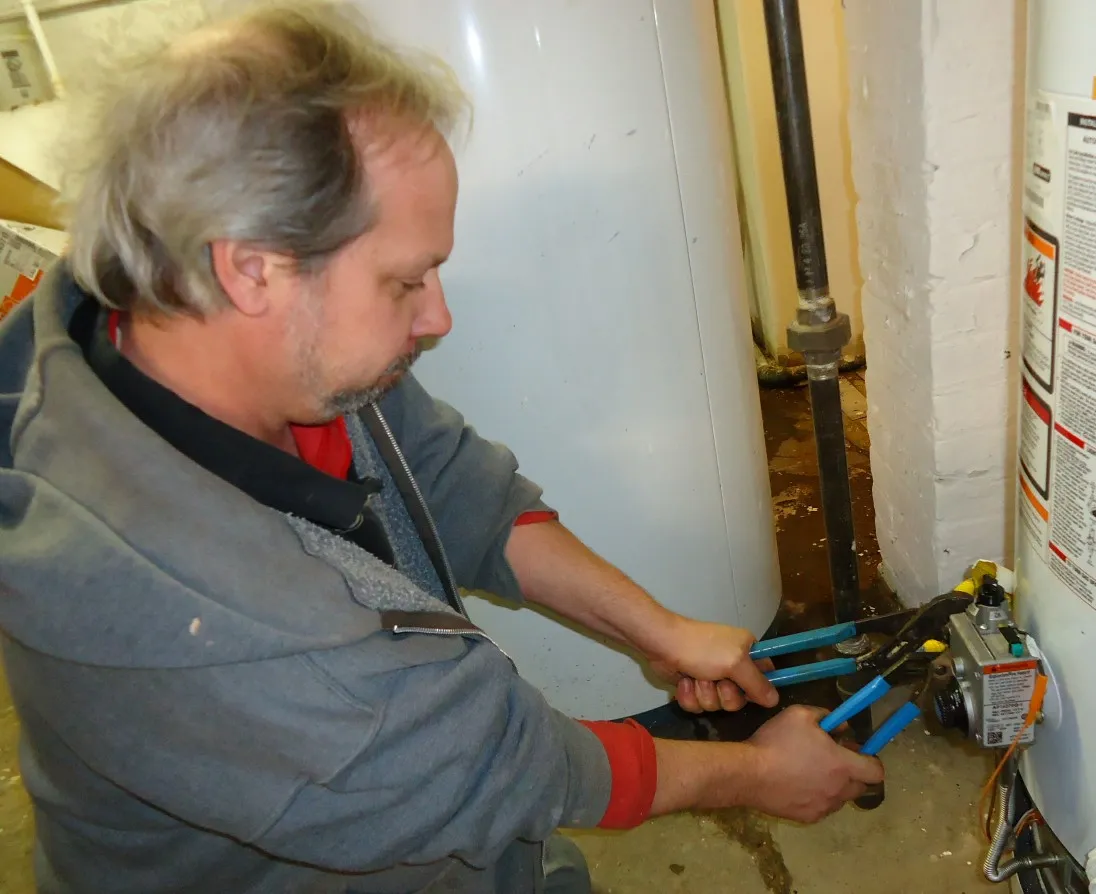
A professional plumber arrives with a tool bag that has pipe wrenches, a hacksaw or pipe cutter, PTFE tape, both kinds of solvent cement, a plunger and an auger, and a torch. They ask where the tank outlet valve and the bathroom isolation valve are before they open anything, and they check the water has actually stopped before unscrewing a fitting.
They look at the whole fitting, not just the drip: a plumber called for a tap who notices the angle valve is seized and says so is the one you want. They tell you the name of the part before replacing it and show it to you after. And they clean up: a plumber who leaves hair from the trap in the basin is a plumber who leaves cement on the tiles.
Red flags
- M-seal on a joint. Epoxy putty is an emergency patch, not a repair. A plumber who reaches for it on a supply joint is not planning to come back and finish.
- "Replace the whole thing." A new cistern for a running flush, a new tap for a worn washer, a new WC for a blocked one. Sometimes right, usually not. Ask what the smaller fix would be and why it will not work.
- No angle valve, no problem. A plumber who works on a fitting with no isolation valve without suggesting one is leaving you with the same emergency next time.
- One tin of cement. "All-purpose" solvent cement on CPVC is a joint that fails in the first summer.
- Breaking tiles to find a leak. The wall is opened after the spot is found, not to find it.
- No pressure test. A concealed line closed without one is a leak with a date on it.
- A lump-sum quote for a bathroom with no list. Nobody can check a lump sum. A quote per fitting, per metre and per trap can be checked against the rate card.
What a fair quote looks like
A quote has four parts, each on its own line.
Visit. ₹250, waived when the job goes ahead.
Labour, per unit. A tap at ₹200 to repair or ₹250 to replace; a flush at ₹350; a blockage at ₹400 to ₹1,500 depending on where it is; a WC at ₹1,500; a basin at ₹900; a geyser connection at ₹600; pipeline at ₹120 per metre exposed or ₹250 concealed; a full new bathroom at ₹12,000 for the plumbing labour.
Materials, with brands. A tap at ₹300–₹2,500, an angle valve at ₹150–₹600, a WC at ₹4,000–₹25,000, a basin at ₹1,500–₹8,000, pipe at ₹60–₹250 per metre. The brand and the class or model written down, and the shop bill attached afterwards.
Adjustments. Metro cities about 30 percent higher. Same-day about 20 percent more. Flexible timing a little less. More than four items, a discount from the fourth. Any of these are fair if they are on the quote and not discovered on the bill.
The TheHire cost estimator produces exactly this structure for your list of jobs and your city, and you can share it with the plumbers who reply so everyone starts from the same numbers.
What to agree before work starts
- Where the wall will be opened, for a concealed job, and who closes it. The plumber seals the pipe; whether they also plaster and tile, and what that costs, should be said before the first blow.
- Which parts are being replaced and which are being repaired. "Fix the tap" and "replace the tap" are different prices and different outcomes.
- Who buys the big items. You, with the plumber's specification (the trap distance, the inlet size, the pressure rating), or the plumber, with a bill. Either is fine; a surprise is not.
- The pressure test, for anything concealed: when it happens, how long it is held, and that you will see the gauge.
- The return policy. A leak that comes back within a few weeks is revisited without a second visit charge.
- How long the water will be off, and whether the whole house or one bathroom.
After the work
Run every fitting the plumber touched, with the plumber still there. Open and close each angle valve they fitted. Flush twice. Fill the basin and watch the trap as it drains. For a concealed job, see the gauge hold before the wall is closed, and then do the overnight tank test yourself that night.
Keep the material bill; it has the brand and model for warranty claims and for buying the matching cartridge in three years. Photograph any pipe before it is covered. And write a review: the next household calling about a damp patch is choosing on them.
When you need more than a plumber
Three jobs sit on the border with other trades, and a good plumber will say so.
The geyser. The water side is the plumber's at ₹600; the 16A point, the earthing and the element are the electrician's. If a geyser gives a tingle, that is the electrician first.
A borewell or a sump. Connecting a borewell to the tank is a plumbing job at ₹2,500; the bore itself, the submersible pump and its starter are the borewell contractor's and the electrician's.
The drain beyond the chamber. The plumber clears to the inspection chamber at ₹1,500. Past it, into a septic tank or a blocked municipal line, is the septic and drain service. A plumber who says "that one is not mine" is telling you the truth, and is the plumber to call back.