Six decisions come up in almost every plumbing job that is bigger than a washer. Each has two or three honest answers depending on the house, the floor and the budget, and the plumber's preference is often just what they have done most. Here are the trade-offs, so the choice is yours.
CPVC, UPVC, PPR or GI
CPVC is the default for supply lines in Indian homes now: hot and cold, solvent-cement joints, every plumber carries it, every shop stocks it. Look for IS 15778 and the class: SDR 11 for hot and pump lines, SDR 13.5 acceptable on a gravity cold line. Its weakness is a careless joint; too little cement or too short a hold leaks within months.
UPVC is cheaper and fine for cold water, drains and overflows. It is not for hot water. On a pressure line it should be Schedule 40 or 80 to ASTM D 1785, not the agricultural IS 4985 pipe.
PPR is fused with heat and the joints are as strong as the pipe. It handles hot water well. The limits are that fewer plumbers carry the tool and a PPR line cannot be patched with CPVC fittings, so it is a decision for new work with a plumber who uses it daily.
GI is the old galvanised pipe. It is not a choice for new work. If the house has it, the decision is when to replace, not whether.
When each is right: CPVC for the supply in almost every house; UPVC for every cold drain and overflow; PPR if your plumber is a PPR plumber; GI never. A new exposed line is ₹120 per metre in labour with pipe at ₹60–₹250 per metre; concealed is ₹250 per metre.
Floor-mounted or wall-hung WC
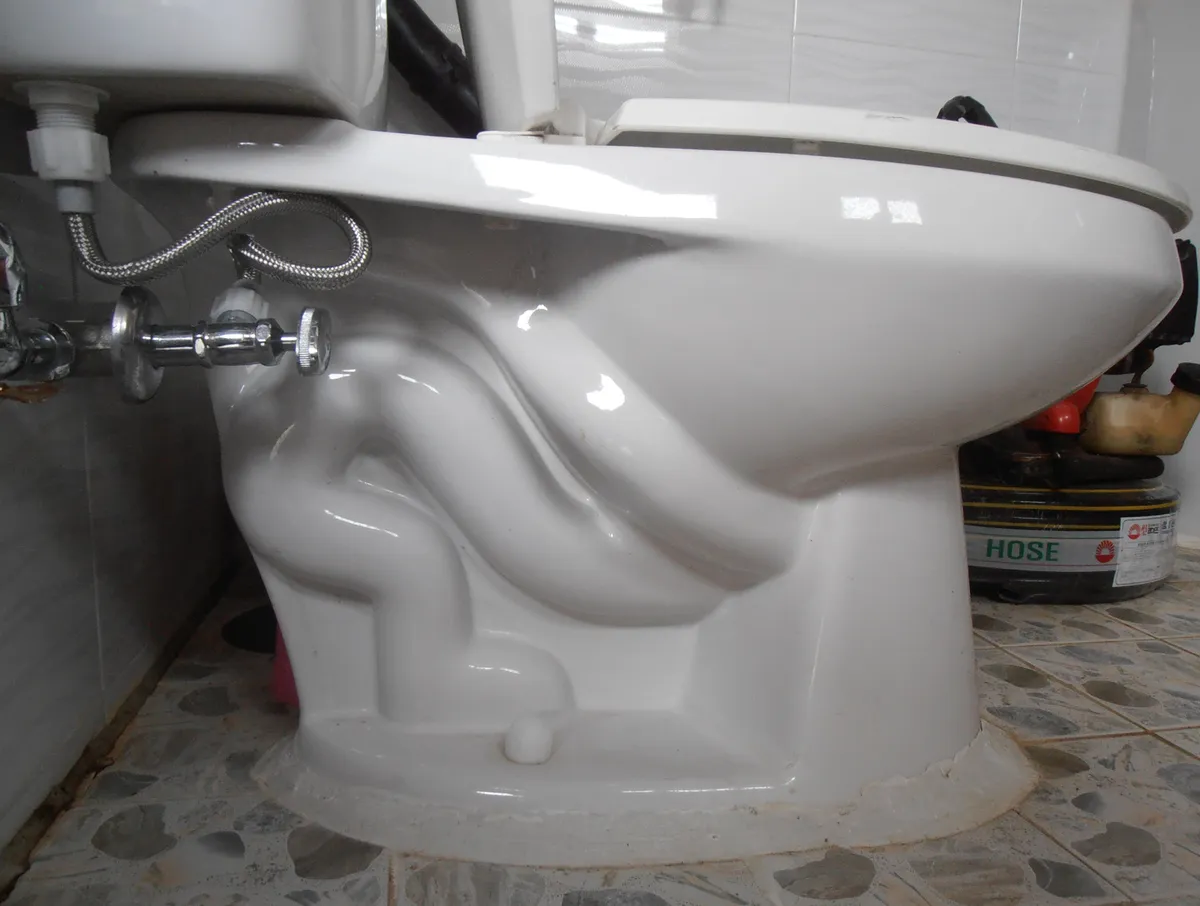
Floor-mounted sits on the floor, connects to the existing outlet, and the cistern sits on it or on the wall behind. Fitting is ₹1,500, or ₹1,800 with the old one removed. The only thing to get right is the trap distance.
Wall-hung hangs from a steel frame built into the wall, with a concealed cistern behind the tiles. The floor under it is clear, which makes cleaning easy and the bathroom look bigger. The cost is the frame and cistern at ₹1,200–₹6,000 plus ₹700, and the wall is opened and rebuilt, so it is a renovation decision. The cistern's mechanism is reached through the flush plate; a plumber who has not fitted one before should not start on yours.
When each is right: floor-mounted for any replacement in an existing bathroom; wall-hung for a bathroom being redone from the wall out, where the ₹8,000 renovation is happening anyway.
Overhead tank, pressure pump, or both
The question is how to get a strong shower on the top floor.
Raise the tank. A taller stand gives more head and more pressure to every floor. It is the cheapest answer if the roof allows it, and it needs no power. A tank on a new stand is ₹1,500 with the stand extra.
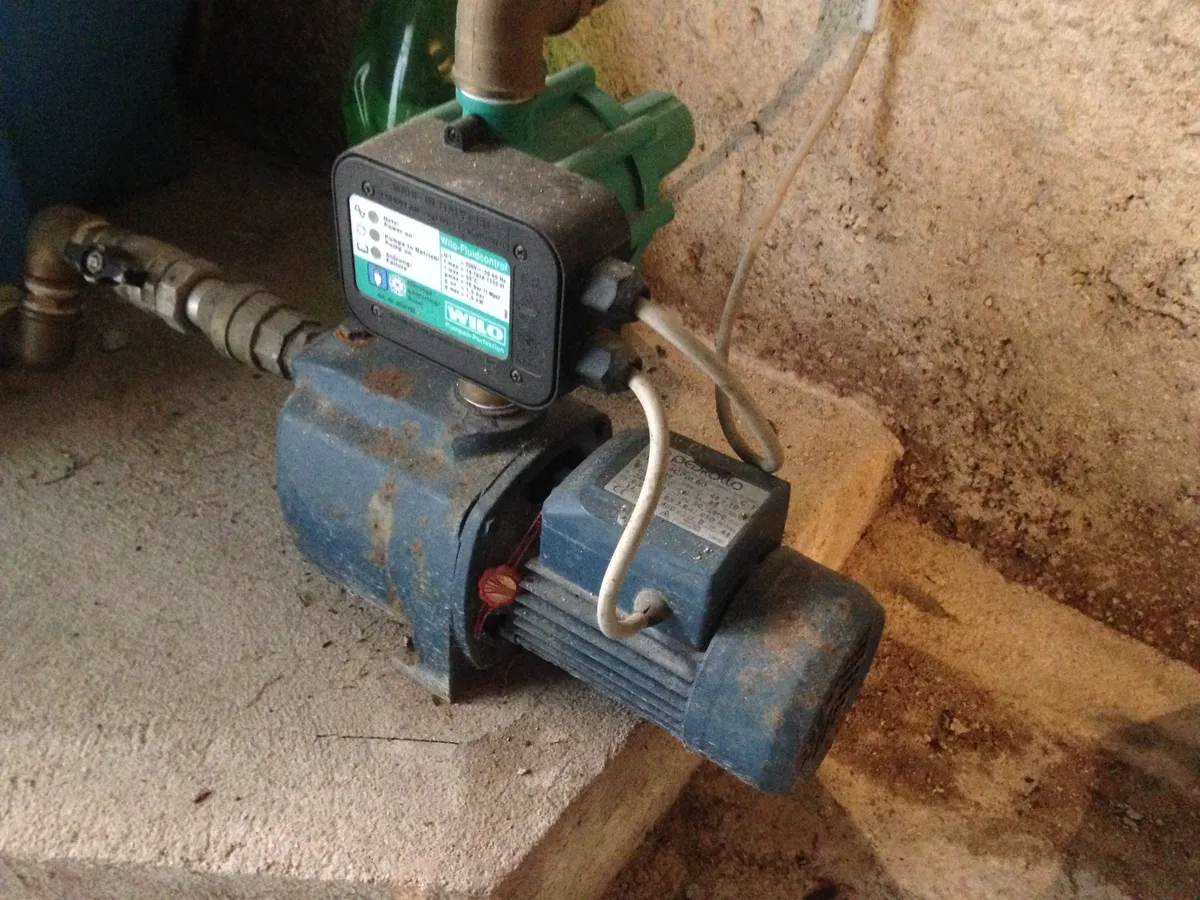
A pressure pump on the tank outlet pressurises the line whenever a tap opens. The shower is strong on every floor. The costs are a pump, ₹900 to fit on the water side with the electrical point by the electrician, a little power every time a tap runs, and silence lost; the pump can be heard. It also raises the pressure on everything, so the geyser needs the higher bar rating and old joints that were fine at gravity pressure may weep.
Both, a tank for storage and a pump for pressure, is what most high-rises run. The pump is the association's and the geyser rating is the only thing you decide.
When each is right: raise the tank in a house where the roof allows it; a pump for a top floor that cannot get head any other way; and check the geyser rating before fitting a pump.
Storage, instant or solar water heater
Storage geysers hold 10 to 25 litres and heat it in advance. A shower, back-to-back showers, a bath. In hard water the tank and element scale, so buy glass-lined. 6 bar is standard; 8 bar for a pressure-pumped or high-rise line.
Instant geysers heat as the water passes. No stored hot water, no standing losses, but a thin flow and a struggle with a cold inlet. Right for a kitchen basin or a wash basin; not for a shower in most Indian bathrooms.
Solar water heaters on the roof heat a tank by the sun and feed every bathroom by gravity. Free hot water for most of the year; a backup element for the monsoon. The pipeline from the roof to the bathrooms, with the hot line insulated, is ₹3,500; it pays back in a few years in a house with several showers a day.
When each is right: storage for every shower; instant for the kitchen; solar for a house, or a top-floor flat, that can get the panel on the roof and the pipe down.
The plumbing connection for any geyser is ₹600; the electrical point is the electrician's.
Quarter-turn or screw-down taps
Screw-down taps close a rubber washer onto a seat. Cheap, repairable with a ₹20 washer, and everyone understands them. The washer wears in hard water, and people over-tighten them, which scores the seat.
Quarter-turn taps close a pair of ceramic discs. They close with a quarter turn, cannot be over-tightened, and last longer. The cartridge is ₹150 to ₹400, and the tap is only as repairable as the cartridge is available; buy a brand whose spares the shop stocks.
When each is right: quarter-turn for every tap in the house where the cartridge can be bought; screw-down for an outside tap, a garden tap, or where nobody will find a cartridge. Replacing a tap is ₹250 plus ₹300–₹2,500 for the tap; repairing one is ₹200.
Concealed or exposed lines
Concealed lines run inside the wall under the tiles. The bathroom looks clean and nothing is in the way. Every joint is invisible, which is fine until one fails, and then it is a ₹1,500 job with the tile broken. A concealed line is only as good as its pressure test before tiling.
Exposed lines run along the wall, clipped. Every joint can be seen and reached, repairs are the ₹450 kind, and the pipe can be replaced by the metre without touching a tile. They are visible, and some people mind.
When each is right: concealed for a bathroom being built or renovated by a plumber who pressure-tests and will show you the gauge; exposed for a terrace line, a kitchen, a utility area, or any older house where the plumber's work is not yet trusted. A middle path is common and sensible: concealed in the bathroom, exposed everywhere else.
The pattern behind all six
In each case the more expensive option is also the one that depends more on the plumber doing it right: the concealed line, the wall-hung WC, the PPR joint, the pump that raises pressure on every joint. The cheaper option is more forgiving and easier to repair. If you have a plumber whose work you have seen, the first set is worth it. If you are choosing a plumber and a method at the same time, choose the forgiving option, see the work, and upgrade next time.
Whichever way you go, the labour is on the rate card by the fitting and the metre, and the cost estimator will put your choices into one quote you can hand to the plumbers who reply.