Most plumbing calls end with the plumber explaining something the customer could have known in advance: that the tank is too low for the pressure they want, that the smell is a dry trap, that the flush "leak" is a float. This is the system in plain words, so you can judge what you are told.
The path water takes
Water arrives in one of three ways: a municipal line that runs for a few hours a day, a borewell with a submersible pump, or a tanker that fills a sump. In almost every Indian home it then goes to an underground sump or a ground-level tank, because the supply is not continuous and not pressurised enough to be used directly.
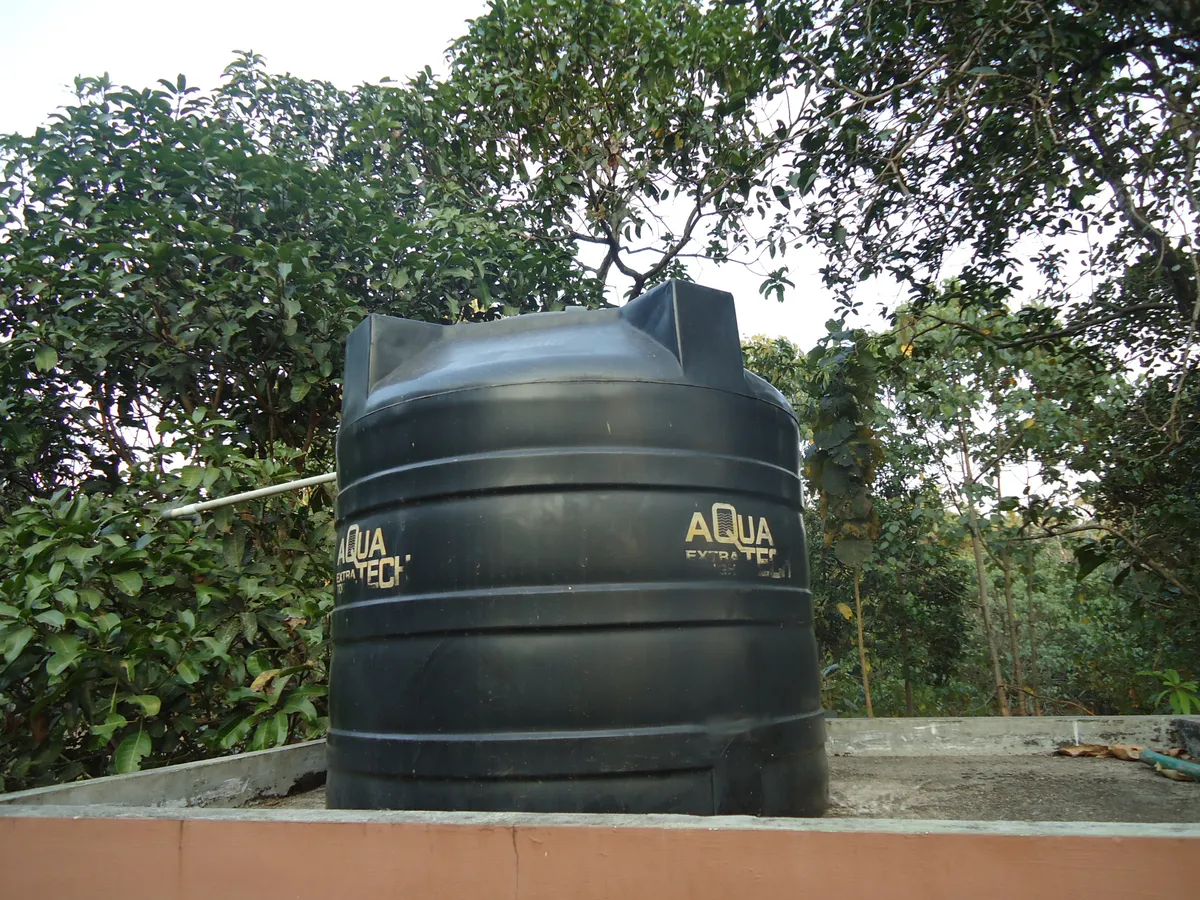
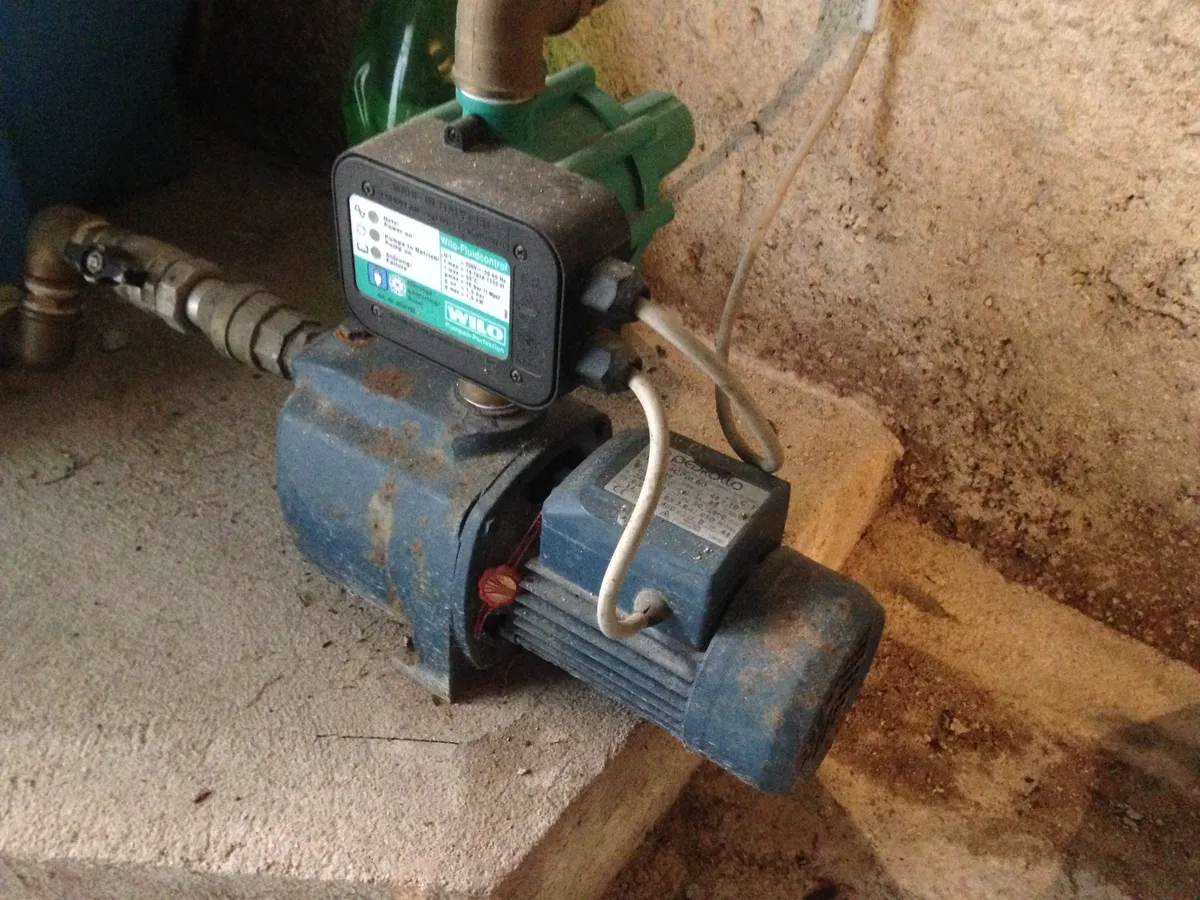
From the sump a pump, half a horsepower to one horsepower in a house, lifts the water to the overhead tank on the roof. In an apartment block this is a bigger pump and a bigger tank, run by the association, and the only part you see is the tap.
From the overhead tank water comes down by gravity through a down-take pipe to each bathroom and the kitchen. Each bathroom should have its own isolation valve on this line, so one bathroom can be shut without draining the building. Below that, each fitting has an angle valve, and then the tap or the cistern or the geyser.
The hot line starts at the geyser. Cold water goes in at the bottom, is heated, and leaves from the top to the shower and the basin mixer. Because hot water is under the same pressure as cold, the geyser's tank is a pressure vessel, which is why it carries a bar rating and a relief valve.
The drain side is the half nobody looks at. Waste from basins, showers and floor traps goes into a waste pipe; the WC goes into a soil pipe. Both run down the outside of the building or through a shaft to an inspection chamber at ground level, and from there to the municipal sewer or a septic tank.
Pressure, and why the top floor loses
Water pressure at a tap comes from the height of water above it. Roughly, every ten metres of height gives one bar. A ground-floor bathroom with the tank three floors up gets about one bar and a strong shower. A top-floor bathroom with the tank a metre and a half above its ceiling gets a fraction of that, and a rain shower there is a trickle.
This is why "low pressure" is rarely a plumbing fault and usually geometry. The fixes are to raise the tank on a stand, to fit a pressure pump on the tank outlet that pressurises the line whenever a tap opens, or to accept a smaller shower head. A pressure check is ₹400; a pump fitted on the water side is ₹900, with the electrical point by an electrician.
Three things mimic low pressure and are cheaper: a blocked aerator on the tap, a half-closed angle valve, and scale in an old GI pipe that has narrowed to a pencil's width.
Traps, and why the bathroom smells
Every drain in the house has a trap: a U-bend or a small chamber that holds water. The water is a plug that stops sewer gas coming back up. The floor trap in the bathroom, the nahani, is one; the bottle trap under the basin is another; the WC's own S-bend is a third.
A trap only works while it holds water. A bathroom unused for a fortnight dries out and smells; a mug of water fixes it. A trap that gurgles when the next fitting drains has lost its water seal to suction, usually because the stack has no vent, and that is a plumber's job. A trap that smells even when full is often a cracked trap body under the tiles, which is the ₹1,500 kind of job.
Hair, soap and grease collect in traps because that is their job; clearing a floor trap is ₹450 and a kitchen bottle trap ₹400. Drain acid does not clear a trap; it eats the trap.
How a flush works
Inside a cistern are two independent parts. The inlet valve opens when the float drops and closes when the float rises to the set level. The flush valve is a seal at the bottom that lifts when you press the button and drops back when the tank is empty. A dual-flush button lifts the seal for a shorter time on the half flush.
A cistern that never stops filling has its float set too high, so water runs over the overflow tube, or an inlet valve that no longer closes. A cistern that trickles into the bowl has a flush valve seal that does not seat, often from a grain of scale. Both are ₹350 to fix and ₹150 to ₹600 in parts. Neither needs a new cistern.
The bowl itself flushes by siphon: the rush of water fills the S-bend faster than it drains, the bend becomes a siphon, and the bowl empties. This is why a weak flush is often a blocked rim or a low water level, not a blocked drain, and why the trap distance matters so much at installation: an offset outlet breaks the siphon.
The geyser and the two valves
A storage geyser is a tank under mains pressure with a heating element. Two angle valves, one on the inlet and one on the outlet, let it be isolated for repair. A non-return valve on the inlet stops hot water pushing back into the cold line. A pressure-relief valve lets a few drops out as the water expands while heating; that drip from the small pipe is normal. A steady stream from it means the inlet pressure is above the geyser's rating, which happens on a high-rise pressure line, and a pressure-reducing valve is the fix.
In hard water the element and the tank scale up. A geyser that takes longer to heat each year, or makes a kettle noise, is scaled. Descaling is a service job; a leaking inlet or outlet is ₹400; a new connection is ₹600.
Why pipes fail
Joints, not pipe. Almost every leak is at a joint. On CPVC it is a joint made with too little cement or not held long enough; on GI it is a thread that rusted; on a tap it is the connector nut. A plumber who remakes the joint properly fixes it once. One who wraps it in M-seal fixes it until the next summer.
Hard water. Scale builds in GI pipes, on elements, in aerators and on ceramic discs. It is why old houses have no pressure and why taps drip after three years.
Water hammer. The bang in the wall when a tap closes is a column of water stopping suddenly. It loosens joints over years. A quarter-turn tap closed gently, or an air chamber fitted by the plumber, stops it.
Concealed lines with no test. A line buried in the wall and tiled over without a pressure test is a leak waiting for its first monsoon. Every concealed line should be held under pressure for a few hours with the plumber and the owner both looking at the gauge before the tiles go on.
Five things every householder should know
- Where the valves are. The tank outlet valve on the roof, the bathroom isolation valves, and the angle valve under each fitting. Closing the right one turns a flood into a drip while you wait for the plumber.
- Which pipe you have. CPVC, UPVC, PPR or GI. It decides what a repair costs and whether the plumber can patch it or must replace it.
- The trap distance of each WC. Written on the back of the bathroom door or in your phone. It is the number that makes a WC replacement a half-day job rather than a week.
- The geyser's pressure rating and your floor. If the building has a pressure pump, the geyser needs the higher rating.
- That the tank needs cleaning. Twice a year, ₹1,200 for up to a thousand litres. Sediment in the tank is what blocks the aerators and the float.
What is fine to do yourself, and what is not
Fine: closing an angle valve, pouring water into a dry trap, cleaning the aerator on a tap, clearing hair from a floor-trap grating, plunging a WC, adjusting the float in a cistern, replacing a seat cover, tightening a connector nut by hand.
Not: cutting or joining pipe, anything behind a tile, anything on the geyser's water connections, opening an inspection chamber, and any job where the first step is "drain the tank". Those are the jobs where a mistake is a flooded floor or a ceiling below, and where a plumber's ₹250 visit is cheap against the repair.