A house can run for years on bad plumbing. Then a connector lets go at midnight, the tank grows a green film, or the monsoon finds the joint behind the tiles. These five things are what separate a house where plumbing is a twenty-minute call from one where it is a week of masons. For each: why it matters, how to check, what it costs to put right.
1. An isolation valve for every bathroom and an angle valve under every fitting
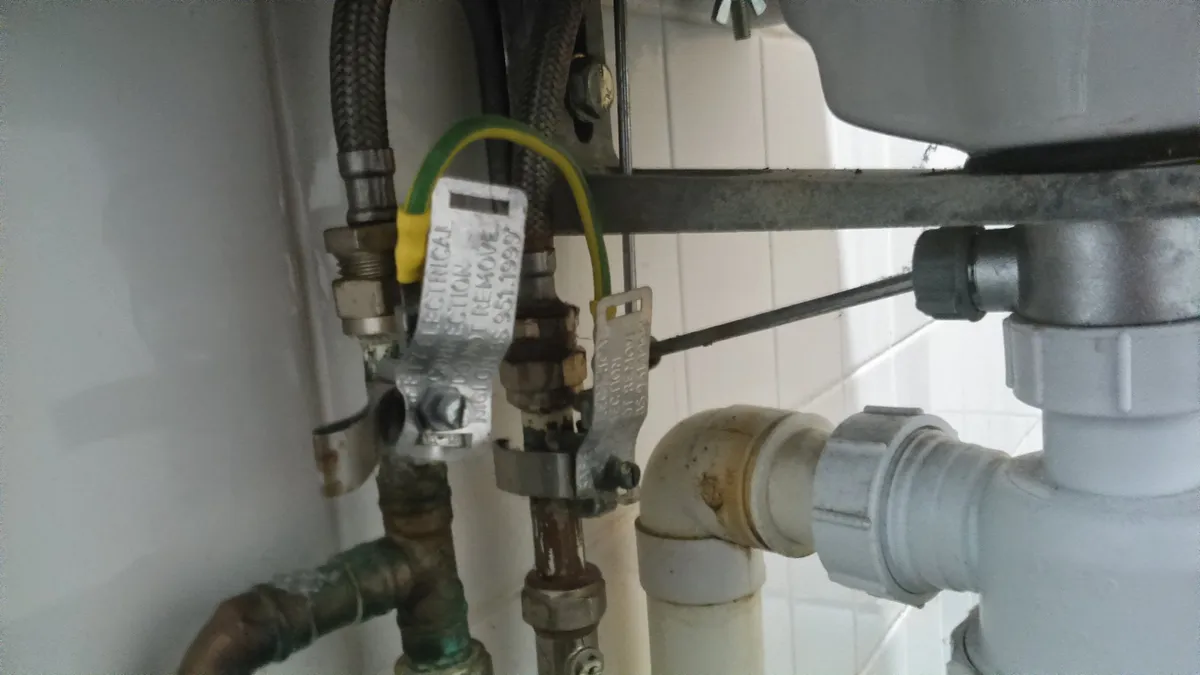
Why it matters. When a tap sprays or a connector bursts, the only question is how fast you can stop the water. With an angle valve under the fitting, you reach down and turn it. Without one, you climb to the roof and close the tank, and the house is dry until the plumber comes. The same valve lets the plumber replace a tap or a flush valve without draining the line, which is why jobs in a house with valves are quicker and cheaper.
How to check. Look under each basin, behind each WC, at the geyser inlet and outlet, and at the washing machine tap. Each should have a small brass valve with a handle. Then find the isolation valve for each bathroom: usually a ball valve in the shaft, near the ceiling, or where the down-take enters the room. Turn each one once a year so it does not seize.
What it costs. A brass angle valve is ₹150–₹600 and ₹200 to fit. A bathroom isolation valve on an exposed line is a small job on the ₹450 scale; on a concealed line it is priced as a concealed job. Fit them all in one visit and the plumber discounts from the fourth item.
2. A tank you can clean, with a lid, a float and an overflow you can see
Why it matters. Everything you drink and bathe in sits in the overhead tank first. A single-layer tank lets light in and grows algae. A tank with no lid collects dust, leaves and mosquito larvae. A tank with no drain plug cannot be cleaned without a man climbing in and bailing. A stuck float either overflows every night or lets the tank run dry at 7 am.
How to check. Go up and look. The tank should be a dark-lined, multi-layer tank with a threaded lid that is on. The inlet should have a float valve that moves freely. The overflow pipe should discharge somewhere you would notice, not into a hidden gutter. There should be a drain plug or outlet at the bottom, and the outlet to the house should have a valve. The water, with a torch, should be clear with no sediment layer.
What it costs. Cleaning is ₹1,200 for up to a thousand litres, and it should happen twice a year. A new float valve is ₹200 to ₹600 fitted in the same visit. A tank that is single-layer, cracked or lidless is replaced at ₹1,500 plus ₹4,000–₹15,000 for the tank; the plumber will tell you whether the stand and the slab are sound.
3. The right pipe for each line, and no GI left in the walls
Why it matters. A hot line in UPVC softens and leaks. A pump line in thin-class pipe bursts. GI pipe from the 1990s narrows with scale until the pressure is gone, and its threads crumble when a plumber touches them, so every repair becomes two. The pipe decides whether a leak is a ₹450 job or a ₹1,500 one that comes back.
How to check. Look at the exposed pipe on the terrace, in the shaft and under the basins. Cream or ivory pipe with "CPVC" and IS 15778 printed on it is right for hot and cold. Grey or white UPVC is fine on cold and drain lines but should not be on the geyser outlet. Grey-silver metal pipe with threaded joints and rust at the joints is GI. Brown water in the morning, or pressure that has fallen over years, confirms it.
What it costs. Replacing a GI run with CPVC is ₹120 per metre exposed or ₹250 per metre concealed, with pipe at ₹60–₹250 per metre. A whole bathroom relined is ₹8,000. It is not cheap, but a house on GI pays for it anyway, one leak at a time.
4. Traps that hold water, with gratings you can lift
Why it matters. Every drain has a water trap that blocks sewer gas. A trap that has dried out, cracked or been bypassed is why a bathroom smells with the window open. A trap with a fixed grating cannot be cleared of hair, so it blocks every few months and the floor floods during a shower. A kitchen sink without a bottle trap drains grease straight into the line until the line is a solid plug.
How to check. Each bathroom should have a floor trap with a grating that lifts out, and a little water visible in it. Under each basin and the kitchen sink there should be a bottle trap or a P-trap, not a straight pipe into the wall. Run the shower and watch: the floor should drain without pooling, and the basin should not gurgle when the WC flushes.
What it costs. Clearing a floor trap is ₹450, a kitchen trap ₹400. Replacing a cracked trap or a rusted grating is ₹350. A gurgle that will not go away is a venting problem on the stack and needs a plumber to look at the drainage side, which is quoted after inspection.
5. A pressure test before any line is tiled over
Why it matters. A concealed line is a pipe you will never see again. If it leaks, the first sign is a damp patch on the neighbour's ceiling or a tile that lifts, and the repair means opening the wall. A pressure test, the line filled and held under pressure with a gauge for a few hours before the tiles go on, catches a bad joint while it is still a five-minute fix.
How to check. For new work, ask the plumber to show you the gauge before the tiler starts, and to leave it on for the afternoon. For an existing house, the test is the water meter: with every tap off and the tank full, the meter should not move. If you have no meter, mark the tank level at night with every tap closed and check it in the morning.
What it costs. The test is part of a properly done ₹12,000 new-bathroom job or a ₹250 per metre concealed line; a plumber who does not offer it is the plumber to avoid. An inspection and written report on an existing house, before you buy or rent, is ₹700 and includes this check.
Doing all five at once
A house that is missing more than two of these is better served by one planned visit than by five emergency ones. Post the list: angle valves for every fitting, the tank cleaned and the float checked, the GI runs identified and priced by the metre, each trap cleared and gratings replaced, and the meter test done. The plumber prices each item on its own rate, discounts from the fourth, and you pay one ₹250 visit charge that is usually waived.
The order, if it has to be spread over months: valves first, because they make every later job faster. Then the tank, because it is what you drink. Then the traps. Then the pipe, because that is the expensive one and you will want to see the plumber's work on the small jobs before trusting them with the walls.