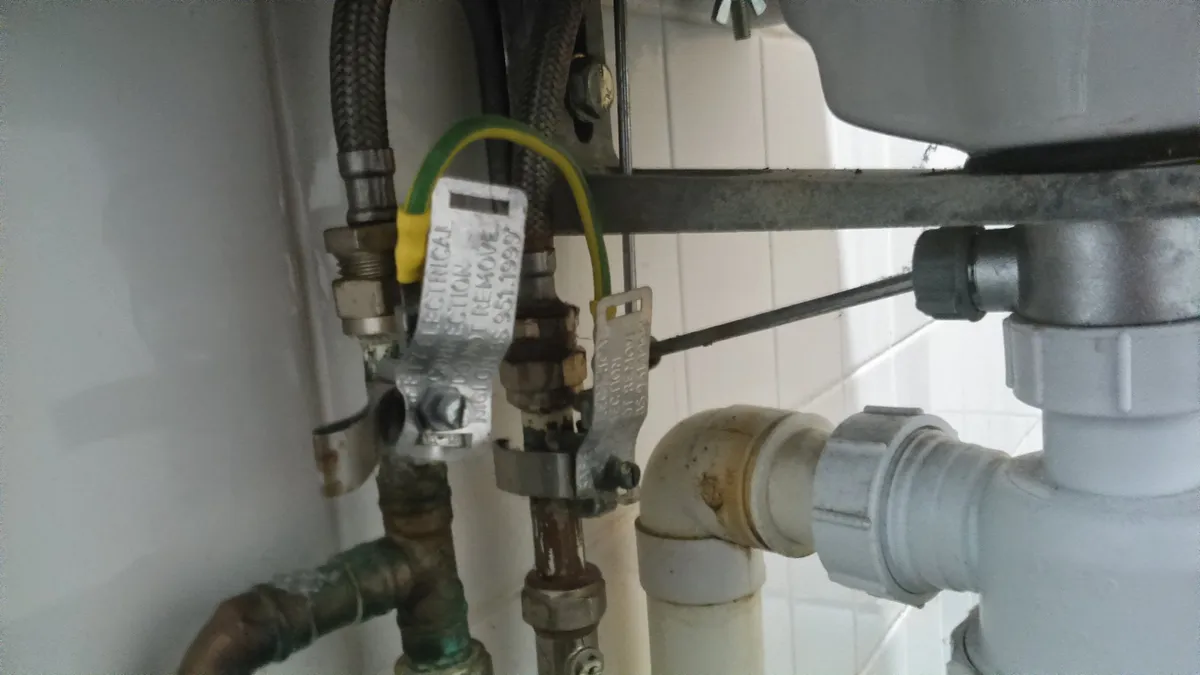
Most leaks that come back within a year were decided at the shop, not at the wall. A zinc tap that pits, a tank that grows algae because it is a single layer, a UPVC pipe on a hot line that softens, an angle valve that will not close when you need it to. This guide covers what quality means for each item, which marks to look for, and what to check before paying.
Pipes: match the pipe to the water
Four kinds of pipe appear in Indian homes, and each belongs in a particular place.
CPVC is the standard supply pipe for hot and cold water. Look for IS 15778 on the pipe and a class marking: SDR 11 is the thicker wall and the one for hot lines and pressure lines from a pump; SDR 13.5 is thinner and fine for a gravity cold line. Joints are made with CPVC solvent cement, not the UPVC kind; they are different tins and the wrong one fails quietly after a few months. Pipe and fittings are ₹60–₹250 per metre installed as material, with labour at ₹120 per metre exposed or ₹250 concealed.
UPVC is for cold water only. For pressure plumbing it is sold to ASTM D 1785 as Schedule 40 or the thicker Schedule 80; the IS 4985 pipe is the agricultural grade and is fine for overflow and drainage runs but is not what you want on a pump line. UPVC softens with hot water; never let anyone put it on the geyser outlet.
PPR is the green or grey pipe that is fused with a heat tool rather than glued. It is excellent for hot water and lasts, but not every plumber carries the welding iron, so it is for new work with a plumber who uses it, not for patching an existing CPVC line.
GI is the galvanised steel pipe in houses from before about 2005. It rusts from the inside, narrows with scale in hard water, and the threads crumble when touched. Do not buy it for new work. If the house is on GI, the plan is replacement by the metre, not repair by the joint.
On every pipe check three things: the IS or ASTM number is printed along the length, the wall thickness is even when you look at the cut end, and the fittings are the same brand and class as the pipe.
Taps: buy brass, buy a cartridge you can replace
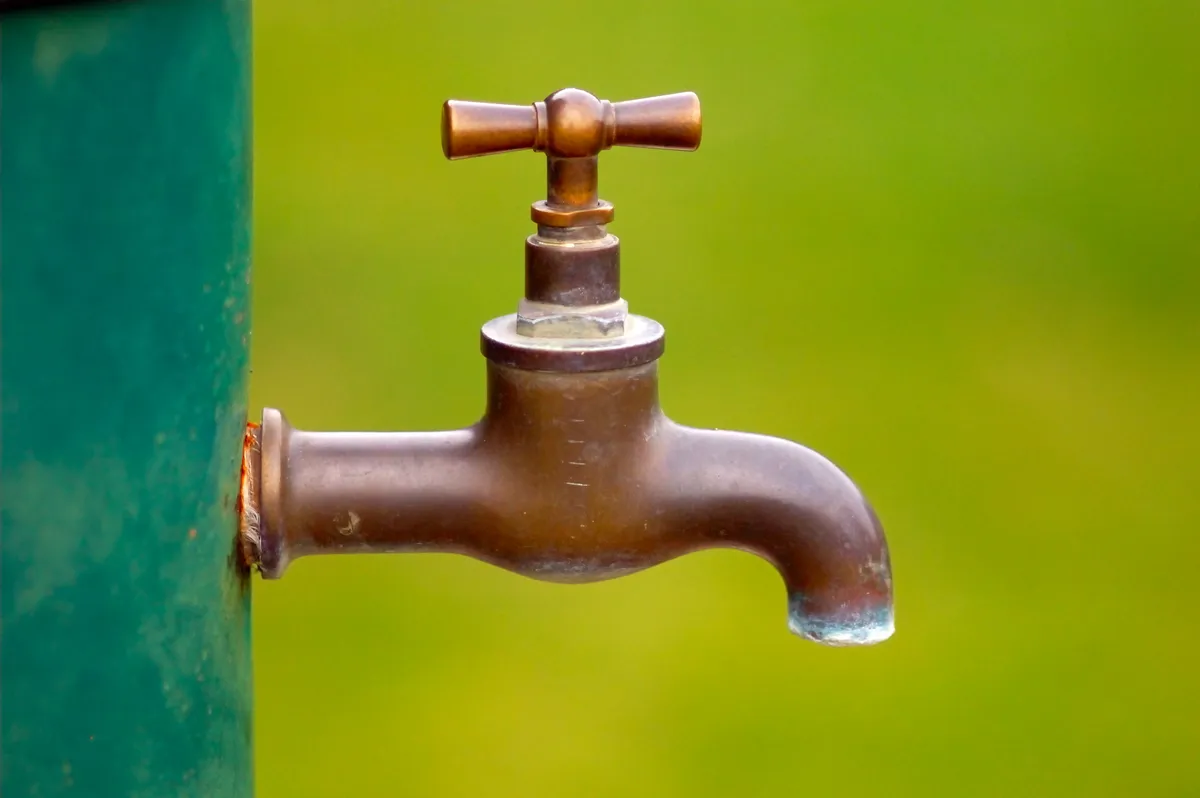
A tap is a brass body, a mechanism, and a chrome finish. The body is what matters. Zinc-alloy taps are lighter, cheaper and pit through within a few years in hard water; brass taps last decades. Pick the tap up: a brass half-inch bib tap is noticeably heavy. IS 8931 is the Indian standard for copper-alloy taps and stop valves and is a good sign on the box.
The mechanism is either a screw-down spindle with a rubber washer, or a quarter-turn ceramic disc cartridge. Quarter-turn is better: it does not grind a washer onto a seat every time you use it, and it closes fully with a quarter turn so nobody over-tightens it. The one thing to confirm is that the maker sells the cartridge separately. A tap whose cartridge cannot be bought is a tap you will replace whole at ₹250 labour plus ₹300–₹2,500 for a new one.
A basin mixer or a shower diverter is the same decision at a higher price, ₹1,500–₹8,000 for the fitting and ₹600 to fit. For a concealed diverter, buy the whole set from one brand so the body in the wall and the trim on the outside match; a mismatched trim on a buried body is a wall opened twice.
Sanitaryware: the number to carry is the trap distance
A WC is vitreous china, and IS 2556 is the mark to look for. What decides whether it fits is not the brand but the trap distance: the gap from the finished wall behind the WC to the centre of the floor outlet, usually about 4 inches, 8.5 inches or 12 inches in Indian bathrooms. Measure it, or have the plumber measure it, and buy a WC with the same figure. A mismatch means an offset connector, a slower flush and a joint that can leak.
Three more decisions on the WC:
- Floor-mounted or wall-hung. Wall-hung needs a concealed cistern and a steel frame in the wall, so it is a renovation decision, not a replacement one. The frame and cistern are ₹1,200–₹6,000 and ₹700 to fit, before the WC itself at ₹1,500.
- Dual flush. Standard now; the half flush saves water on a tank that is filled by tanker in summer.
- Rimless bowls are easier to keep clean in hard water, where the scale builds under a rim where you cannot see it.
A wash basin follows the same rules: look for the IS mark, decide between a pedestal, a half pedestal or a counter top, and buy the waste coupling and the bottle trap with it. Fitting with tap and trap is ₹900. A seat cover is ₹500–₹2,500 and worth buying with soft-close hinges because it is the part that breaks first.
Tanks: layers, litres and a lid that fits
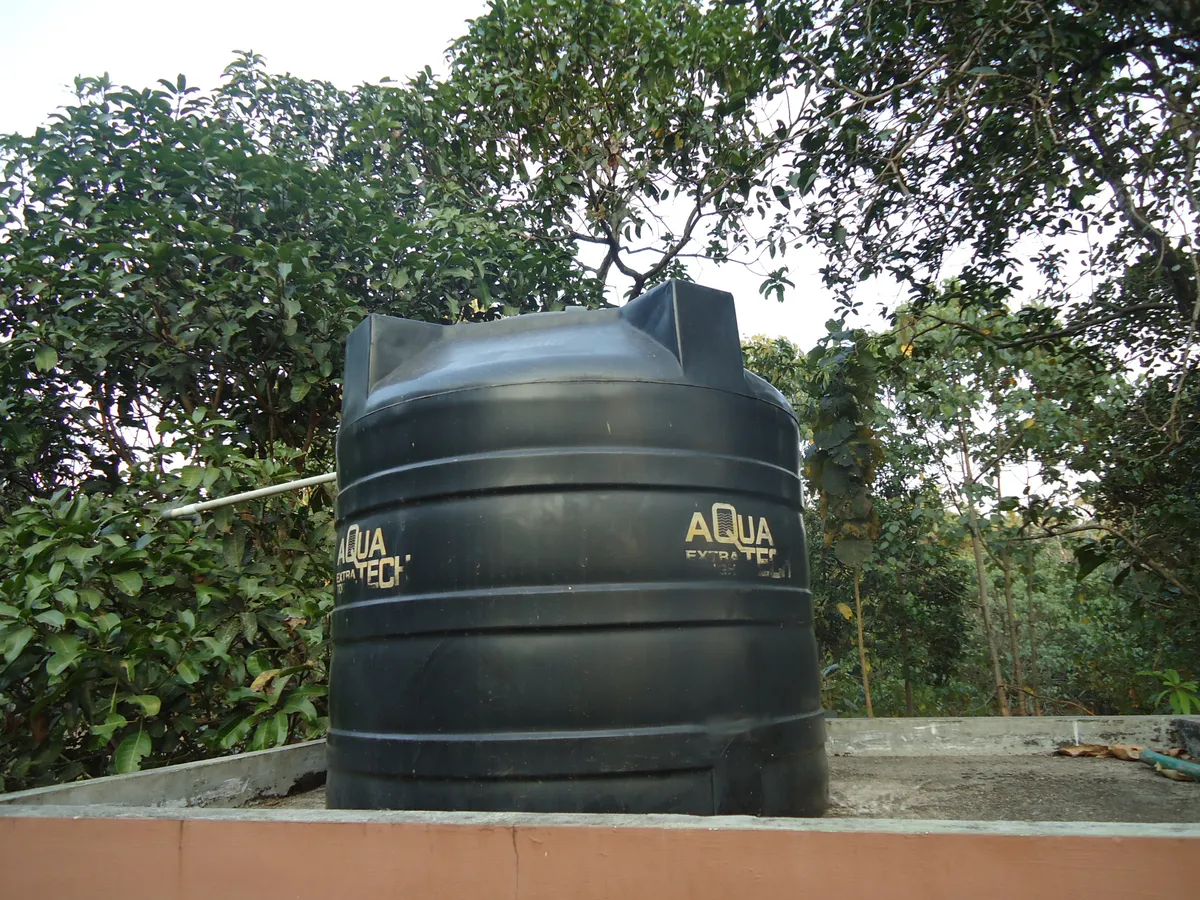
The overhead tank is rotomoulded polyethylene, and IS 12701 is the standard. The things that decide how long it lasts and how clean the water stays:
- Layers. A single-layer tank lets light through and grows algae. Buy a three-layer or four-layer tank with a black inner layer, and a UV-stabilised outer layer for a roof in the Indian sun.
- Capacity. Indian supply norms plan on about 135 litres per person per day. Keep at least a day's supply. A family of four is 500 to 750 litres with a daily fill; 1,000 litres if the supply is unreliable or tanker-fed.
- The lid. A threaded lid that seals keeps mosquitoes and dust out. A loose lid is why the water tastes of the roof in summer.
- The fittings. Inlet with a float valve, outlet with an isolation valve, an overflow that goes somewhere visible, and a drain plug at the bottom for cleaning.
A tank is ₹4,000–₹15,000 and ₹1,500 to fit on an existing stand. A stand and the lift to the roof are extra, and the plumber will tell you whether the slab can take a full tank where you want it; a thousand litres is a tonne.
Valves and connectors: the small parts that matter most
Angle valves sit under every basin, behind every WC and at every geyser inlet. They are the valve that lets a plumber work on one fitting without draining the house. Buy brass, from the same maker as the taps if you can, at ₹150–₹600 each. A zinc angle valve will not close when you need it most, which is at 11 pm with the basin tap spraying. Fitting is ₹200.
Flexible connectors join the angle valve to the tap. Buy stainless steel braided, not the plain plastic kind, and check the nut is brass. They are ₹100 to ₹300 and they are the second most common source of a drip under a basin.
PTFE tape and solvent cement are the plumber's, but it is worth knowing the brand of cement matches the pipe: CPVC cement for CPVC, UPVC cement for UPVC. "All-purpose" cement is for neither.
A float valve for the tank inlet, brass with a plastic ball, ₹200 to ₹600. The plastic ones stick, and a stuck float is either an overflowing tank or a dry one.
Geysers: pressure rating, tank lining, litres
The electrical side is covered in the electrician's buying guide; the plumbing side is three things on the label.
- Pressure rating. 6 bar is standard. 8 bar is for a high-rise where the overhead tank is many floors above the bathroom, or where a pressure pump feeds the line. Buy the rating for your building; a 6 bar geyser on a 12th-floor pressure line will weep at the inlet.
- Tank lining. Glass-lined or enamelled tanks resist hard-water scale and corrosion better than plain steel. In most Indian cities the water is hard enough that this decides the geyser's life.
- Capacity. 10 to 15 litres for a shower, 25 litres for a bath or a family that showers back to back, 3 to 6 litres for a kitchen or a basin.
IS 2082 is the standard for storage water heaters. The plumbing connection is ₹600, with two angle valves and two connectors on top.
Floor traps and drains
A floor trap, the nahani, holds a little water that blocks the smell from the drain. Buy one with a removable grating so hair can be cleared, and in a bathroom that drains slowly consider a multi-floor trap that takes the basin and the shower into one chamber. A stainless steel or brass grating lasts; a thin chrome one rusts through in a year. Replacing a trap or its jali is ₹350.
Where to buy
A sanitaryware shop, not a general hardware shop, for taps, WCs, basins and valves; they stock the cartridges and the seat covers and they will have seen your trap distance before. A pipe and fittings dealer for CPVC and UPVC, where the brands are complete and the solvent cement is fresh. Online for a branded geyser or a WC if you have confirmed the specification, and never for pipe, which gets crushed in transit.
Quick checklist before paying
- Pipe: IS 15778 (CPVC) or ASTM D 1785 (UPVC) printed on it, the class or schedule marked, same-brand fittings, the right cement.
- Tap: brass body, quarter-turn ceramic cartridge, the cartridge available as a spare.
- WC: IS 2556, the trap distance matches the floor outlet, dual flush, seat cover with soft-close hinges.
- Tank: IS 12701, three or four layers with a black inner, UV-stabilised, a threaded lid, a drain plug.
- Angle valves and connectors: brass and stainless braided.
- Geyser: the right pressure rating for your floor, a glass-lined tank, the litres for how you use it.
- The bill, with the brand and the model on it, kept for the warranty.