Masonry decisions are made once and lived with for twenty years, usually in a tile showroom with a mason waiting outside. These are the six that come up in almost every job, and the trade-offs in plain words.
Ceramic, vitrified, or stone
Ceramic is cheap, light, easy to cut, and glazed on the face. On a wall it is excellent and there is little reason to pay more. On a floor the glaze wears through at the doorway and the kitchen sink within a few years, and the body underneath absorbs water. ₹30 to ₹60 per sq ft.
Vitrified is fired to a dense body that absorbs almost nothing. Double-charged has the colour through the top layer and wears best; glazed vitrified, GVT and PGVT, carries a printed design under a glaze and comes in the marble and wood looks. For a living room, a matt or satin GVT; for a hall that sees sand and chappals, double-charged; for a bathroom floor, anything with an R10 or R11 slip rating, which rules out polished. ₹45 to ₹150 per sq ft and upwards.
Natural stone, granite, marble, kota, is a separate trade in many cities and priced per sq ft of laying plus polishing. It is beautiful, heavy, and needs sealing; kota is the cheap and hard-wearing one.
The labour for laying is ₹45 per sq ft for floors and ₹55 for walls regardless of tile type, until the tile is larger than 2 ft on a side, when the rate goes up because it is a two-person job with a levelling system.
Tile-on-tile, or remove and re-lay
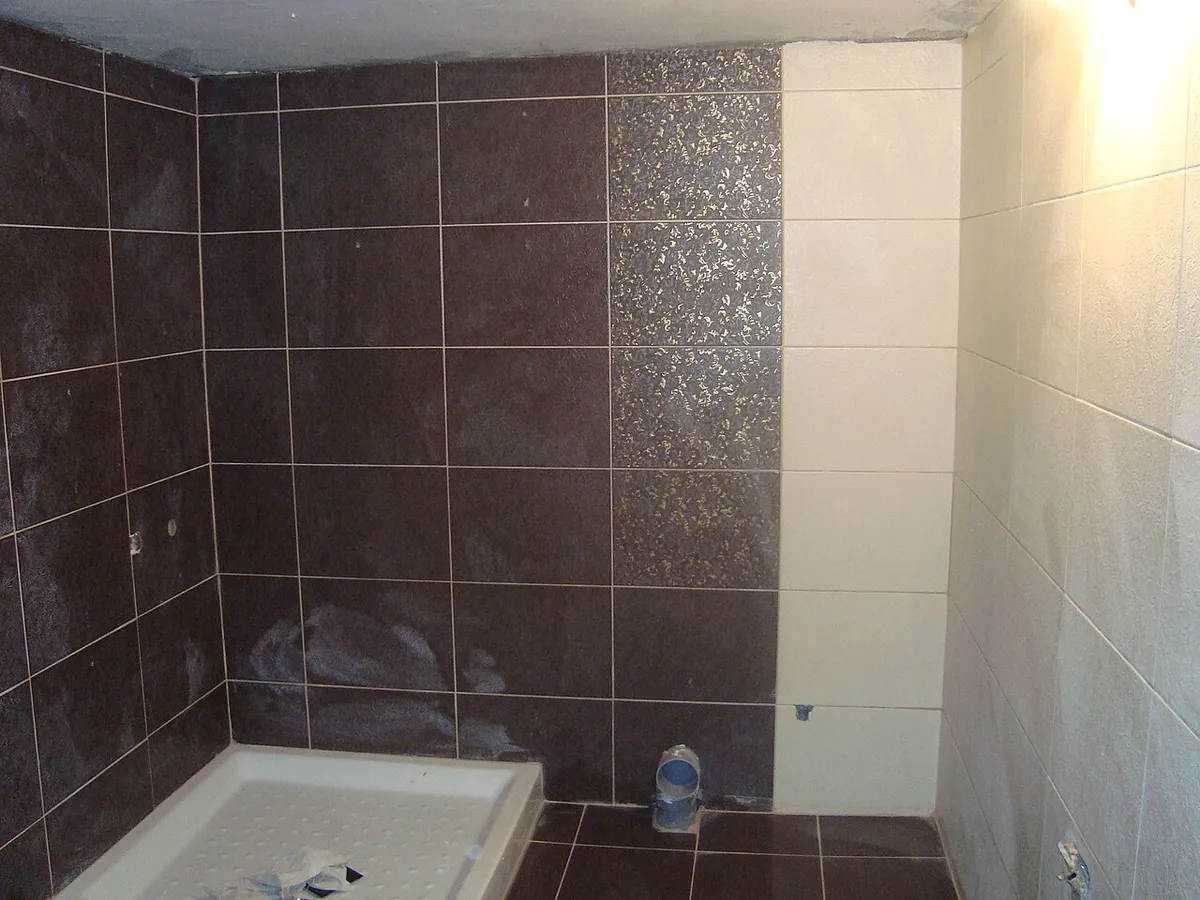
Laying a new floor over the old one with a Type 3 adhesive saves the ₹15 per sq ft removal, saves the debris and the tempo, and saves two days. It works when the old floor is sound, level and dry, and when the extra 10 to 15 mm of height does not fight with the doors and the threshold.
It is the wrong choice in three places. In a bathroom, because the waterproofing is under the old tiles and you cannot inspect or renew it. On a floor where more than a few tiles sound hollow, because you are building on a loose bed. And at a doorway where the new level will not meet the adjoining room.
The honest rule: tap the old floor. If it is solid and dry, tile-on-tile. If not, remove.
Red brick, fly-ash brick, or AAC block
For a new wall on the ground or on a foundation, red clay brick at ₹7 to ₹12 each is the traditional choice and still a good one where the kiln is good. Fly-ash brick at ₹5 to ₹8 is more uniform, absorbs less water, and uses less mortar; it is the better buy in cities where clay bricks are poor.
For a new wall on an existing slab, which is the usual case in a flat, the question is weight. A 9-inch brick wall at ₹90 per sq ft of labour weighs a great deal and almost no slab was designed for it. A 4.5-inch brick partition at ₹65 per sq ft is lighter. An AAC block wall at the same labour rate is a third the weight again, insulates better, and is what the engineer will usually approve. The catch is the mason: AAC needs a thin-bed adhesive, not mortar, and a mason who has not laid it will crack the joints. Ask.
For a bathroom wall that will carry wall tiles and a geyser, any of the three works; for a wall that will carry a kitchen platform, the engineer decides.
Cement grout or epoxy grout
Cement grout is cheap, mixed from a bag, easy to apply, and porous. In a bedroom it is fine for years. In a bathroom it goes black within a year, lets water through to the bed, and crumbles.
Epoxy grout is a two-part resin at ₹800 to ₹1,500 a kilo. It is waterproof, does not stain, and does not grow mould. It sets fast and is hard to clean off the tile face if the mason is slow, which is why the labour at ₹18 per sq ft is a separate line. For a shower area, behind a hob and around a sink, it is the best money in the room. Everywhere else, cement grout and a sealer.
Brickbat coba, or a chemical membrane
A terrace has to be waterproofed one way or the other, at ₹60 per sq ft of labour.
Brickbat coba is broken brick laid in lime or cement mortar, 75 to 100 mm thick, finished with a screed that is marked into squares. It builds the slope as it goes, it insulates the slab from the sun, and done well it lasts decades. It is heavy, it takes a week to lay and two more to cure, and on an old building the extra load needs an engineer's word.
A chemical membrane, acrylic or polyurethane, is painted onto a cleaned, cracks-filled, already sloped slab in two or three coats, with a fibre mesh in the corners and up the parapet. It is light, it goes on in two or three days, and it stretches over small cracks. It depends completely on preparation: a dusty slab, a missed corner, or a coat applied to a damp surface peels. It also needs a protective screed or tiles over it if the terrace is walked on, or it wears through.
If the existing coba is sound and only the screed has cracked, a membrane over the coba is the common and sensible middle path.
Day rate or job rate
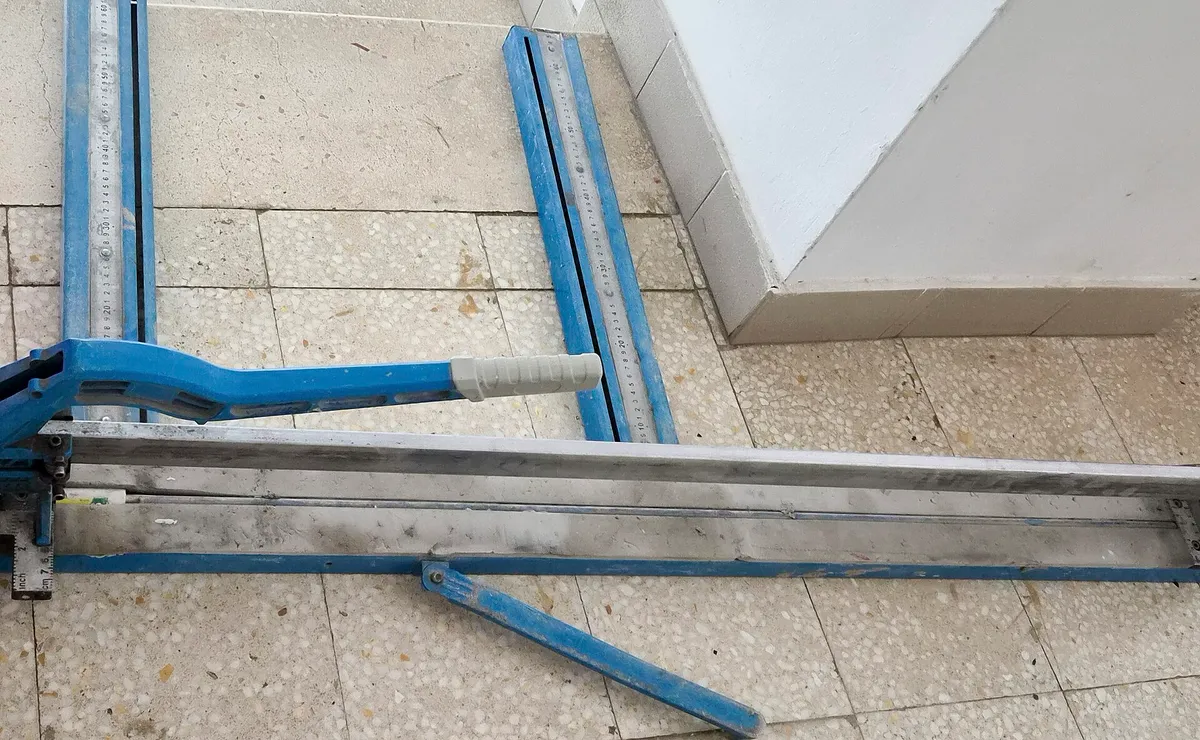
A mason on a day rate at ₹1,000 plus a helper at ₹600 is the right arrangement when nobody can measure the job in advance: a series of small repairs round the house, chasing walls for an electrician, a day of making good after a plumber. You supply everything and you manage the day.
A job rate, per sq ft or per unit, is right for everything you can measure: tiling, plaster, waterproofing, a wall, a bathroom at ₹15,000. The risk of a slow day is the mason's, the quote can be compared with another, and the scope is written down. For a renovation, the all-trades rate of ₹35,000 or ₹28,000 is a job rate for the whole, and should still be shown trade by trade.
The mistake is paying a day rate for a measurable job, which rewards slowness, or a job rate for an unmeasurable one, which rewards corner-cutting.
The pattern behind all six
In each case the cheaper option is right somewhere and wrong somewhere, and the place it is wrong is nearly always the wet area. Ceramic on a wall, tile-on-tile in a bedroom, cement grout in a hall, a 4.5-inch brick wall on a foundation: all fine. The same choices in a bathroom or on a terrace are the leak you will be reading the problems guide about in two years. Spend in the wet areas and save in the dry ones.
Related guides
The painter's choices guide covers what goes on the plaster. The architect's guides cover when a layout change is worth the structural work that comes with it.