Most arguments with a mason come from not knowing what is happening inside the wall. This is the system in plain words: what mortar is, why water is both the ingredient and the enemy, how a wall is built up in layers, and which of those layers you can safely touch yourself.
What holds a wall together
A brick wall is bricks and mortar. The mortar is cement, sand and water in a ratio by volume, written as 1:4 or 1:6, cement first. 1:6 is normal for brickwork; 1:4 is richer and used for plaster, for the bed under tiles and anywhere water will sit. Richer is not always better: a mortar with too much cement shrinks more as it sets and cracks.
Cement does not dry; it cures. Mixed with water it starts a chemical reaction that goes on for weeks, and the strength it ends up with depends on water being available for the first seven days at least. This is the single most misunderstood thing about masonry in India. A plastered wall that is left in May sun with no water on it loses the water to evaporation in hours, the reaction stops, and the surface stays soft and crazed with cracks. Sprinkling the wall twice a day for a week, or ponding water on a new floor by building a little mud dam around it, is not the mason being fussy. It is the job.
The bricks matter too. A dry clay brick sucks the water out of fresh mortar before it can cure, so bricks are soaked before laying. Fly-ash bricks and AAC blocks absorb less and need only a wetting.
The layers of a finished wall
From the inside out, a typical Indian wall is:
- The brick or block. A 9-inch wall is two bricks thick and carries load; a 4.5-inch partition is one brick thick and divides space. On an existing slab, only an engineer can say whether a new 9-inch wall is safe to add.
- Plaster. 12 to 15 mm of 1:4 cement-sand, thrown onto the wetted wall, levelled with a straight edge against screed strips, and floated smooth. It is the layer that makes the wall flat and keeps weather out. Cured for seven days before anything goes on it.
- Putty. A thin skim of white cement-based or acrylic putty, two coats, sanded, that gives the smooth face paint needs. Some masons do it, most painters do.
- Primer and paint. The painter's layers, covered in the painting guides.
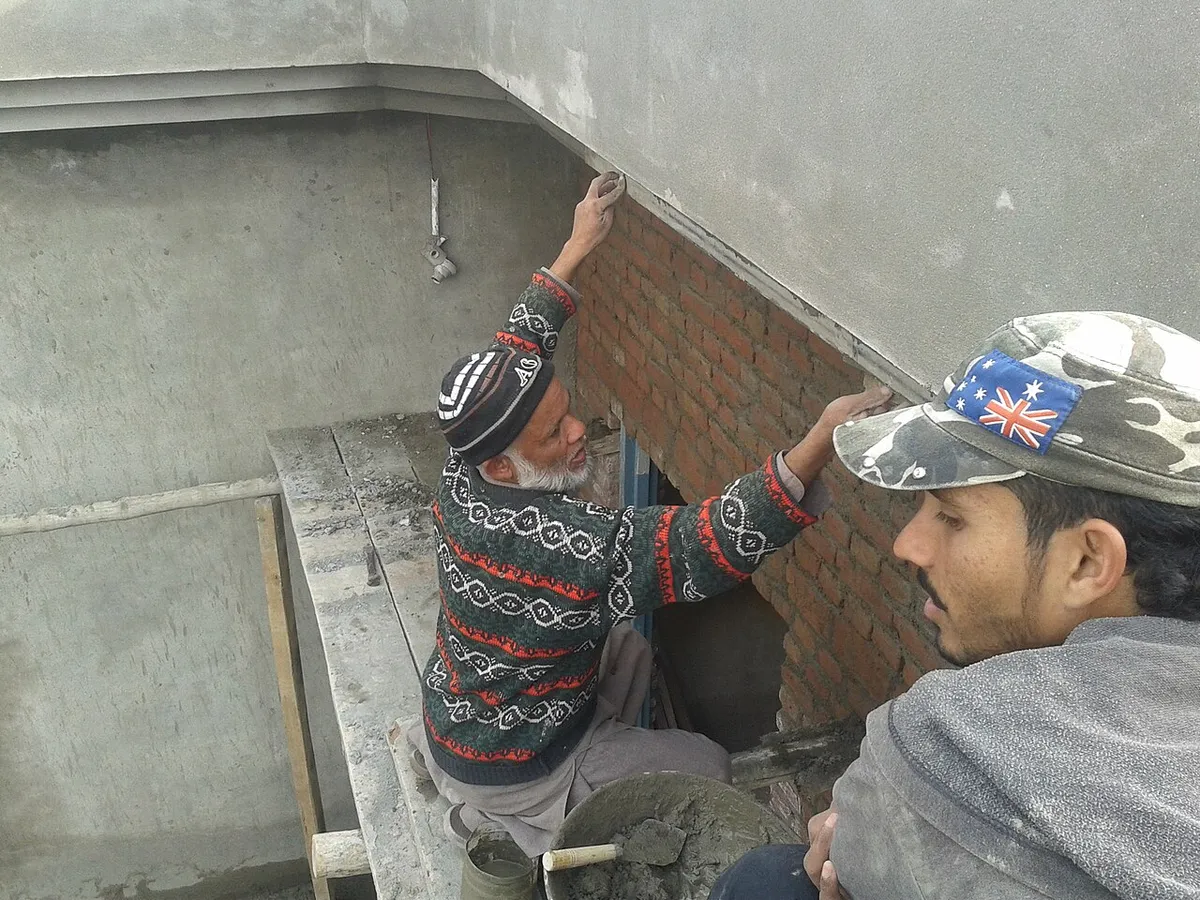
Every one of those layers can fail if the one under it is wet, dusty or uncured. A painter who paints on week-old plaster gets blisters. A mason who plasters over a loose, hollow patch gets a crack along the same line a year later.
How a floor is tiled
A tiled floor is also layers. On a new slab, the mason spreads a bed of 1:4 or 1:6 mortar 25 to 40 mm thick, levels it, dusts cement slurry on top, and presses each tile in, tapping it with a rubber mallet so the back is fully in contact. Plastic spacers set the joints, 2 to 3 mm for rectified tiles and up to 5 mm for unrectified. The floor is left for a day, then grouted, then kept off for another day.
On an existing floor, or on a wall, or for large tiles, a bagged adhesive replaces the slurry: combed onto the surface with a notched trowel, tile pressed in with a twist. The adhesive method is more forgiving and is the right one for bathrooms.
The test of a tiled floor is the tap. A tile that was pressed in fully sounds solid; one with a void under it rings hollow and will crack the first time something heavy lands on it. A careful mason taps every tile before grouting and lifts the hollow ones. Floor labour is ₹45 per sq ft, wall labour ₹55, and the difference is the time spent holding tiles on a vertical face while the adhesive grabs.
Where water gets in, and why it decides everything
Almost every masonry problem in an Indian home is a water problem wearing a disguise. Peeling paint, bubbling plaster, white salts on the wall, a musty bedroom, hollow tiles, rust stains on a balcony ceiling: water.
There are only a few ways in.
From above. A terrace or a balcony with no slope or a blocked drain holds water, and water finds the hairline cracks in the slab. The stain appears on the ceiling of the room below, often a metre from the actual leak.
From a bathroom. Bathroom floors are tiled, but the joints and the floor trap are not waterproof. Water goes through the grout, through the bed, and shows up on the ceiling or the wall of the room below or next door. This is why bathroom waterproofing at ₹6,000 is done before the tiles, not after: a coating over the whole floor and 30 cm up the walls, water-tested for two days.
From the ground. Rising damp in ground-floor walls, where the wall wicks water up from the soil because the damp-proof course was never built or has failed. The tide mark is a metre or so above the floor and the salts are white.
Through the outside wall. Driving rain through cracks in exterior plaster or through unfilled joints around pipes and window frames.
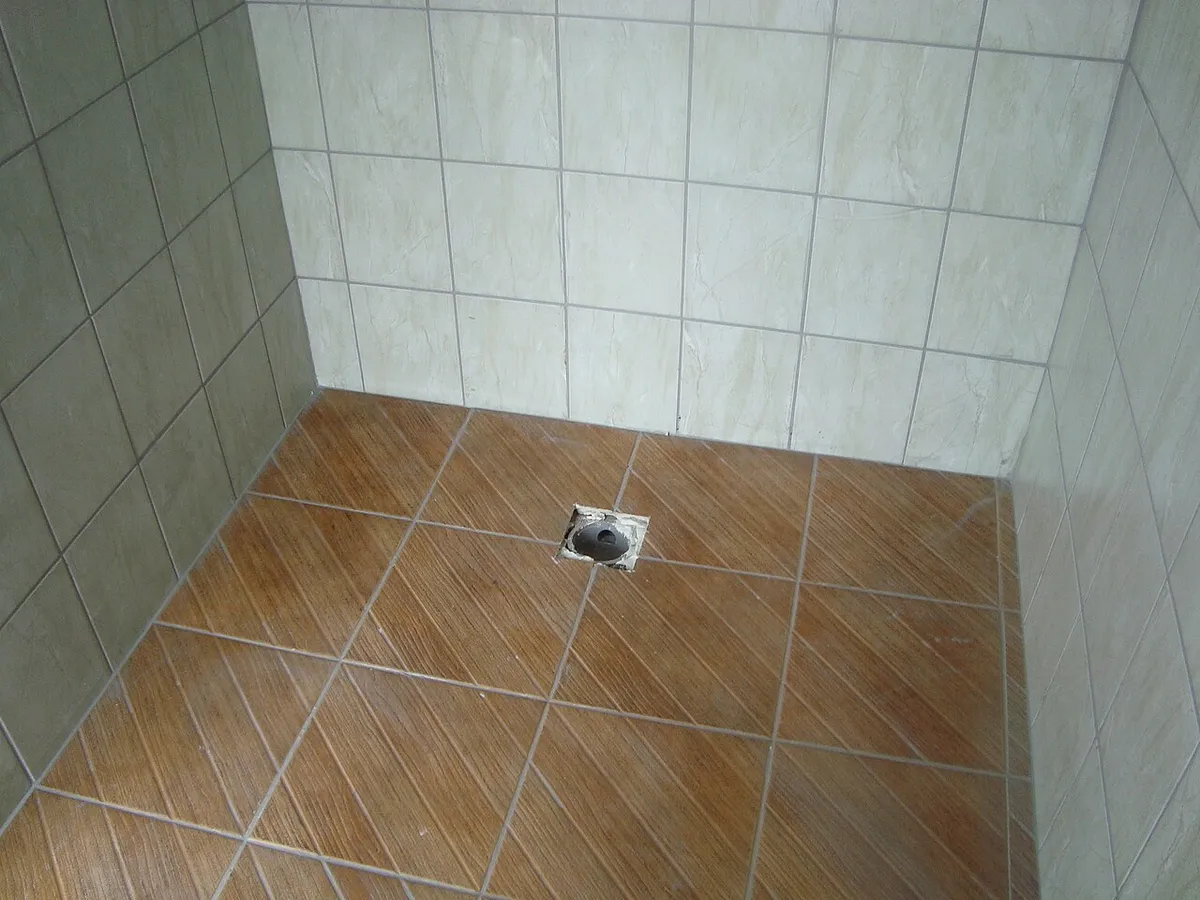
The treatment for seepage, at ₹45 per sq ft, is scraping the damaged plaster, applying a waterproof coat, and re-plastering. It works only if the source has been found and stopped. Treating your ceiling while the neighbour's bathroom above still leaks is money spent on a wall that will be wet again by the next monsoon.
Efflorescence and what it tells you
The white, fluffy or crystalline deposit on brick and plaster is efflorescence: salts dissolved in water inside the wall, carried to the surface, and left behind when the water evaporates. It is harmless itself and brushes off dry. What it tells you is that water is moving through the wall, and that the wall is drying on the side you can see. Painting over it does not work; the paint lifts. Find the water, let the wall dry, brush the salts off, and then finish.
Cracks: shrinkage or structure
Plaster and mortar shrink as they cure. Fine cracks in a random map pattern, or along the line where a brick wall meets a concrete column or beam, are shrinkage and movement at the junction of two materials. They are filled with a flexible filler and painted. A crack repair is ₹1,200 per job.
A different kind of crack runs diagonally from the corner of a window or door, is wider at one end than the other, goes through the plaster and into the brick, or appears on both faces of the wall. That is the wall moving, and the cause is below it: a settled foundation, a cut beam, a removed wall. A mason fills it; an engineer explains it. Get the explanation first.
Lintels, chasing and the things that must not be cut
Over every door and window there is a lintel, a small reinforced concrete beam that carries the wall above the opening. Columns and beams carry the slab. None of these may be cut, chased for a pipe or drilled through without an engineer. A mason who agrees to chase an electrical conduit across a beam, or to widen a window by cutting the lintel, is agreeing to something that is not theirs to agree to.
Chasing a brick wall for pipes and conduits is normal, provided the chase is no deeper than a third of the wall and is filled with mortar and chicken mesh before plastering so the line does not crack.
What is fine to do yourself, and what is not
Fine: filling a hairline crack with ready filler, re-grouting a few joints with a grout pen, brushing efflorescence, sealing around a pipe with silicone, laying a few tiles on a balcony with adhesive if you have the patience.
Not fine: anything on a terrace or a bathroom floor, because the waterproofing under it is the job; removing or building a wall; anything involving a beam, column, lintel or the slab; plastering a wall you will paint, because the cure and the flatness are the skill.
For those, a mason at ₹1,000 a day with a helper at ₹600, or a job rate from the cost guide, is cheaper than doing it twice.