Every mason on TheHire sees the same ten problems. For each: what it usually is, what you can safely try first, when to call, and what the call should cost in labour in a typical Indian city.
1. A damp patch that comes back after every monsoon
Usually: water getting in from above, through a terrace, a balcony or a bathroom, and travelling along the slab before it shows. The patch is rarely directly under the leak.
Try first: go up. Check the terrace for standing water and blocked drains, the balcony above for a cracked floor, the bathroom above for soft grout. In a flat, talk to the neighbour upstairs before anyone touches your ceiling.
Call for: finding and sealing the source, then ₹45 per sq ft to scrape, treat and re-plaster the patch. If the source is the terrace, that is ₹60 per sq ft and a dry-season job.
2. Paint bubbling and plaster coming off in sheets
Usually: plaster that was laid on a dry, dusty wall and never bonded, or plaster that has been wet from behind for so long that it has lost its strength. Behind the bubble the plaster is hollow and soft.
Try first: tap around the bubble with a coin to find how far the hollow goes. Mark the edge with a pencil.
Call for: cutting out the hollow area back to sound plaster and re-plastering, which is ₹28 per sq ft for the patch, or ₹1,200 as a job if it is small. The painter comes after the seven days of curing, not before.
3. White powder or crystals on the wall
Usually: efflorescence, salts carried through the wall by water and left behind when it evaporates. It is a sign of water movement, not a disease of the brick.
Try first: brush it off dry with a stiff brush and watch whether it returns. If it does, water is still moving.
Call for: the source, which is one of the previous two problems. Once the wall is dry the finish is the painter's job; a mason only needs to be involved if the plaster has been damaged.
4. A crack in the wall
Usually: shrinkage in the plaster, or movement where brick meets a concrete column or beam. These cracks are fine, follow a straight junction or a random map pattern, and do not change over a year.
Try first: put a pencil mark across the ends of the crack and date it. Check in three months. A crack that has not grown is cosmetic.
Call for: a crack repair at ₹1,200, V-cut, filled and plastered, for a stable crack. A diagonal crack from a window corner, a crack wider at one end, or one that appears on both faces of the wall is structural movement and needs an engineer before any mason fills it. Filling it hides the evidence.
5. Tiles that sound hollow or have cracked
Usually: tiles laid with voids under them, on a bed that was too dry or on adhesive that was not combed over the whole back. Vitrified tiles are hard and brittle; a void under one is a crack waiting for a dropped pan.
Try first: tap the whole floor with a coin and mark every hollow one with a sticker. Do not use a hollow tile as the floor under a heavy appliance.
Call for: lifting and re-laying the hollow tiles with spares from the same batch, a half-day to a day at ₹1,000 with a helper at ₹600. If half the floor is hollow, the bed was bad and the honest answer is removal at ₹15 per sq ft and re-tiling at ₹45.
6. Grout that is black, crumbling or missing
Usually: cement grout that has absorbed water and dirt for years, or joints that were never filled fully. In a bathroom, this is the path water takes to the room below.
Try first: scrub with a stiff brush and a bathroom cleaner. If the grout comes away as you scrub, it has failed.
Call for: raking out and re-grouting with epoxy at ₹18 per sq ft. In a shower area it is the best small job in the house.
7. Water on the floor below the bathroom
Usually: no waterproofing under the bathroom tiles, or a failed one. Sometimes a leaking concealed pipe, which the plumber finds by pressure test before the mason opens anything.
Try first: stop using that bathroom for two days and see if the patch below dries. If it does, it is the floor. If it does not, it is a pipe or the water line.
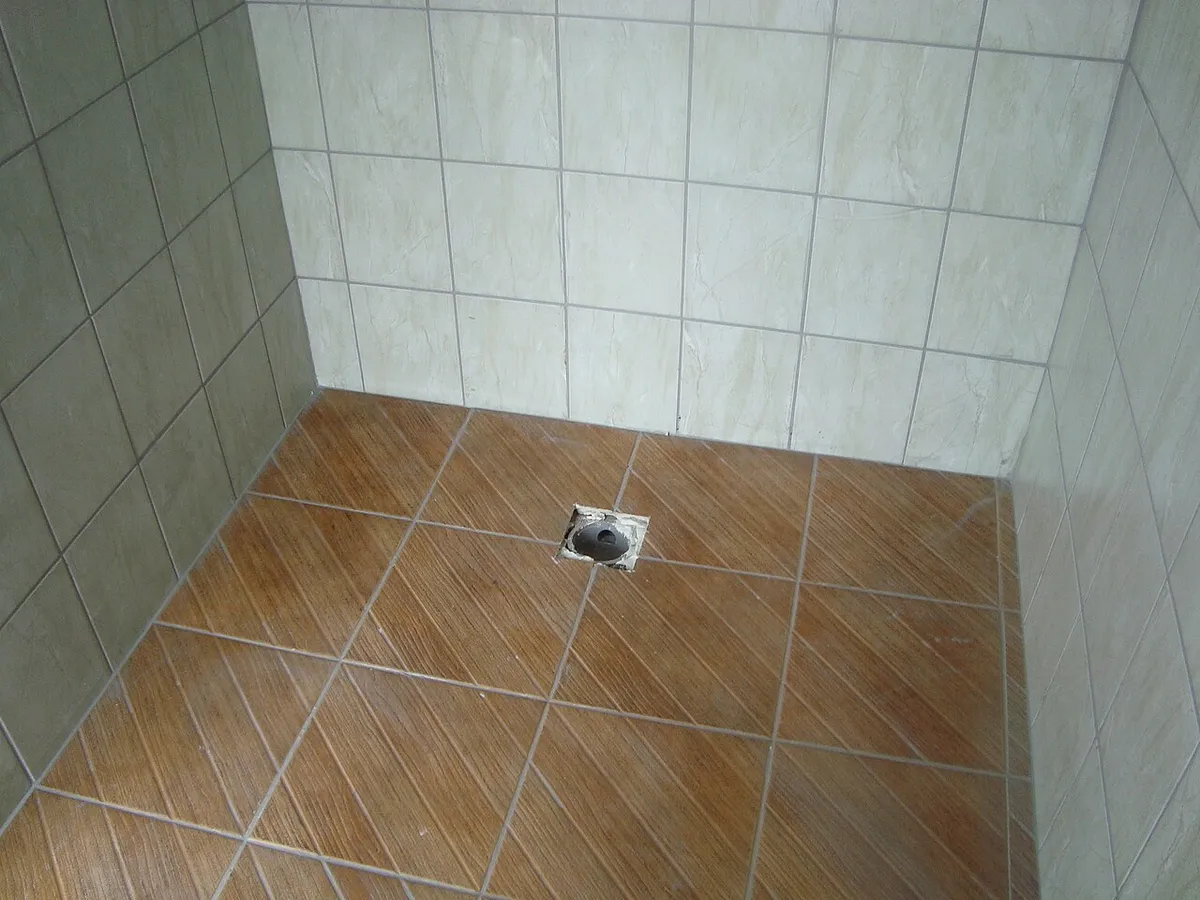
Call for: the plumber first, then the mason for removal, waterproofing at ₹6,000, and re-tiling at ₹15,000. There is no fix that keeps the tiles.
8. A terrace that leaks
Usually: standing water from no slope or blocked drains, a waterproof layer that has reached the end of its life, or a parapet junction that was never sealed. Water pipes and AC drain lines laid across the terrace often hold water against the slab.
Try first: clear every drain and look for puddles the morning after rain. Look at the parapet joint for a dark line.
Call for: re-waterproofing at ₹60 per sq ft, either brickbat coba or a membrane, with the slope rebuilt and the parapet turned up. It is a dry-season job and the whole terrace, not the patch, because water travels under a partial repair.
9. Concrete falling from a balcony or chajja, steel showing
Usually: spalling. Water has reached the reinforcement, the steel has rusted and expanded, and the concrete over it has been pushed off. Common on balconies, chajjas and the underside of old slabs.
Try first: nothing on the structure. Keep people from standing under it and photograph it.
Call for: an engineer's opinion first, then a slab patch at ₹6,000 if the engineer says it is local: the loose concrete cut back, the steel cleaned and treated, and the section rebuilt with a repair mortar and bonding agent. Plaster over the rust is not a repair.
10. A new wall or platform has cracked at the junction
Usually: the junction between new and old work, or between brick and concrete, was not bridged with mesh before plastering. The two materials move differently and the plaster splits along the line.
Try first: nothing. It is a known weak line.
Call for: cutting the plaster back along the junction, fixing chicken mesh or fibre mesh across it, and re-plastering, at ₹1,200 per job for a short run. Ask for the mesh on every junction the next time a wall is built; a partition is ₹65 per sq ft either way.
The pattern behind all ten
Nine of these ten are water. The tenth is movement. A mason who starts every visit by asking where the water is coming from, and who says "engineer" without being asked when a crack is diagonal, is the mason to keep. The visit charge is ₹300, waived when the work goes ahead, and the hour spent finding the source is the most valuable hour in the job.