Masonry materials are bought by the bag, the thousand and the box, and the shop will sell you whatever you point at. This guide is the questions to ask before you point. For each material: what quality means, what to check, and roughly what it costs in a typical Indian city.
Cement: the grade matters less than the freshness
Three kinds sit on the shop floor and the bags look alike.
OPC 43 is ordinary Portland cement that reaches 43 MPa at 28 days. OPC 53 reaches 53 MPa, sets faster and gives off more heat as it cures. PPC is Portland pozzolana cement, OPC blended with fly ash; it gains strength more slowly, generates less heat, and shrinks less.
For the jobs a mason does in a home, PPC or OPC 43 is the right choice. Plaster, tile beds, brickwork mortar and waterproofing screeds all want a cement that does not crack as it dries, and PPC's slower, cooler cure is exactly that. OPC 53 belongs in structural concrete, where early strength matters and a structural engineer has specified it. A mason who insists on 53-grade for plaster is buying the number on the bag, not the result on the wall.
What to check:
- The ISI mark and the IS number. IS 269 for OPC, IS 1489 for PPC. The mark is printed on the bag with a licence number.
- The manufacturing date. Cement loses strength from the day it is bagged, roughly a fifth in three months and more in the monsoon. Do not accept a bag older than three months, and never one with hard lumps you cannot crumble with your fingers.
- The weight. 50 kg. A bag that feels light or has been re-stitched has been opened.
- Storage. On a pallet or planks, off the floor, away from the wall, under cover, and used within a fortnight of buying. A bag that has sat on a damp garage floor for the monsoon is for the garden path, not the wall.
A bag of PPC is ₹330 to ₹400 and OPC 53 ₹380 to ₹450 depending on brand and city. A 100 sq ft wall takes roughly one bag for 12 mm plaster, and a 9-inch brick wall takes about one bag per 20 sq ft including the mortar joints.
Bricks and blocks: three choices, one test
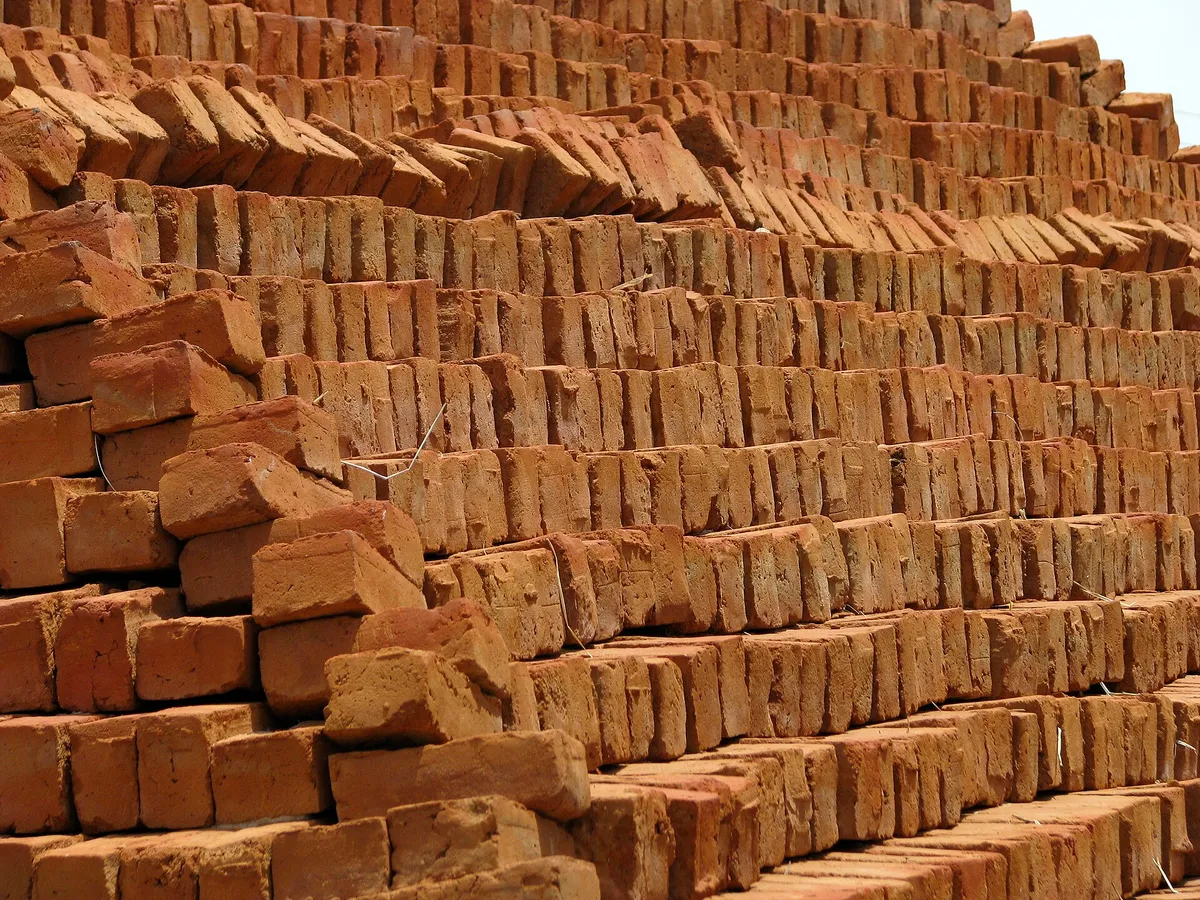
Red clay bricks are the default across most of India. A first-class brick is uniform in colour, has sharp edges, rings when two are knocked together, and does not break when dropped from a metre onto hard ground. It should absorb no more than a fifth of its weight in water after 24 hours of soaking. Second-class bricks are slightly misshapen and fine for walls that will be plastered; third-class crumbles at the corners and belongs nowhere in a house. Price is ₹7 to ₹12 each delivered, and bricks are quoted per thousand.
Fly-ash bricks are made from thermal power plant ash with lime and gypsum. They are more uniform than clay bricks, absorb less water, need less mortar because the faces are flat, and cost ₹5 to ₹8 each. Their strength is comparable to a good clay brick. In cities where clay bricks are poor and expensive, fly-ash is the better buy; the one caution is to buy from a maker whose bricks have been cured properly, because an under-cured fly-ash brick is weak and the shop will not tell you.
AAC blocks, autoclaved aerated concrete, are the large grey lightweight blocks used in apartment construction. One block replaces seven or eight bricks, they are a third the weight, and they insulate better. They are the right choice for a new partition on an existing slab because the slab carries far less load. They need a thin-bed adhesive rather than ordinary mortar, and a mason who has not used them before will lay them like bricks and the joints will crack. A 600 by 200 by 100 mm block is ₹45 to ₹70.
Whichever you buy, soak clay bricks for a few hours before laying so they do not pull the water out of the mortar; fly-ash and AAC need only a wetting.
Sand: river versus manufactured
River sand is becoming scarce and expensive, and in many cities it arrives with silt and clay that weaken mortar. Manufactured sand, M-sand, is crushed rock graded to size; it is consistent and cheaper, and it is now the normal choice for plaster and tile beds in most of south India. For plaster ask for plastering-grade M-sand, which is finer. The simple field test for any sand: rub it between wet fingers. If it leaves a muddy stain, there is too much silt.
A tractor-load or unit of sand is sold by volume and prices vary enormously by city and distance from the quarry; ask the mason how many units the job needs and get the delivery note.
Tiles: read the box, not the showroom
Tiles are where most of the money goes and where the most quiet substitution happens. The things that matter are printed on the box.
Ceramic tiles are a clay body with a glazed face. They are light, easy to cut, cheap, and fine for walls. On floors they wear through the glaze at doorways within a few years. ₹30 to ₹60 per sq ft.
Vitrified tiles are pressed and fired to a dense body that absorbs almost no water, under 0.5 percent. Double-charged vitrified has the colour running through the top layer and wears well; glazed vitrified, GVT, and polished glazed vitrified, PGVT, carry a printed design under a glaze and look like marble or wood. For a floor that will see sand and chappals, double-charged or a matt GVT with a decent wear rating outlasts a shiny PGVT. ₹45 to ₹150 per sq ft and upwards.
What to check:
- Grade. Boxes are stamped Grade 1, Standard or Premium for first quality; Grade 2 or Commercial is seconds with colour variation and size tolerance. Seconds are fine for a store room, not a living room.
- Batch and shade number. Every box in the order must carry the same batch and shade code, or the floor will have a visible patch. Open three boxes at the shop and lay tiles side by side.
- Water absorption. Printed as a percentage. Under 0.5 for vitrified, under 3 for a good ceramic. Bathroom floors want the lowest you can get.
- Slip rating for wet floors. R10 or R11 for bathrooms and balconies. A polished PGVT in a bathroom is a fall waiting to happen.
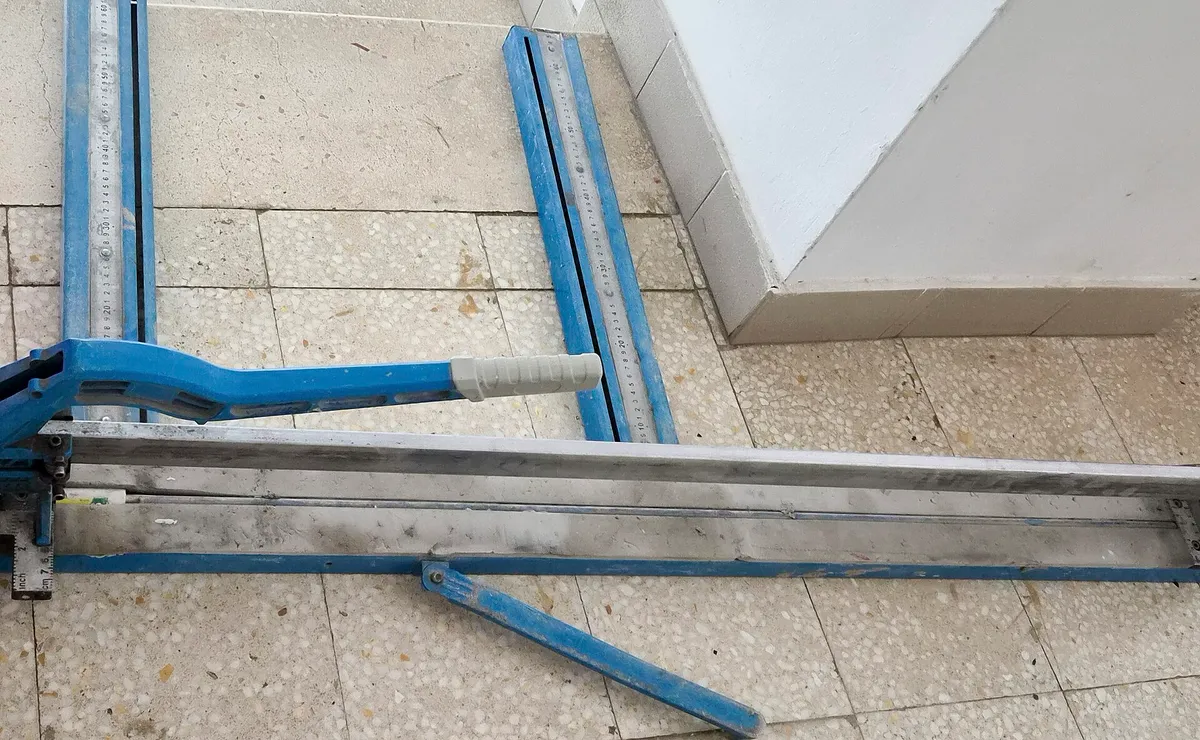
- Size and rectification. Rectified tiles have ground edges and can be laid with 2 mm joints; unrectified need 3 to 5 mm. Large formats above 2 ft need a flat floor and two people, and the laying rate goes up.
Adhesive, grout and spacers
Tiles on a cement-sand bed is the traditional Indian method and still fine for floors with vitrified tiles if the mason uses a slurry of cement and a bonding agent. Tile adhesive, sold in 20 kg bags at ₹400 to ₹900, is the right choice for tile-on-tile, for walls, for large formats and for anything in a bathroom. Ask for a Type 2 adhesive for vitrified and a Type 3 for tile-on-tile or stone.
Grout fills the joints. Cement grout is cheap and stains within a year in a kitchen or bathroom. Epoxy grout at ₹800 to ₹1,500 a kilo is waterproof, stain-proof and worth it in a bathroom and behind the hob; the mason's labour for epoxy grouting is ₹18 per sq ft because it sets fast and takes care. Plastic spacers cost almost nothing and decide whether the joints are straight; a mason who lays by eye without them is a mason to watch.
Waterproofing compounds
Three families, and the mason should name which one they intend to use. Integral compounds are a liquid added to the mortar mix, ₹100 to ₹200 a litre, and help but do not waterproof on their own. Cementitious coatings are a two-part powder and liquid brushed on in two coats, ₹150 to ₹300 a kilo, and are the normal bathroom treatment before tiling. Acrylic or polyurethane membranes are painted on terraces and parapets, ₹300 to ₹600 a kilo, and stretch over small cracks. The brand matters less than the number of coats and the water test afterwards.
Where to buy
A dedicated building materials shop near a construction cluster has fresher cement than a general hardware shop, because stock turns over. Tile showrooms of the big brands sell firsts; the small shops that sell the same brand for 30 percent less are often selling seconds without saying so, which is why you read the box.
Quick checklist before paying
- Cement: ISI mark, date under three months, no lumps, 50 kg.
- Bricks: ring test, drop test, sharp edges; ask for the kiln's name.
- Sand: finger test for silt; plastering grade for plaster.
- Tiles: Grade 1, same batch and shade on every box, absorption and slip rating on the box, 10 percent extra.
- Adhesive and grout: type on the bag, epoxy for wet areas.
- Waterproofing: product named on the quote, two coats, water test.
Buying well costs the same hour it takes to buy badly, and the labour to lay it, at ₹45 per sq ft for a floor, is the same either way. The difference shows up in year three.