You do not need to be an entomologist to understand what the technician is doing in your kitchen. Ten minutes with this and you will know why gel beats spray, why termites need drilling, why bed bugs need two visits, why fogging is nearly useless on its own, and which chemicals are safe to have around children and a dog.
Gel baits: the nest does the work
A cockroach gel is food laced with a slow-acting insecticide, usually fipronil or imidacloprid. A cockroach eats it, walks back to the harbourage behind the platform, and dies there a day later. Other cockroaches eat the dead one and the droppings, and the dose passes along. One dot of gel in the right place kills a colony that a litre of spray would only scatter. This is why the technician's ₹2 per sq ft treatment is mostly a tour of the places you cannot see: the switchboard, the sink trap, the hinge side of cabinet doors, the back of the fridge.
Gel is also why a modern treatment does not need you to leave the house. The dots are tiny, they are placed out of reach, and nothing is in the air.
Residual sprays: a film that keeps working
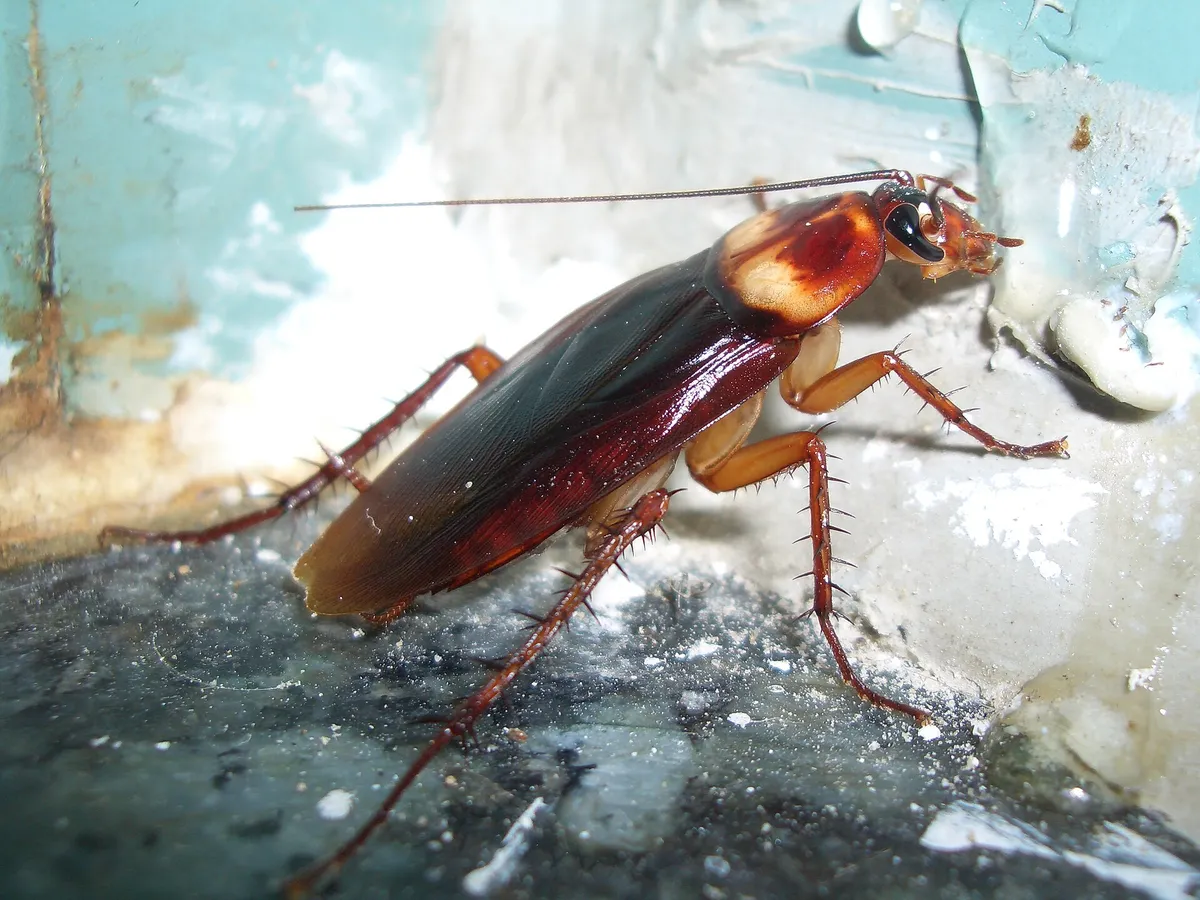
The other half of a cockroach treatment is a residual spray along the skirtings, the drain edges and the bathroom floor junctions. The chemicals are pyrethroids, cypermethrin, deltamethrin or lambda-cyhalothrin, synthetic cousins of the compound in chrysanthemum flowers. They dry to a film that kills an insect walking across it for weeks. This is what stops the big American cockroaches coming up from the drain, which the gel in the kitchen does not reach.
Two consequences follow. You should not mop the treated skirtings for about a week, or you wash the film off and the warranty with it. And pyrethroids are highly toxic to fish and to cats more than dogs, which is why the technician asks about an aquarium and why it must be covered with its air pump switched off; the pump pulls the airborne spray into the water.
The herbal and odourless options
"Herbal" in Indian pest control usually means a plant-derived or low-odour formulation, often with a lower pyrethroid concentration or a botanical like neem or pyrethrum. It is milder, not stronger. It lets a family with an infant, a pregnant woman or an asthmatic stay in the house during treatment, at ₹1 per sq ft on top. It may need repeating sooner. "Odourless" is the same idea with a solvent that does not smell; the active ingredient is still an insecticide and the same precautions apply.
Termites: the barrier in the ground
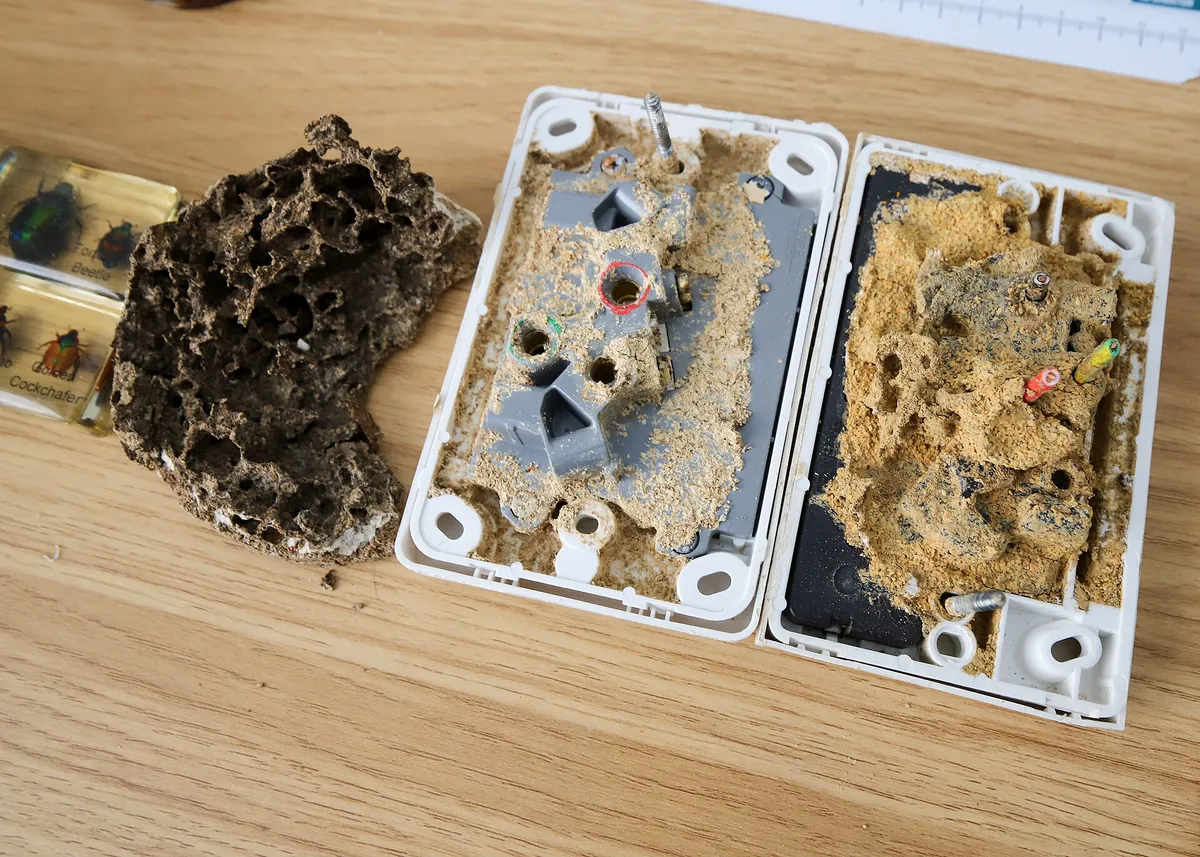
Subterranean termites, the kind that eat Indian houses, live in the soil and come up through cracks in the floor and the wall-floor junction, building mud tubes to stay damp as they travel. They do not need to be inside the wood to reach it; they need a damp path to it. So the treatment is not about spraying the wood. It is about putting a termiticide in the soil and the junction so that the path is cut.
Post-construction, the technician drills 12 mm holes at about 30 cm intervals along the wall-floor junction inside and outside, at an angle, and injects an emulsion of the termiticide so that it soaks into the soil below the floor. The holes are sealed with white cement. Door and window frames get drilled and injected where they meet the floor. This follows IS 6313 Part 3 and costs ₹7 per sq ft with a one-year warranty.
Pre-construction, at ₹12 per sq ft, the same chemical goes into the foundation trenches, the backfill, the plinth fill and the external perimeter at each stage of the build. It is the only time the whole soil under the house can be treated.
The chemicals are chlorpyrifos, imidacloprid, fipronil or bifenthrin. Chlorpyrifos is the older, cheaper, more pungent one. Imidacloprid and fipronil are non-repellent, meaning termites walk through the treated soil without noticing and carry the dose back, which is why the modern treatments outperform the old ones. Ask which is being used; the answer tells you what you are paying for.
Wooden furniture with no ground contact is a different pest, usually drywood termites or powder-post beetles, and the treatment is drilling the piece and injecting it, ₹900 per wardrobe.
Bed bugs: why it is always two visits
Bed bugs hide in seams and cracks within a couple of metres of where people sleep, and they come out at night to feed. A spray kills the adults and nymphs it reaches. It does not kill eggs, which hatch over 7 to 10 days. So the first visit kills what is alive, the second visit 10 to 15 days later kills what has hatched, and the warranty runs from the second. Skipping the second visit is the single most common reason a bed bug treatment "did not work".
The treatment is a pyrethroid or a carbamate spray on the mattress seams, the bed frame joints, the headboard, the skirting behind the bed, switchboards and picture frames, sometimes with steam on the mattress. Pyrethroid resistance is common in bed bugs, which is why a good technician rotates chemicals for the second visit or adds steam. It is ₹1,500 for one room or ₹4 per sq ft for the home.
Your side of the work matters more than in any other treatment: wash bedding and curtains at 60 °C, dry them in the sun, bag what cannot be washed, and do not carry the mattress through the house.
Mosquitoes: the larvae are the target
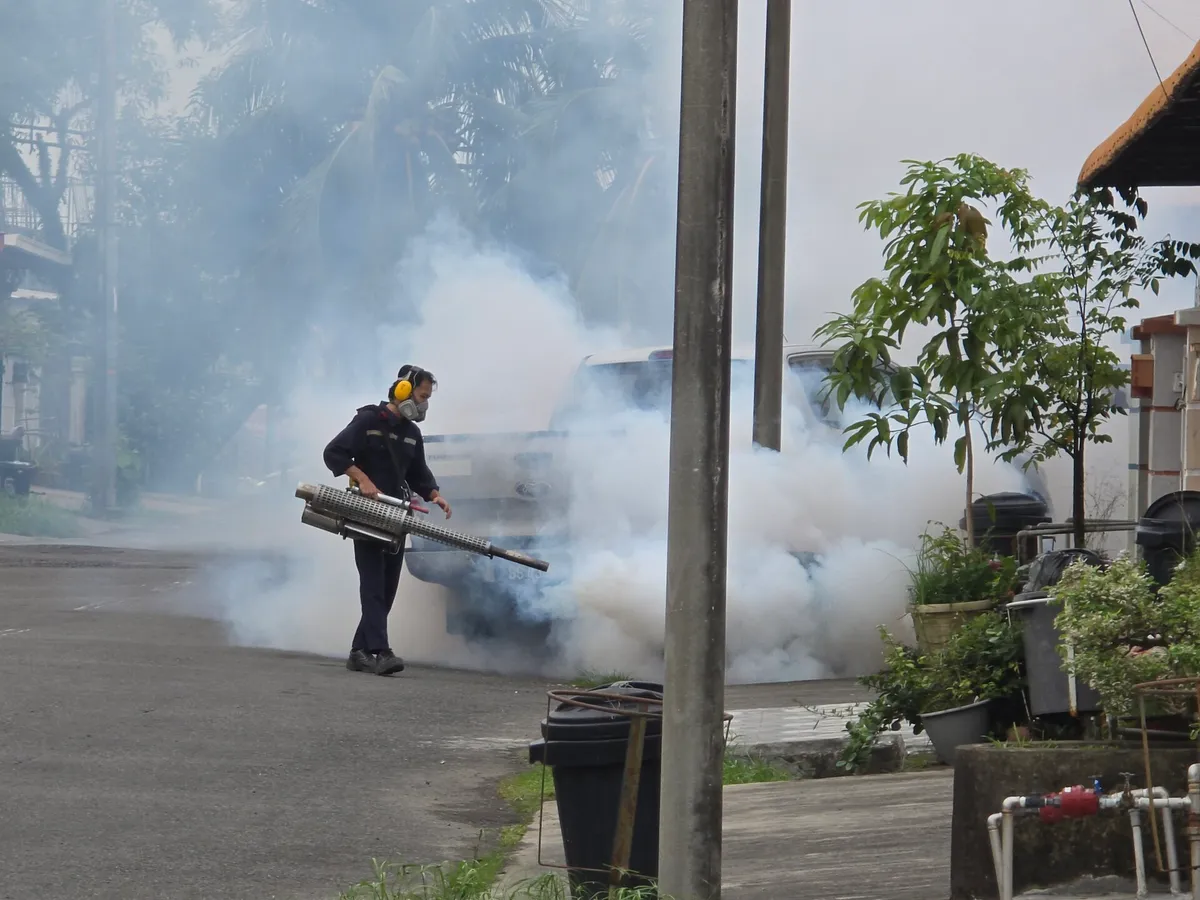
Fogging, the smoke machine in the society compound, puts a fine mist of pyrethrum or malathion into the air that kills the adult mosquitoes flying through it that afternoon. By evening the mist has settled and the next batch hatches from the drain untouched. Fogging at ₹900 per visit has its place before a function or during a dengue outbreak, but on its own it is theatre.
Larvicide at ₹600 per visit is the treatment with a lasting effect. Temephos granules or a Bti product, a bacterium that kills mosquito larvae and nothing else, go into every place water stands: drains, sumps, tank overflows, the stairwell gutter, the lift pit. Bti is safe enough to use in drinking water tanks; temephos is the older chemical and is kept out of them.
Dengue is carried by Aedes aegypti, which bites by day and breeds in small clean water: the cooler tray, the flower pot saucer, the AC drip tray, a coconut shell on the terrace. No treatment reaches those. Emptying them once a week, the "dry day" that municipal campaigns ask for, is the mechanism that works.
Rodents: bait, trap and seal
Rat bait is bromadiolone, an anticoagulant, in wax cakes inside locked bait stations so that a dog or a child cannot reach it. The rat eats over several days and dies, often outside, looking for water. Glue boards and snap traps are the alternative where poison is unsafe. Neither solves anything if the rats can keep coming in, which is why the second half of the ₹1,500 job is proofing: wire mesh over drain outlets, steel wool packed around pipes, a sweep on the kitchen door. The second visit removes the stations and checks the seals.
What is fine to do yourself, and what is not
Fine: gel dots in the kitchen, mesh on windows, emptying standing water weekly, a snap trap in the loft, washing bedding hot.
Not fine without gloves, a mask and a label you have read: diluting and spraying a residual, handling termite emulsion, placing rat poison.
Never yourself: drilling a wall-floor junction for termites, treating a bee hive, fogging. These are the jobs a verified professional is for, and the prices are smaller than the risks: ₹7 per sq ft for termites, ₹2,500 for a hive, ₹900 for a fogging visit.