Every pest control professional on TheHire sees the same ten problems week after week. For each one: what it usually is, what you can safely try first, when to call, and what the call should cost in a typical Indian city.
1. Small cockroaches in the kitchen drawers
Usually: German cockroaches, the small brown ones with two stripes, living in the warm spaces behind the platform, under the sink, inside the switchboard and in the hinges of the cabinets. They came in with a grocery carton or from a neighbour, and they breed fast.
Try first: gel bait dots in the hidden places, not where you see them, and nothing sprayed over the gel. Keep the sink dry overnight and the bin closed.
Call for: gel disappearing within a day, or cockroaches in the bedrooms. The full treatment is ₹2 per sq ft, with a warranty of 3 to 6 months; add ₹1 per sq ft for the herbal option if there is an infant or an asthmatic in the house.
2. Big cockroaches coming up the bathroom drain
Usually: American cockroaches, the large reddish ones that fly, living in the building's drains and coming up at night through the floor trap.
Try first: a mesh under the drain cover and the cover kept closed. A residual spray along the bathroom skirtings if you are comfortable with a hand sprayer and gloves.
Call for: more than one or two a week, which means a population in the shaft. The same ₹2 per sq ft treatment covers it, and the technician will spray the shaft side; for a society, the drains are a common-area job.
3. Mud tubes on a wall, or a door frame that sounds hollow
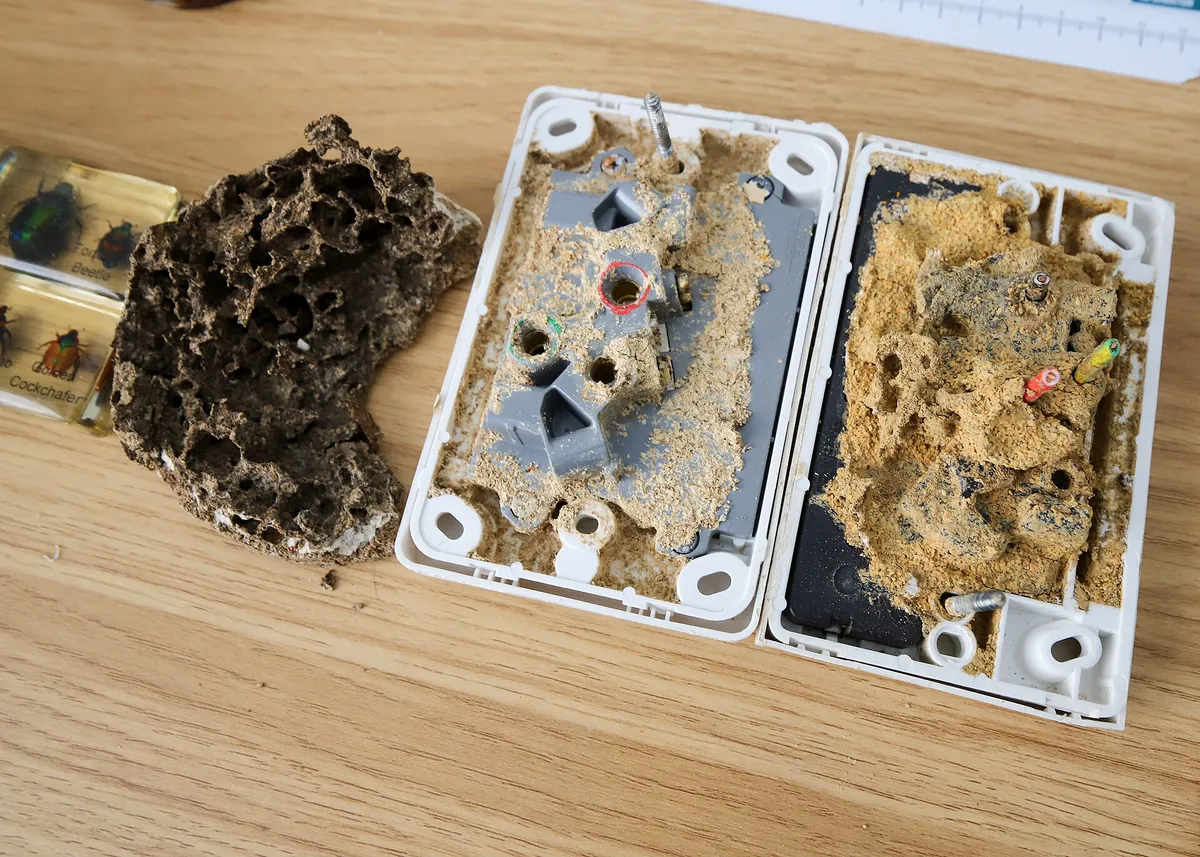
Usually: subterranean termites coming up through the floor junction. The tubes are pencil-thin lines of dried mud running up a wall, behind a wardrobe or along a frame. Paint that bubbles without damp, wood that gives under a thumbnail, and a fine powder under a shelf are the same story.
Try first: nothing that involves spraying the wall; spraying repels the termites into another wall. Photograph the tube, note which rooms, and do not break the tube open until the technician has seen it.
Call for: this one is prompt, not emergency. Post-construction treatment is ₹7 per sq ft with a one-year warranty, priced on the rooms affected if the problem is local. A single wardrobe with no wall tubes is ₹900 to inject.
4. Bites in the morning, black specks on the mattress seam
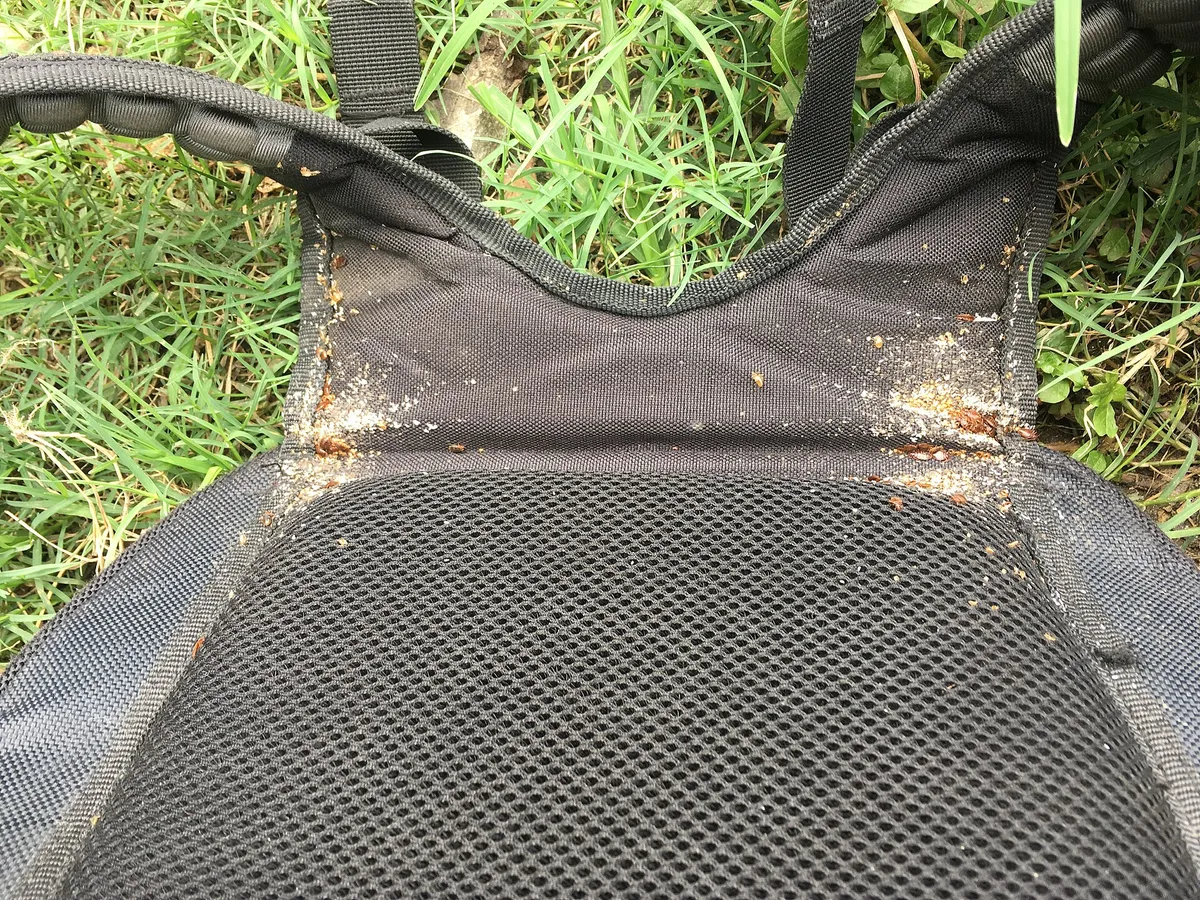
Usually: bed bugs. The bites are in lines or clusters, on skin that touched the bed. The specks are droppings; look along the mattress piping, the bed frame joints and the headboard with a torch. They often arrive with luggage after a hotel stay or a train journey, or with a second-hand sofa.
Try first: wash bedding at 60 °C and dry it in the sun; bag what cannot be washed; a steam cleaner on the seams. Do not move the mattress or sleep in another room; that spreads them.
Call for: any confirmed sighting. Treatment is two visits 10 to 15 days apart, ₹1,500 for one room or ₹4 per sq ft for the whole home if they have been there more than a month. Skipping the second visit is why treatments fail.
5. Mosquitoes in the daytime, dengue in the building
Usually: Aedes aegypti, the striped day-biter, breeding in clean water somewhere within a hundred metres: a cooler, a pot saucer, an AC tray, a tyre on the terrace, a tank without a lid.
Try first: the weekly dry day. Empty every container, scrub the cooler tray, cover the tank. Mesh on the windows. A bed net for the child's cot.
Call for: a society-level problem. Larvicide in the drains and sumps is ₹600 per visit and lasts weeks; fogging at ₹900 per visit knocks down adults for an afternoon and is for an outbreak, not a routine.
6. Droppings in the kitchen, gnawed packets, a scratching sound at night
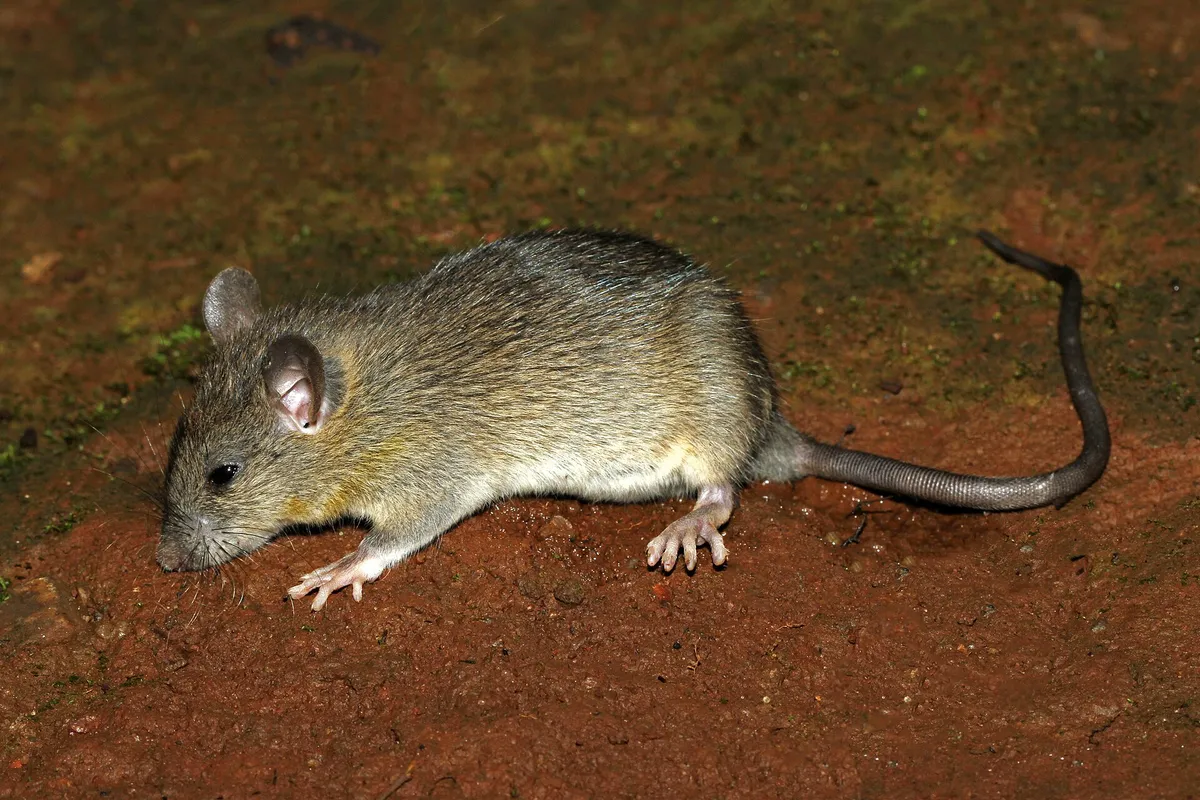
Usually: rats, coming in under the kitchen door, through the drain shaft, or along a pipe through the wall. Droppings the size of a rice grain are mice; the size of an olive stone, rats. Grease marks along a skirting show the route.
Try first: a snap trap baited with a peanut along the route, and a torch inspection of every pipe entry and the gap under the door. Never poison inside a flat; the rat dies inside a wall.
Call for: more than one rat, or droppings in more than one room. The ₹1,500 job is two visits: bait stations and traps, then proofing every gap with mesh and steel wool and removing the stations.
7. Ant trails across the kitchen counter
Usually: sugar ants following a scent trail from an entry point in the window frame or a crack in the wall to something sweet.
Try first: wipe the trail with soap water to break the scent, find the entry point, seal it with putty, and put a dot of cockroach gel on the trail near the entry. It works on ants too.
Call for: ants in the bedrooms or in electrical fittings, or big black ants nesting in a wall cavity. They are included in the ₹2 per sq ft general treatment.
8. Lizards on every wall in the evening
Usually: house geckos coming in for the insects around the lights. They are harmless and they eat mosquitoes, but nobody wants them above the bed.
Try first: mesh on the windows, lights off in empty rooms, no insects for them to eat. Egg shells, naphthalene balls and repellent sprays do not work.
Call for: a ₹1 per sq ft spray, which works by removing the insects they feed on. It also covers spiders.
9. A bee hive on the balcony or under the sunshade
Usually: rock bees, Apis dorsata, which build a single large comb on a high ledge and defend it aggressively, or a smaller wasp nest in a corner. On a high-rise balcony this is dangerous, especially for children and anyone allergic.
Try first: nothing. Do not spray it, smoke it or throw water at it. Keep the balcony door shut and tell the neighbours.
Call for: safe removal at ₹2,500, done in the evening when the bees are on the comb, ideally by someone who relocates honey bees rather than kills them. Wasps are removed rather than relocated.
10. Flies in the kitchen that will not go
Usually: house flies breeding in a wet waste bin that is not emptied daily, a drain, or a neighbour's garbage point. Small drain flies come from the organic film inside the sink trap.
Try first: empty the wet bin daily and keep the lid on, pour boiling water down the drain twice a week, mesh on the kitchen window, and a fly bag trap on the terrace if the source is outside.
Call for: a kitchen or shop with a persistent problem is the ₹800 per visit fly control treatment, which includes baits and a residual on the resting surfaces.
Two rules that apply to all ten
Photograph before you call. A picture of the tube, the droppings or the bug on a white tissue lets the technician quote the right treatment and bring the right chemical, instead of a second visit.
One visit, several jobs. If three of these are waiting, post one request with all three. The technician prices each on its own rate and discounts from the fourth item, and you deal with one re-entry time instead of three.