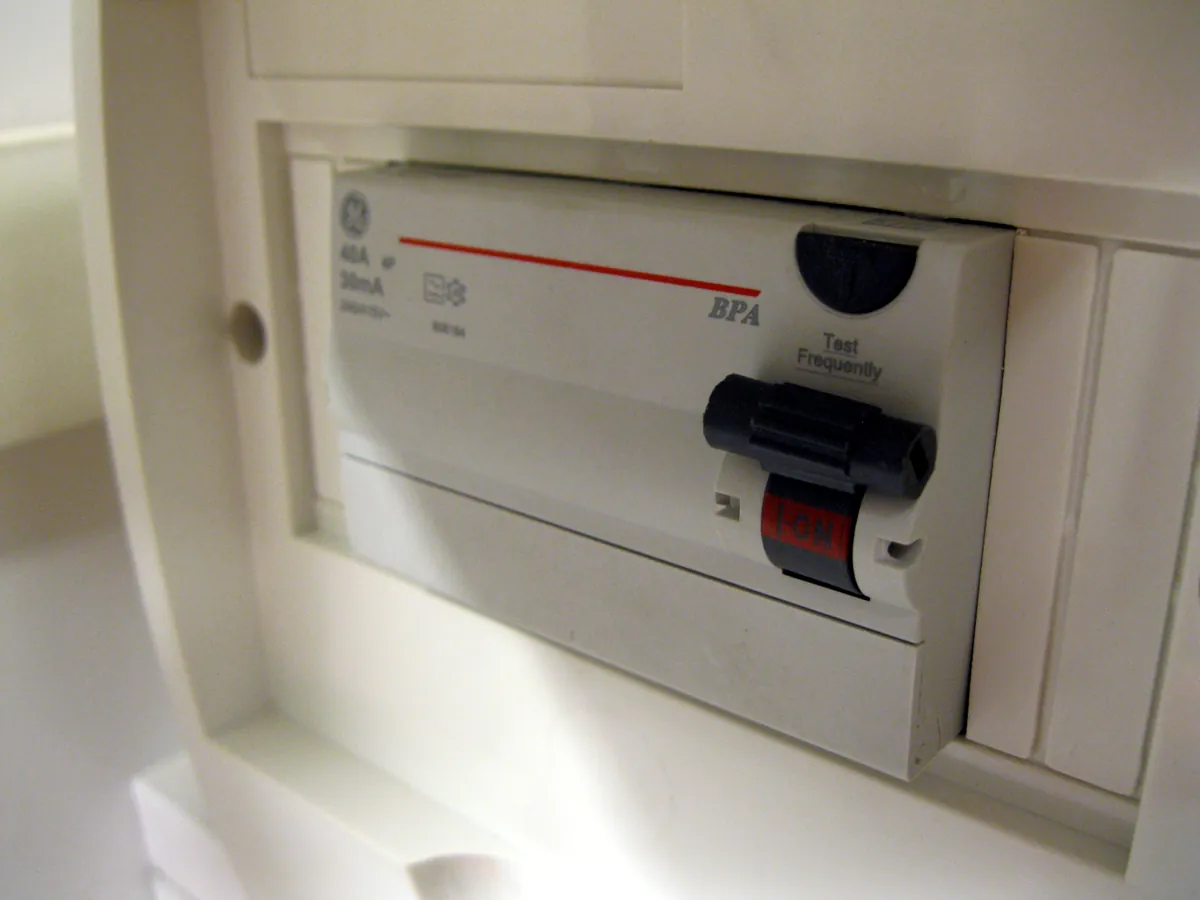
You do not need to be an electrician to understand your own house. Ten minutes with this and you will know what the box by the door does, why the MCB trips, why earthing matters, and which jobs are fine to do yourself.
The path electricity takes
- The meter. Supply arrives from the pole or the building's panel at 230 volts single phase, or 415 volts three phase in a large house or a shop. The meter counts units; one unit is one kilowatt-hour, a 1 kW geyser running for one hour.
- The main switch. The one isolator that cuts everything. Know where it is. In an emergency, a burning smell or someone getting a shock, this is the first thing to reach for.
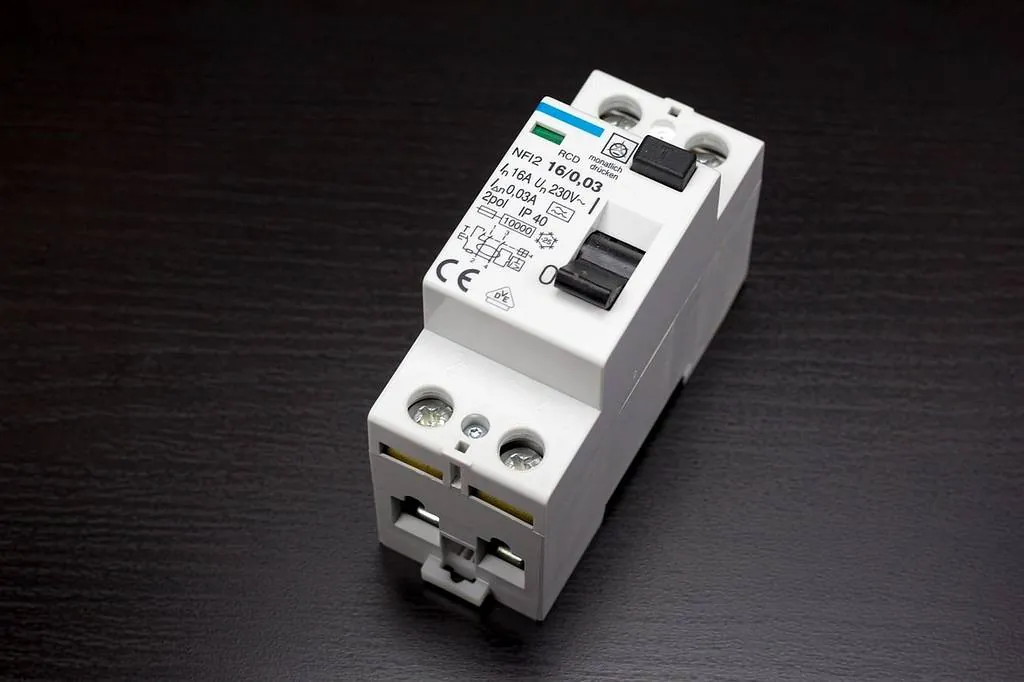
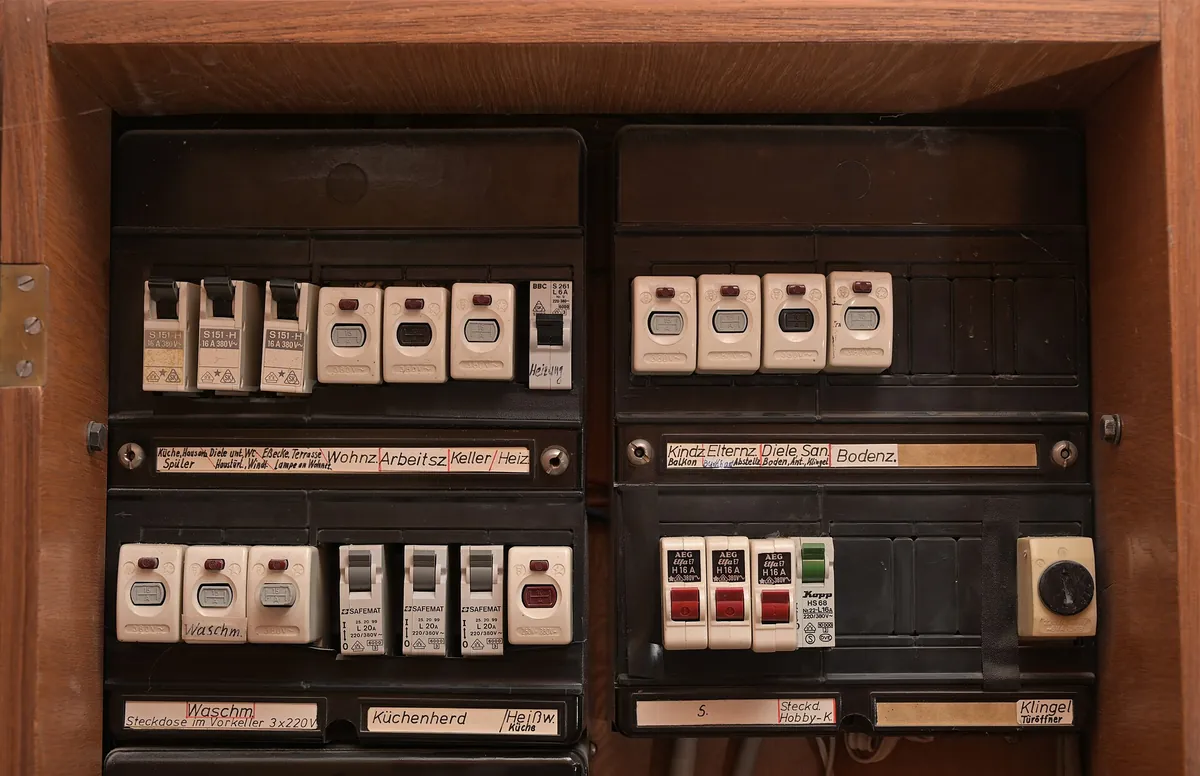
- The distribution board. The grey box with a row of small switches. Each small switch is an MCB guarding one circuit: lights for the front rooms, sockets for the kitchen, the AC line, the geyser line. The bigger switch at the end, often with a test button, is the RCCB.
- The circuits. From each MCB a pair of wires, phase and neutral, runs through the conduit in the wall to the points on that circuit. A third wire, earth, runs alongside for every socket and every appliance.
- The point. The switch, socket or ceiling rose where you meet the system. A switch sits on the phase wire; that is why a fan can still give a shock when switched off if a careless electrician wired the switch on the neutral.
Phase, neutral and earth
Phase carries the current in. Neutral carries it back. Earth carries nothing, until something goes wrong. If a live wire touches the metal body of a geyser, the earth wire gives that current an easy path to the ground, the RCCB sees the leak and trips, and the person touching the geyser is not the path. A house without working earthing has no such path, and the person is.
Modern colour code: brown is phase, blue is neutral, green with a yellow stripe is earth. Older houses use red for phase and black for neutral, and often have no earth at all in the lighting circuits.
An electrician tests earthing with a meter between the socket's earth pin and a known ground. The result is a resistance in ohms; under five is good for a house, and a reading that climbs into the hundreds means the earth pit has dried out or the wire has broken somewhere. Repairing an existing earth is ₹1,200; a new one is ₹5,000.
Why the MCB trips
An MCB trips for two reasons. Overload: too many things drawing current on one circuit, a heater and an iron and a microwave on the same kitchen sockets. Short circuit: phase touching neutral, usually a failed appliance or damaged insulation. The MCB is doing its job, which is to protect the wire inside the wall from overheating. If it trips immediately every time you reset it, there is a short; stop resetting and call someone. If it trips after a while, the circuit is overloaded; move an appliance to another socket.
The RCCB trips for a third reason: leakage to earth. A damp switchboard after rain, a geyser element cracked and leaking into the water, a washing machine with a failing heater. An RCCB that trips only when one appliance is on has found your culprit. Diagnosing a board that trips with no obvious cause is a ₹800 job, and the fix is usually one appliance or one damp point, not the board.
Load, and why some points are special
Every appliance draws a certain current. A phone charger is almost nothing. A 1.5 ton AC draws about 8 amps, a 2 kW geyser about 9, an induction hob about 9. A standard 6A socket on 1.5 sq mm wire cannot feed any of these for long, which is why these appliances get their own 16A point on 4 sq mm wire with their own MCB. A dedicated AC line is ₹1,400, a 16A kitchen point ₹700. Sharing one such point between two heavy appliances with a multi-plug is the most common cause of a melted socket in Indian kitchens.
Adding up the house tells you something useful. A 2 BHK with two ACs, a geyser, a microwave and the usual lights and fans can draw 25 to 30 amps with everything on, which is why the main MCB is 40A or 63A and the cable from the meter is 6 sq mm. If an old house has a 32A main and a thin meter cable, running two ACs at once will trip it; the ₹3,500 meter-to-board upgrade is the fix, not a bigger MCB.
The inverter, and what it changes
An inverter sits between the board and a few chosen circuits. When the supply fails, it feeds those circuits from the battery, and nothing else. This is why the fan works in a power cut but the geyser does not: the geyser is deliberately kept off the inverter, because a 2 kW load would flatten a battery in twenty minutes. Extending the inverter to another room is ₹450 per room; the electrician runs that room's lighting and fan circuit through the inverter and leaves its sockets on the mains.
Rooftop solar does the opposite in daylight: it feeds the board, and the meter runs backwards when the panels make more than the house uses. The electrical connection, including the net meter and the changeover, is ₹4,500; the panels and inverter are the solar installer's side.
Five things every householder should know
- Where the main switch is, and that it cuts everything.
- Whether the board has an RCCB. Press its test button once a month; it should trip. If there is no RCCB, fitting one is the best safety spend in the house.
- That earthing exists and works. A three-pin socket with the top pin connected to nothing is common in older flats. An electrician can test it in minutes.
- Which circuit is which. Ten minutes with a marker labelling the MCBs saves a panicked search in the dark later.
- Never to upsize an MCB, bridge a fuse, or run a heater on an extension cord. Each of these removes a safety limit that was there for a reason.
What is fine to do yourself, and what is not
Fine: changing a bulb or a tube, fitting a plug on a cord, resetting a tripped MCB once, replacing a fan regulator knob, labelling the board.
Not fine without the main switch off and some experience: replacing a switch or socket, changing a ceiling fan, anything inside the distribution board.
Never yourself: work on the meter side of the main switch, earthing, adding circuits, anything that involves opening a wall. These are the jobs a verified electrician is for, and they are not expensive: a switch is ₹220, a fan ₹450, an RCCB ₹1,200 fitted, and a safety audit of the whole house with a written report is ₹900.