Every electrician on TheHire sees the same ten faults week after week. For each one: what it usually is, what you can safely try first, when to call, and what the call should cost in a typical Indian city.
1. The ceiling fan hums, runs slowly, or will not start
Usually: the capacitor. A small cylinder inside the fan canopy that gives the motor its starting push; it weakens over a few years and the fan gets slower and slower before it stops. Sometimes the regulator instead, if a new fan is slow on every speed.
Try first: if the fan hums without turning, switch it off. A stalled motor overheats. Give the blade a push by hand with the fan on; if it then runs, it is the capacitor.
Call for: a capacitor swap or regulator replacement, ₹300 per fan. If the bearings grind, replacing the fan at ₹500 is better money than repairing it.
2. An MCB keeps tripping
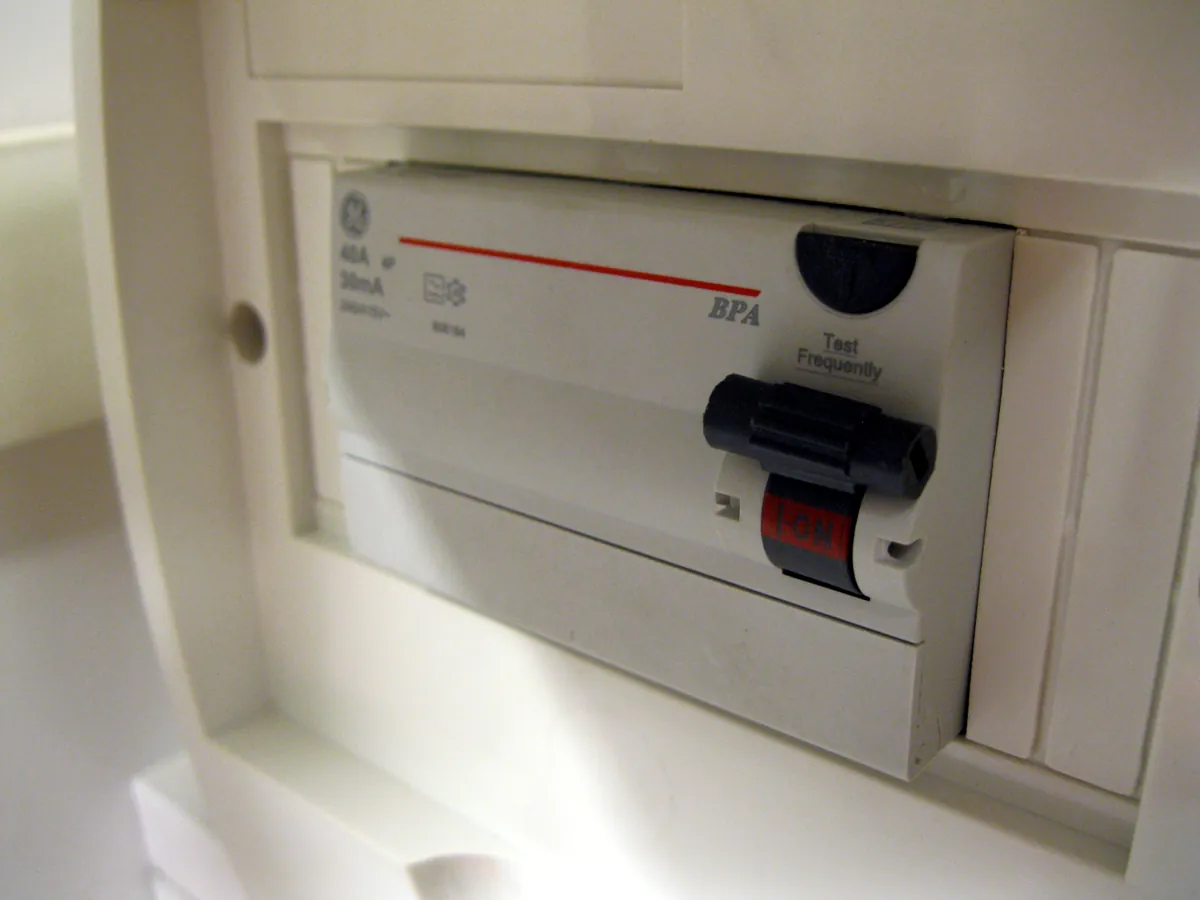
Usually: overload if it trips after a while with several things on; a short or a leaking appliance if it trips the moment you reset it. The RCCB tripping rather than an MCB means leakage to earth: a damp outdoor point, a geyser element, a washing machine heater.
Try first: reset it once. If it holds, note what was running when it tripped and spread the load across sockets. If it trips again at once, unplug everything on that circuit and reset; then plug things back in one at a time until it trips. You have found the appliance.
Call for: a board that trips with nothing obvious plugged in, or a short you cannot isolate. Diagnosis is ₹800; an MCB that has itself failed is ₹350 to replace. Never accept a higher-rated MCB as the fix.
3. A switch or socket is dead
Usually: a loose or burnt connection behind the plate, or a failed switch mechanism. If every point on one wall is dead, the fault is upstream in the junction or at the board.
Try first: check the MCB for that circuit, and check whether other points on the same wall work. One dead point is the point; several is the circuit.
Call for: one point is ₹220. Part of the house dead is ₹700, because the electrician has to trace the run.
4. Sparking, a burning smell, or a warm switch plate
Usually: a loose contact arcing inside the switch or socket, or a socket carrying more than its rating, typically a geyser or an iron on a 6A point. The smell is the plastic plate beginning to cook.
Try first: switch the point off at the board, not at the switch, and stop using it. Do not plug the appliance in elsewhere until you know why.
Call for: this one is the same day. ₹1,000 covers finding the arc and replacing the burnt contact or socket; if the cause is a heavy appliance on a light socket, add a 16A point at ₹600 while they are there.
5. Lights flicker or the voltage is low
Usually: a loose neutral, either in your board or at the building's panel, or a genuinely weak supply at the pole in the evening. A single lamp flickering is its own driver or holder; the whole house flickering is a neutral.
Try first: notice whether it is one light or every light, and whether it is worse in the evening. Both answers help the electrician.
Call for: a loose neutral is dangerous because it can put high voltage on one half of the house; ₹600 covers finding it. One flickering LED is a ₹250 driver or holder replacement. A weak supply at the pole is the electricity board's problem, and the electrician will tell you to log a complaint.
6. The board trips after rain
Usually: water in an outdoor point, a gate light, a balcony socket, the pump's starter box, or in a wall where a leak has reached the conduit. The RCCB sees the leak and trips, which is exactly what it is for.
Try first: switch off the MCBs for the outdoor and balcony circuits and reset the RCCB. If it holds, the fault is outside, and the house can run until the rain stops.
Call for: ₹1,200 to find the wet point and seal or move it. Weatherproof covers on outdoor sockets are a ₹150 part that prevents the next three calls.
7. The geyser gives a tingle, or trips the RCCB
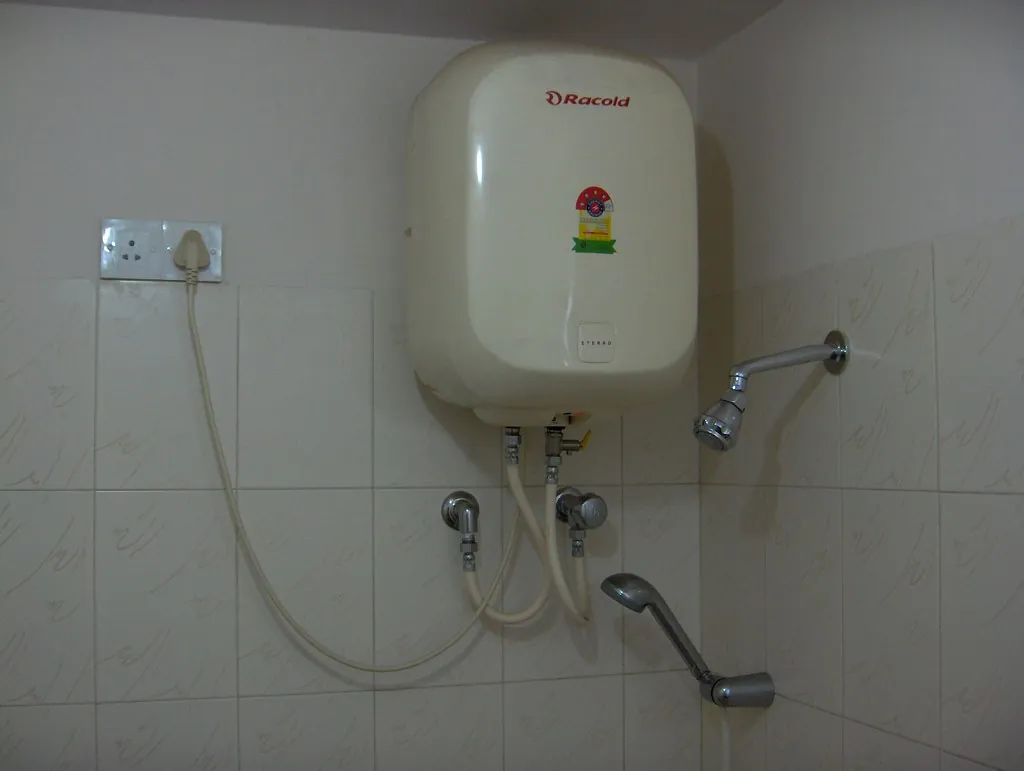
Usually: a cracked heating element leaking current into the water, or a geyser installed without earthing. A tingle from the tap is the second one, and it is the most dangerous item on this list.
Try first: switch the geyser off at the wall and do not use it. Do not test the tingle with a wet hand to see if it is still there.
Call for: a geyser repair, element or thermostat, is ₹500. If the point has no earth, the electrician will say so; fixing the earth is ₹1,200, or ₹5,000 for a new one.
8. The AC trips its MCB, or will not start on a hot afternoon
Usually: the AC's own MCB is too small for its starting current, the wire to it is too thin, or the stabiliser has failed. On a hot day the compressor works harder and draws more, which is why it fails at 3 pm and not at 9 am.
Try first: check whether the AC is on a shared circuit. If the kitchen microwave is on the same MCB, that is the answer.
Call for: a dedicated AC line with its own MCB is ₹1,400, an MCB and wiring upgrade on an existing line ₹900, and a stabiliser fitting ₹400. If the AC itself is at fault, that is the AC technician's call, not the electrician's.
9. The inverter does not take over, or the battery dies in minutes
Usually: a dead battery, a loose battery terminal, or a geyser or iron accidentally wired through the inverter so that one appliance drains it in twenty minutes.
Try first: look at the inverter's display during a cut. If it shows the battery is full but nothing happens, it is the changeover or the wiring. If it shows low battery within minutes, something heavy is on the inverter side.
Call for: an inverter repair visit is ₹600; battery replacement labour ₹400 with the battery on top. Moving a heavy appliance off the inverter circuit is usually done in the same visit.
10. The doorbell, the pump, or one outdoor light has stopped
Usually: these are the points at the far end of long runs and outdoors, so they fail first: a corroded junction, a float switch stuck, a bell transformer that has given up.
Try first: for the pump, check the float switch in the tank is moving freely; a stuck float is half of all "pump not filling the tank" calls.
Call for: a wired doorbell is ₹400, a float switch ₹700, a pump starter ₹800, an outdoor light ₹450.
Two rules that apply to all ten
Switch off at the board, not at the switch. A faulty point with the switch off is still live on the phase side. The MCB is the only switch that makes it safe to touch.
One visit, several jobs. If three of these are waiting, post one request with all three. The electrician prices each one on its own rate and discounts from the fourth item, and you pay one visit charge instead of three.