Most electrical accidents in Indian homes come from the same five absences. None of them is expensive to fix. This is what each one is, why it matters, how to tell in five minutes whether your house has it, and what putting it right costs.
1. An RCCB at the board
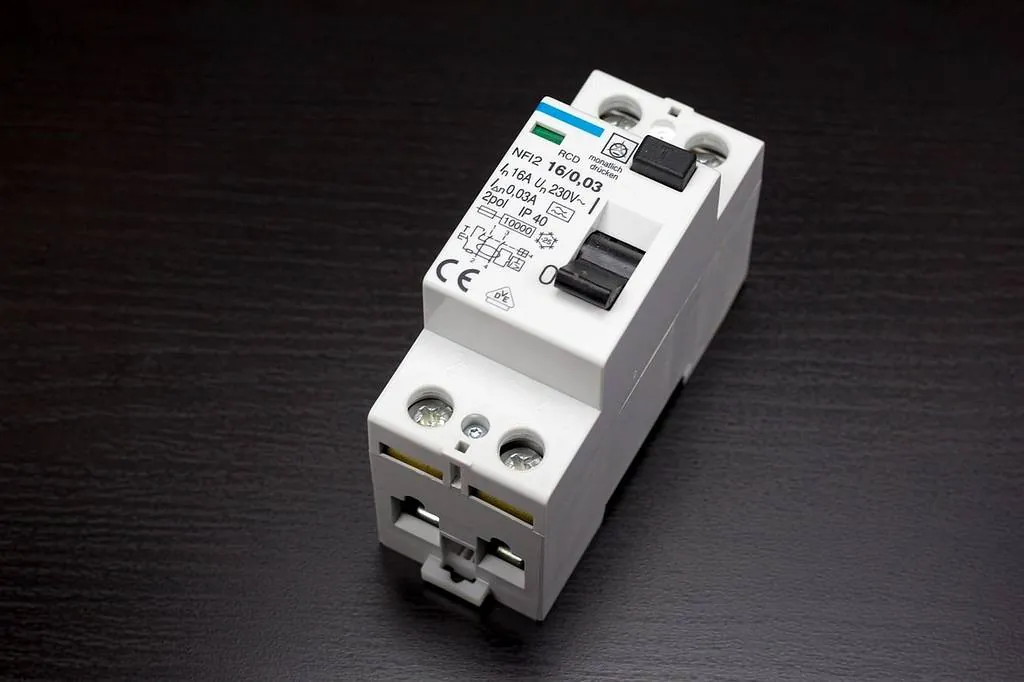
What it is. A residual current circuit breaker, sold in shops as an RCCB or ELCB, sits at the distribution board and watches the current going out on phase against the current coming back on neutral. If 30 milliamps goes missing, which means it is leaking somewhere, through a damp wall or a person, it trips in a few milliseconds. That is fast enough to stop a shock being fatal.
Why it matters. The MCBs on your board protect wires from overheating. They do nothing for a person touching a live geyser body. The RCCB is the only device on the board that protects people.
How to check. Open the board. The RCCB is wider than the MCBs and has a small button marked T or Test. Press it. It should trip with a click, and the house should go dark. If there is no such device, you have none. If the button does nothing, it has failed.
What it costs. The device is ₹1,500 to ₹2,500 for a 40A or 63A 30 mA two-pole unit, and fitting is ₹1,200. A house with two floors is better with one per floor, and a kitchen with many appliances is sometimes given its own.
2. Earthing that actually works
What it is. A wire from every socket and appliance back to the board, and from the board to a plate or rod buried in the ground outside. When a fault puts current onto an appliance's metal body, the earth wire takes it away before a person does, and the RCCB sees the leak and trips.
Why it matters. Without a working earth, a geyser with a cracked element makes the water live, a washing machine with a failing heater makes its drum live, and the only path to ground is the person who touches it. The RCCB cannot help either, because nothing leaks until someone does.
How to check. The quick check is a plug-in tester, under ₹500, which lights up to say whether the earth pin is connected at all. The proper check is an electrician's earth resistance test, which should read under five ohms. Old flats often have earth wires that go nowhere; the pin is there, the wire is not.
What it costs. Repairing an existing earth, usually re-making the connection at the pit or replacing a broken run, is ₹1,200. A new earth pit with a plate or rod and a test certificate is ₹5,000. Ask for the resistance reading in writing.
3. A dedicated 16A point for every heavy appliance
What it is. The geyser, the AC, the microwave, the induction hob and the washing machine each get their own socket, on 4 sq mm wire, with their own MCB on the board. A 16A socket has wider pin spacing than a 6A one; the plug on the appliance will tell you which it needs.
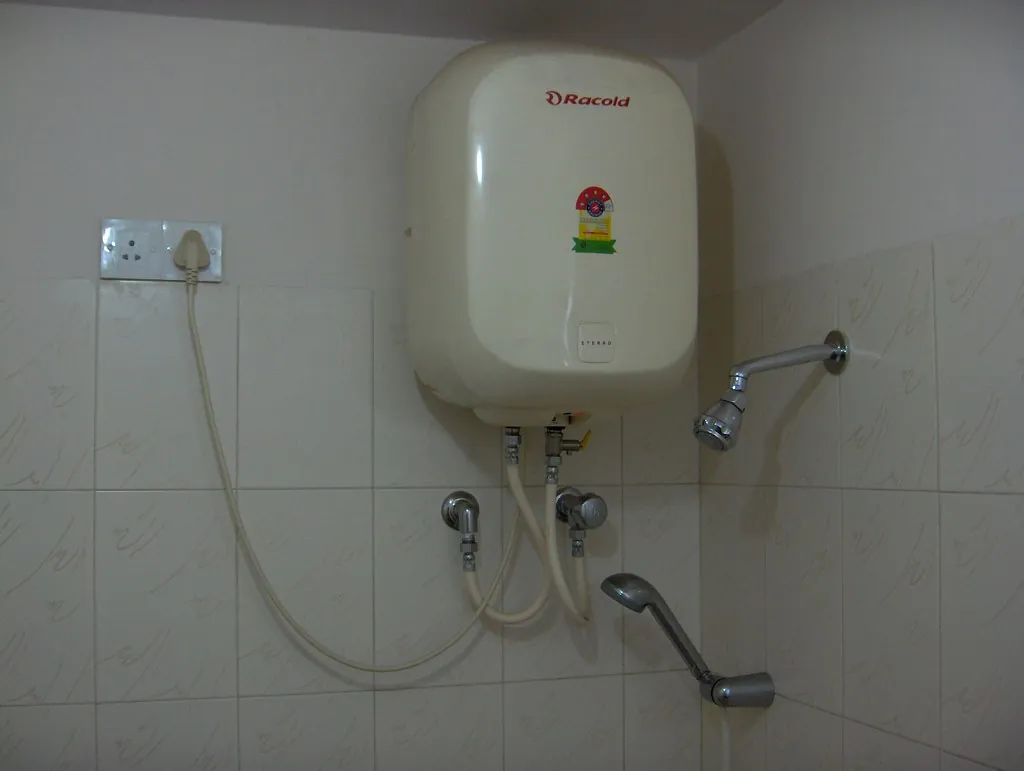
Why it matters. A 2 kW geyser draws about nine amps. A 6A socket on 1.5 sq mm wire will carry that for a while, warming up until the plate browns and the contacts weld. The melted socket plate behind the washing machine in a rented flat is this exact failure, every time.
How to check. Look at the socket each heavy appliance is plugged into. If it is a small three-pin socket on a board shared with a switch and a phone charger, or if there is a multi-plug involved, it is wrong. If the wire feeding it is thin and the MCB for the kitchen also runs the lights, it is wrong.
What it costs. A 16A socket added to an existing board is ₹600. A new 16A point with its own run is ₹1,100, and a dedicated AC line back to the board with its own MCB is ₹1,400. Four appliances on their own points is a day's work and the most useful ₹5,000 a house can spend after the RCCB.
4. ISI-marked copper wire of the right size
What it is. Wire that meets IS 694, printed on the sheath with the brand, size and a metre mark; copper, not copper-clad aluminium; 1.5 sq mm for lights, 2.5 for sockets, 4 for the appliance lines, 6 from the meter to the board.
Why it matters. Undersized or aluminium-cored wire heats under load. Inside a conduit in a wall, that heat has nowhere to go. It is the cause behind most of the "burning smell from the switchboard" calls, and the one fault that becomes a fire rather than a trip.
How to check. At any socket, with the main switch off, an electrician can pull a few centimetres of wire out and read the sheath. No printing means no standard. Copper is reddish when scratched; aluminium is silver.
What it costs. If the house has good wire of the wrong size on one circuit, re-running that circuit is a few hundred rupees per point. If the whole house is unbranded or aluminium, that is the case for rewiring at ₹40 per square foot of labour plus wire, and it is the one job on this page worth saving up for rather than skipping.
5. A labelled board with the right MCBs
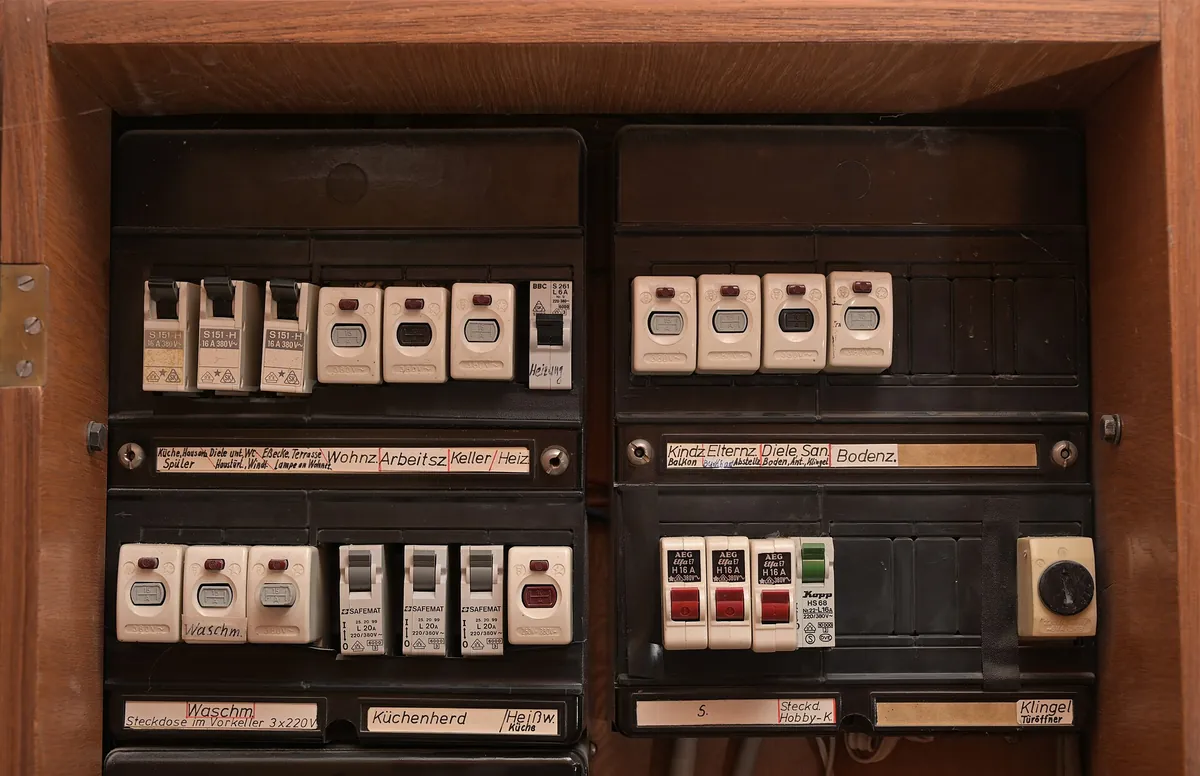
What it is. Each MCB marked with what it feeds, and each rated for the wire it protects: 6A on lighting circuits, 16A or 20A on socket circuits, 20A to 32A on the appliance lines, 40A or 63A at the main.
Why it matters. The labels are for the night the power goes in one room and you need to find the right switch fast. The ratings are the difference between an MCB that trips before the wire overheats and one that lets it. An MCB that has been upsized to stop nuisance tripping is the most common dangerous "repair" in Indian homes.
How to check. Read the numbers on the front of each MCB. If the lighting circuits are on 16A or 20A breakers, or if any socket circuit is on 32A, someone has upsized them. If nothing is labelled, spend ten minutes with a marker.
What it costs. Replacing an MCB with the right rating is ₹350 plus ₹250 to ₹600 for the device. A whole new 8-way board with MCBs and an RCCB, for a house still on a fuse board, is ₹3,800.
Doing all five at once
A safety audit is the sensible way in. An electrician spends an hour on the board, the earth and a sample of points, and writes down what is missing and what each item costs. On TheHire that is ₹900, and most houses come out needing two or three of the five, not all. The RCCB and the earth come first, always; the 16A points next; the board and the wire are the long-term items.
If you are moving into a rented flat, the ₹700 rental handover check is the same list in a shorter form, and it is the right moment to get the owner to agree to the fixes before the deposit changes hands.