AC problems in India arrive on a schedule. February is when the dust of six months is still on the coil and nobody has noticed. May is when every technician in the city is booked and a compressor that was marginal gives up. The monsoon grows mould on a coil that never dries and rusts the outdoor unit. October is when the fridge and the washing machine, ignored all summer, start to complain. This is the calendar, with what to check in each season and what it costs if a check finds something.
February and March: the one afternoon that matters
Do this before the first hot week, not during it. In April the same technician is three days away and charges the same-day rate.
The filters. Slide them out of every indoor unit, rinse under a tap, dry in the shade, slide back. Six months of dust comes off. Free, and it is the single most useful thing on this page.
The outdoor coil. Look through the grille with a torch. Grey felt between the fins means a wash is due. Check there is open air in front of the fan, that nothing has been stored against the unit over winter, and that no bird or rat has nested in it.
The drain. Run the AC for half an hour on a humid morning and go outside. The drain pipe should drip steadily. Nothing coming out means a blocked pipe, and that is July's water down the bedroom wall.
A run test. Set 24 degrees and let it run for twenty minutes. The thick copper pipe should be cold and sweating; the air from the outdoor unit should be warm. Weak cooling now is weak cooling in May, and February is when you can get it looked at.
The remote and the display. New batteries. Check every mode responds.
Then book the service. A wet service is ₹500 per split unit or ₹450 per window unit. A pre-summer check, for a unit serviced recently, is ₹350. A foam-jet deep service at ₹800 every second year, or every year in Delhi, Ahmedabad or any city where the air is dusty.
May: the peak, and what goes wrong in it
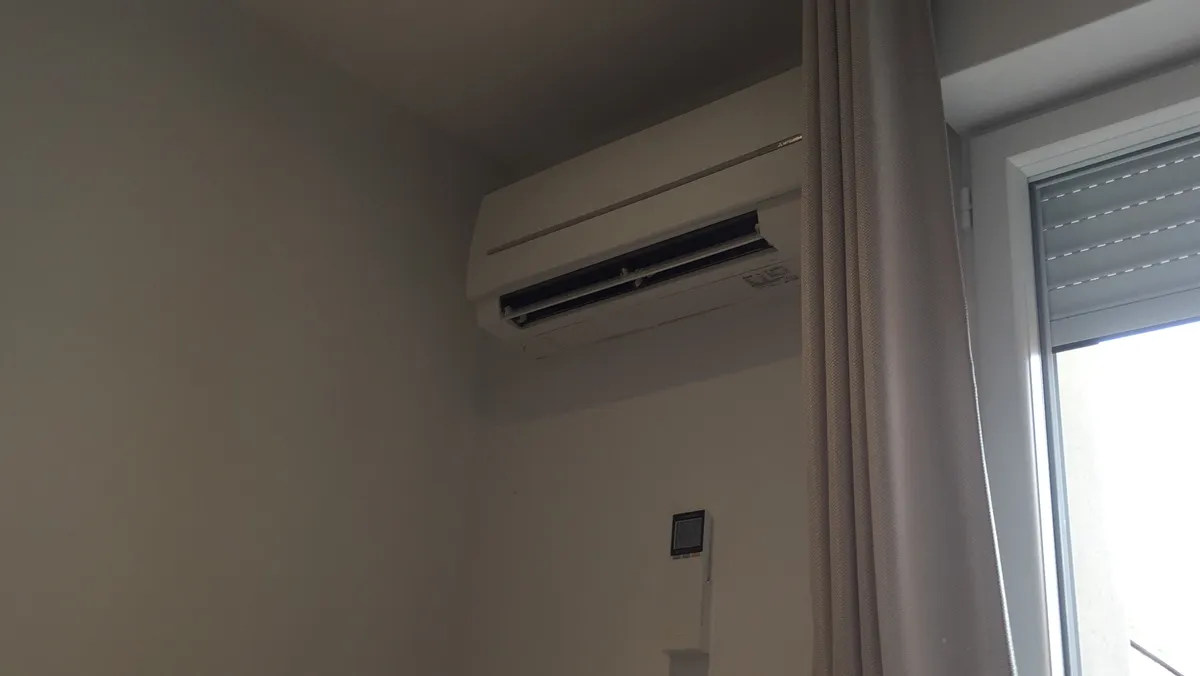
It cools at night and not at 3 pm. The outdoor unit cannot dump heat into 42-degree air through a dirty coil. This is the signature fault of the Indian summer and it is a ₹500 wet service, not a gas refill. If the coil is clean, the capacitor is next at ₹500.
It trips the MCB in the afternoon. The compressor is drawing more than it should because it is running hot, or the circuit is shared with the kitchen. The technician reads the current; the electrician fixes the circuit.
Everything is three days away. Technicians are booked solid from mid-April. An AMC at ₹2,500 per AC per year buys two services and priority in exactly this week, which for a house with three or more units is the whole argument for it.
Set 24 degrees. Setting 18 does not cool the room faster; the compressor runs at the same speed either way, and on a fixed-speed unit it simply runs longer. Every degree lower is more power for no extra speed.
The stabiliser. Summer evening voltage sags in many areas. Check the AC's nameplate range; if the supply goes outside it, a stabiliser is the electrician's small job and cheaper than a PCB.
The monsoon: damp, mould and rust
The coil never dries. Run dry mode, or fan-only for ten minutes before switching off, so the evaporator dries instead of sitting wet all night. A musty smell at start-up is mould, and the fix is a foam-jet service at ₹800.
Dry mode is the useful one. In coastal humidity, dry mode at a moderate temperature is more comfortable than cool mode at a low one, and uses less power.
The outdoor unit rusts. Salt air and constant damp eat an uncoated coil and the cabinet. Nothing to do in the season but note it; the anti-corrosion coating is a buying decision.
Water finds the wall. The indoor unit's drain and the hole through the wall are both paths for monsoon water. A drain that was marginal in May leaks in July: ₹500 to flush the drain and clean the tray, ₹300 for a proper extension.
The board is at risk. Lightning and switching surges kill PCBs in the rainy season. Switch the AC off at the MCB during a thunderstorm; a ₹1,800 repair or a brand-priced replacement board is the alternative.
October: the post-monsoon service and the other machines
Service again. The second of the two annual services: coils washed, drain flushed, mould dealt with, gas pressure and running current noted. ₹500 per split.
The fridge. It has worked hardest through the summer. Check the door gasket by closing it on a sheet of paper; if the paper pulls out freely, the gasket has gone and the compressor has been running continuously for months. Clean the condenser coils at the back. A diagnosis is ₹400; a thermostat, relay or fan is ₹700; gas is ₹1,800.
The washing machine. Monsoon loads are heavier and dry slower. Clean the drain filter at the bottom front. Run an empty hot cycle to clear the detergent sludge that grows mould in the door seal. A bang on spin is the bearing at ₹1,800, and it gets worse, not better.
The chimney. Wash the baffle filters; monsoon cooking saturates them. A service is ₹600, a motor or switch repair ₹900.
The purifier. It has filtered the monsoon's silt. A service at ₹400 plus filters is due.
Winter: the shutdown that is not a shutdown
Do not seal the outdoor unit in a cover. It is built for rain. A tight cover holds moisture against the metal and makes a nest for rats, who eat the wiring; a chewed harness in March is a worse bill than three services.
Run it monthly. Fifteen minutes in cool mode once a month keeps the compressor's oil moving and the seals wet. A unit that sits untouched from November to April is more likely to need a capacitor in May.
Switch it off at the MCB otherwise. Standby power and surge exposure for no benefit.
December is the cheap month to buy. A new AC, an installation at ₹1,500, or a shift at ₹2,200 is easy to book in winter and impossible to book in May.
The annual plan
One planned visit a year, in February, with a list:
- Every AC wet-serviced, both coils, with the drain flushed.
- Gas pressure and running current written on the bill for each unit.
- Capacitors tested, not just the failed ones.
- Outdoor units checked for clearance, brackets and pipe insulation.
- The fridge gasket and condenser, the washing machine filter, the chimney baffles.
- Any unit over eight years old given a plain verdict: service, repair, or plan a replacement.
The technician prices each unit on its own rate, discounts from the fourth item, and you pay one ₹300 visit charge that is usually waived. An AMC at ₹2,500 per AC, or ₹3,500 for the fridge and washing machine together, packages the same thing with priority in May. Houses that do this do not make the 3 pm call in the hottest week of the year.