An AC bought on the wrong tonnage runs all night and never gets the room cold, or short-cycles and leaves it damp. One bought on the star sticker alone can cost more than it saves. This guide covers what each number on the box means, which ones matter for your room and your city, and what to check on the installer's kit on the day.
Tonnage: size it to the room, the floor and the sun
A ton of cooling is about 3.5 kW of heat removed per hour, the old figure for a ton of ice melting in a day. The sizing rule of thumb used across India: around one ton for a room of 100 to 120 square feet, 1.5 ton for 120 to 180, and 2 ton for 180 to 250. Then adjust:
- Top floor or west-facing wall: go up half a ton. The roof and the afternoon sun are a heater.
- A kitchen opening into the room, or more than three people: go up.
- A ground floor room with shade: the lower figure is fine.
- Ceiling height above the usual 10 feet: go up.
Too small runs continuously and never reaches the set temperature. Too large reaches it fast, switches off, and leaves the humidity behind, which is why an oversized AC makes a room feel clammy in Chennai or Mumbai. An inverter unit forgives oversizing better than a fixed-speed one because it slows down rather than stopping.
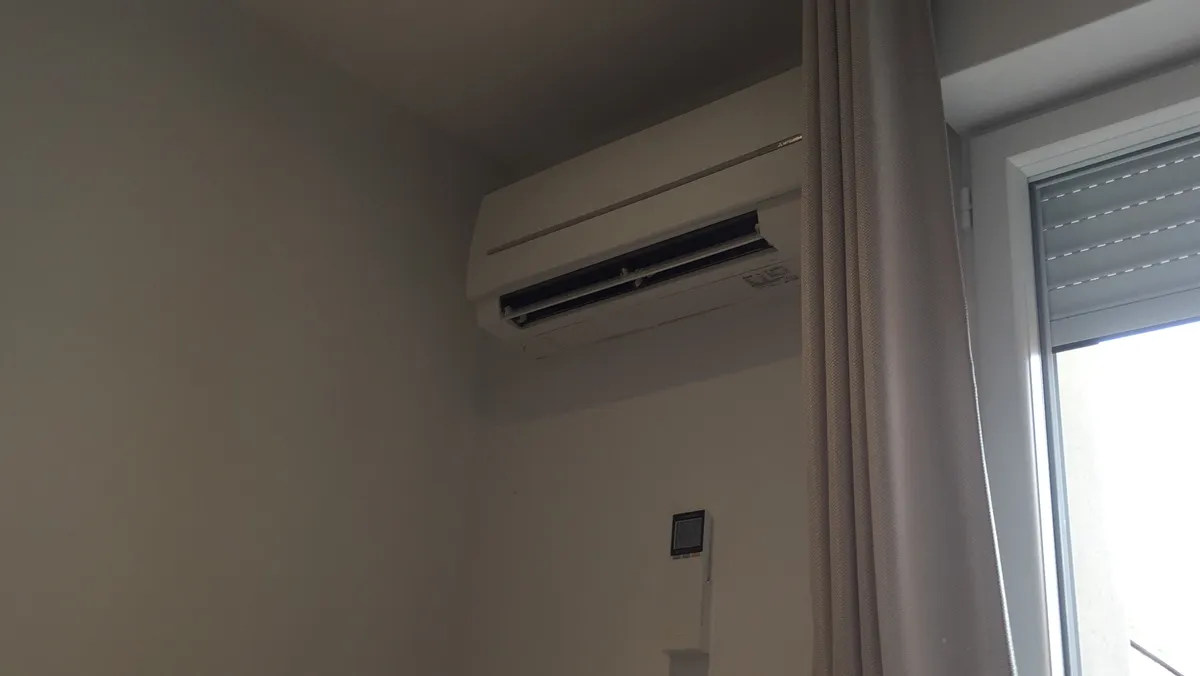
The star label and ISEER
The BEE star label on an AC is based on ISEER, the Indian Seasonal Energy Efficiency Ratio: cooling delivered per unit of electricity, weighted across the temperatures of an Indian year. Higher is better. Two things to know:
- The label has a validity period printed on it. Star thresholds tighten over time, so a 3-star from an older label year may be a 2-star by the current table. Compare the ISEER number, not just the stars, and check the label year.
- Stars pay back by hours. The gap between a 3-star and a 5-star of the same tonnage is a few thousand rupees. In a bedroom that runs eight hours a night for six months, the 5-star recovers it in a few summers. In a room used a dozen nights a year, it never does.
Inverter or fixed speed
An inverter compressor varies its speed to match the room; a fixed-speed one is either on or off. The inverter costs more, runs quieter, holds temperature steadier, uses less power over a night, and starts gently, which matters on a weak supply or an inverter-backed house. The fixed-speed unit is cheaper, simpler and easier to repair, and its PCB is a fraction of the price.
For a bedroom or a living room used daily, inverter. For a guest room, a shop counter or anywhere that runs a few hours a week, fixed speed is honest money. The choices guide goes into this in more detail.
Refrigerant: R32, R410A or R22
The gas inside decides what a leak costs and whether the unit has a future.
- R32 is what most new ACs use. Efficient, lower global-warming potential, and widely stocked. It is mildly flammable, which is why installers must not braze on a charged system and must pull a vacuum before charging.
- R410A is the previous generation. Fine, still serviceable, higher pressure.
- R22 is being phased out. Do not buy a new unit on it. On an old one, a leak is the moment to price a replacement; the gas gets dearer every year.
A gas refill with a leak check is ₹2,500 on any of the three; what differs is the price of the gas itself and whether the technician carries it.
Condenser: copper, coated
The outdoor coil is copper or aluminium. Copper conducts better, lasts longer, and when it leaks it is brazed and refilled. Aluminium is cheaper, leaks are not reliably repairable, and the coil is replaced. In a coastal city, or anywhere with salt or industrial air, insist on copper with an anti-corrosion coating; the brands call it blue fin, gold fin or similar. The coating is what keeps the coil from turning to white powder in three monsoons.
Features that matter, and ones that do not
Matter: a self-clean or dry mode that runs the fan after the compressor stops, so the coil dries and does not grow mould; a filter that slides out from the front for a fortnightly rinse; a hidden display or a display-off button for a bedroom; a sleep mode that steps the temperature up through the night; and a 24-degree default, which the BEE recommends and which is where most people are comfortable.
Do not matter much: ionisers, "anti-virus" filters, scent cartridges, and most app controls. Buy the compressor and the coil; the rest is the brochure.
The installation kit is part of the purchase
A good AC badly installed is a bad AC. On the day, the installer should bring and use:
- Copper pipe of the right gauge, insulated on both lines, not the thin pipe from the corner shop. Up to about 3 metres is included in ₹1,500; beyond that it is ₹450 per metre plus ₹300–₹600 for the pipe. The maximum run and the maximum height difference are in the manual; do not exceed them.
- A flaring tool, so the joints at both units are made properly; a leak at a flare is the most common cause of a gas top-up in year two.
- A vacuum pump, run on the lines before the valves are opened. Air and moisture left inside shorten the compressor's life and freeze in the capillary. If there is no pump in the kit, stop the installation.
- A level and a drain with a slope, so the indoor unit does not drip into the room in July. A drain extension is ₹300.
- A stand or bracket rated for the outdoor unit's weight, ₹500 plus ₹400–₹1,200, fixed into the wall, not into the plaster.
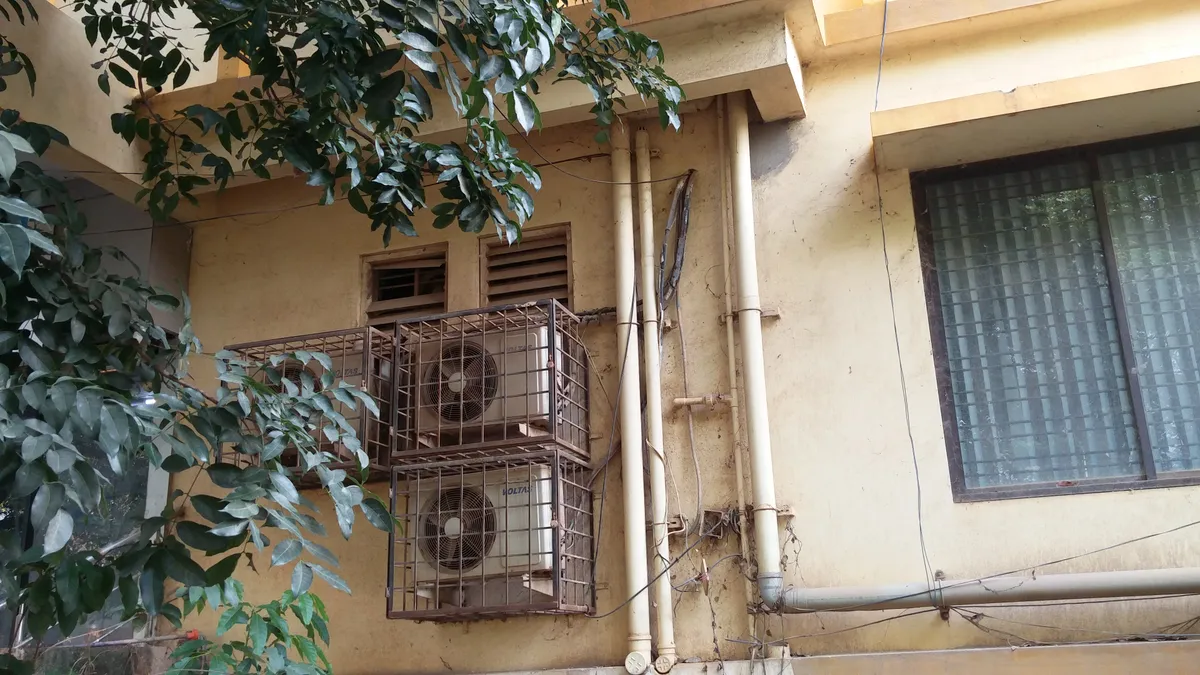
- Clearance around the outdoor unit as the manual specifies, with the fan facing open air, not a wall a foot away. A boxed-in outdoor unit is a unit that trips at 3 pm.
The electrical point, a 20A socket on its own MCB with 4 sq mm wire and earthing, is the electrician's job and should be ready before the installer arrives.
Fridges, washing machines and the rest
The same logic applies to the other appliances the technician services.
Fridge: an inverter compressor for quiet and a lower bill; a star label; a frost-free design for most homes, a direct-cool one for a small budget and a reliable supply. The door gasket is the part that fails first; check it closes with a pull.
Washing machine: front-load washes better with less water and is harder on the bearings; top-load is cheaper, lighter on the drum and easier to repair. In hard-water cities, a machine with a heater and a descaling routine lasts longer. The drum spider on a front-loader is the part that corrodes; a ₹1,800 bearing job at year six is the normal life of a cheap one.
Purifier: RO for hard or borewell water, UV or UF for municipal water that is already soft. Filters are the running cost; a ₹400 service plus filters every year is the budget, not the sticker price.
Where to buy
A brand showroom or a large dealer for the AC itself, with the installation booked through TheHire so the installer answers to you and not to the shop's schedule. Online for a fridge or a washing machine where the specification is clear. Never buy copper pipe or a stand yourself; let the technician bring the right gauge and show you the bill.
Quick checklist before paying
- Tonnage sized to the room, the floor and the sun, with half a ton added for a top floor or a west wall.
- ISEER number and label year, not just the stars; stars chosen by hours of use.
- Inverter for daily rooms, fixed speed for occasional ones.
- R32, copper condenser, coated if the air is salty.
- A front-sliding filter, a dry mode, a 24-degree default.
- Installation booked with a vacuum pump, a flaring tool, insulated copper and a proper stand.
- The 20A point and the wire done by the electrician before the installer comes.
- The warranty card for the compressor, kept with the bill.