An AC can run badly for years and still run. Then the hottest week comes, the compressor trips at 3 pm every day, and the technician finds a coil nobody has cleaned, an outdoor unit boxed against a wall, and a socket shared with the microwave. These five things are what separate an AC that lasts twelve summers from one that lasts five. For each: why it matters, how to check, what it costs to put right.
1. Filters cleaned every fortnight in season, coils cleaned twice a year
Why it matters. The indoor coil can only cool air that reaches it. A clogged filter starves it, the coil freezes, the ice blocks more air, and the AC runs all night without cooling. The outdoor coil can only dump heat into air that reaches it; a clogged one sends warm gas back to the compressor, which draws more current and trips on the hottest afternoon. Dirty coils are behind more "low gas" calls than low gas is.
How to check. Open the indoor unit's front panel; the filters slide out. If you can see dust on them, they are overdue. Look at the outdoor unit's fins through the grille with a torch: grey felt means a jet wash is due. Touch the thick copper pipe while the AC runs: cold and sweating is right, iced is wrong.
What it costs. Filters are free. A wet service, both coils, is ₹500 per split or ₹450 per window unit, twice a year. A foam-jet deep service at ₹800 every second year, or every year in a dusty city. An AMC at ₹2,500 per AC covers both services and gets you a technician in May when everyone else is waiting.
2. An outdoor unit that can breathe, on a bracket that can hold it
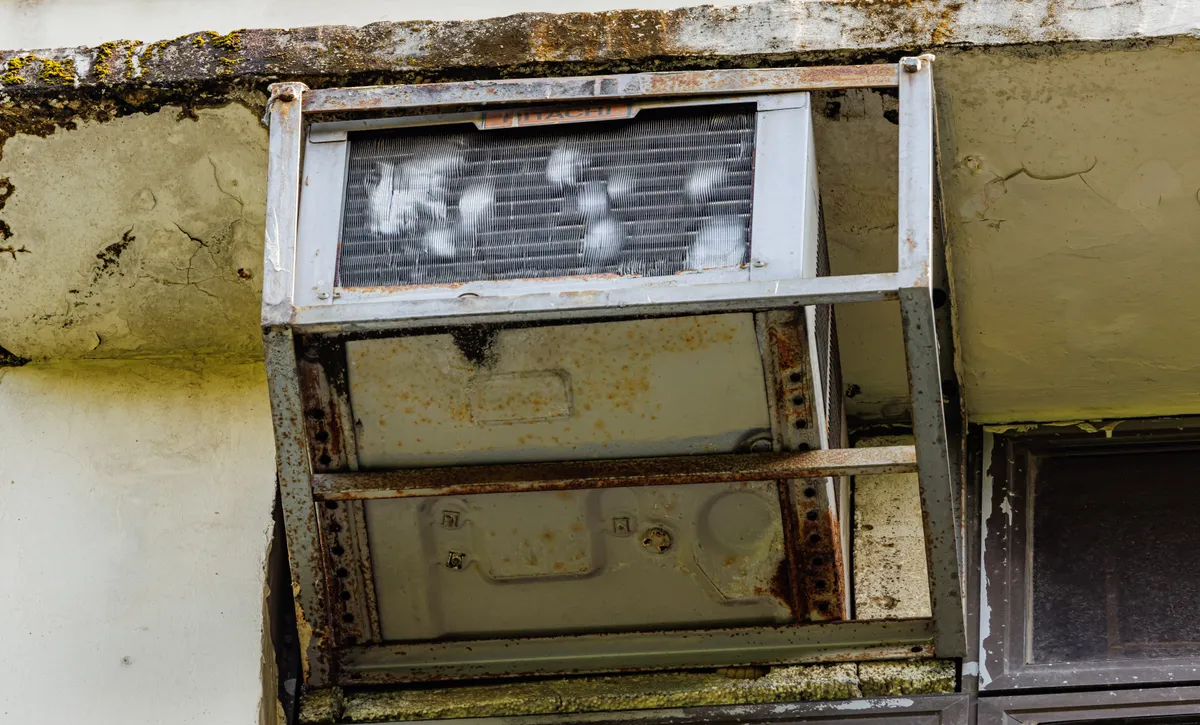
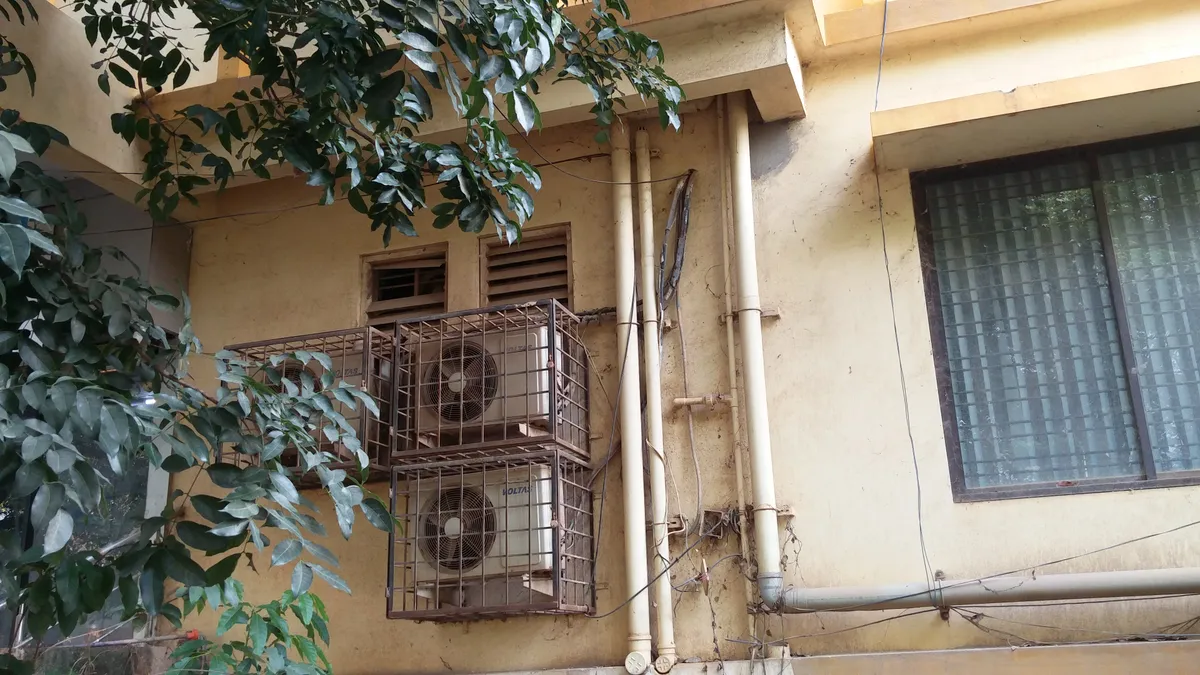
Why it matters. The outdoor unit's fan pulls air through the coil and blows it out the front. If the front faces a wall a foot away, or the unit is boxed into a cupboard on the balcony, or three units are stacked so one breathes the other's exhaust, the hot air goes straight back through the coil. The compressor runs hot, the bill rises, and it trips in May. A bracket fixed into plaster rather than the wall is the other failure; a unit that vibrates loose cracks its own copper.
How to check. Stand in front of the outdoor unit. There should be open air in front of the fan and the clearance the manual asks for behind and beside it. The bracket should not move when you push the unit. The copper pipes should be insulated all the way, not bare and sweating.
What it costs. Moving the unit to a better spot is ₹2,200. A proper stand or bracket is ₹500 plus ₹400–₹1,200. Extra copper if the new spot is further is ₹450 per metre plus ₹300–₹600.
3. A dedicated 20A point on its own MCB, with earthing
Why it matters. A 1.5 ton AC draws a heavy current, and more at start-up. On a socket shared with a microwave or through an extension board, the plug heats, the plate melts, and in the worst case the wire behind the wall does. On a circuit without earthing, a fault puts the metal of the indoor unit live. A dedicated line is also why the AC does not trip the kitchen when the kettle goes on.
How to check. Follow the plug. It should go into a 20A socket, usually a three-pin round-pin or a heavy flat-pin, with its own MCB on the board labelled for the AC. If it goes into an ordinary 6A socket through an adaptor, or into a multi-plug, it is wrong. A warm plug after an hour of running is the same warning.
What it costs. This is the electrician's job, not the AC technician's: a dedicated line back to the board with 4 sq mm wire, its own MCB and an earthed 20A socket. Book it before the installation; an installer who arrives to a 6A socket will either refuse or do the wrong thing.
4. A charge put in under vacuum, by a technician who found the leak
Why it matters. The refrigerant loop must contain refrigerant and nothing else. Air and moisture left in the lines at installation or after a repair raise the pressure, freeze in the capillary and corrode from the inside; the compressor pumps them for the rest of a short life. A vacuum pump removes them in ten to fifteen minutes. And a system that needed gas had a leak; gas put in without fixing it is money that leaves through the same hole.
How to check. At installation or a gas job, watch for the pump: a small machine with a gauge, connected to the service port, running before the valves are opened. Ask the technician where the leak was and to show you the repaired joint. Ask for the pressure reading on the bill. If the AC has needed gas two summers running, nobody has found the leak.
What it costs. A refill with a leak check is ₹2,500; a top-up after a small repair is ₹1,500. A new installation at ₹1,500 includes the vacuum, and should be refused without it.
5. A drain that slopes, ends in the open, and is cleaned at every service
Why it matters. The indoor coil pulls litres of water out of the air every night in a humid city. It runs into a tray and down a pipe. A pipe with a sag collects slime and blocks; a pipe with no slope backs up; an end pushed into a wall or a sealed pot overflows. The result is water down the wall, into the plaster, onto the socket below, and a damp patch the painter is blamed for.
How to check. Run the AC for an hour on a humid day and go outside: the drain should drip steadily. Inside, look at the wall under the indoor unit for stains. If the unit was fitted level or tilted the wrong way, the tray cannot drain; a spirit level on the unit shows it.
What it costs. A drain block cleared and the tray cleaned is ₹500. A drain extension to a proper outlet is ₹300. A unit re-hung with a slope is a small job on the same visit. Cleaning the drain is part of a ₹500 wet service; ask for it by name.
Doing all five at once
A house missing more than two of these is better served by one planned visit before the summer than by an emergency call during it. Post the list: wet service on every unit with the drains flushed, the outdoor units checked for clearance and brackets, the gas pressure and running current written down, and a note of any unit that needs shifting. The technician prices each unit on its own rate, discounts from the fourth item, and you pay one ₹300 visit charge that is usually waived. The electrician's point is a separate request and should come first.
The order, if it has to be spread: the filters today, because they are free; the dedicated point next, because it is the one that is a safety matter; then the service; then the outdoor unit; and the vacuum the next time anyone opens the gas side.