Six decisions come up in almost every carpentry job bigger than a hinge. Each has two or three honest answers depending on the room, the humidity and how long you intend to keep the furniture. Here are the trade-offs.
Plywood, MDF or solid wood
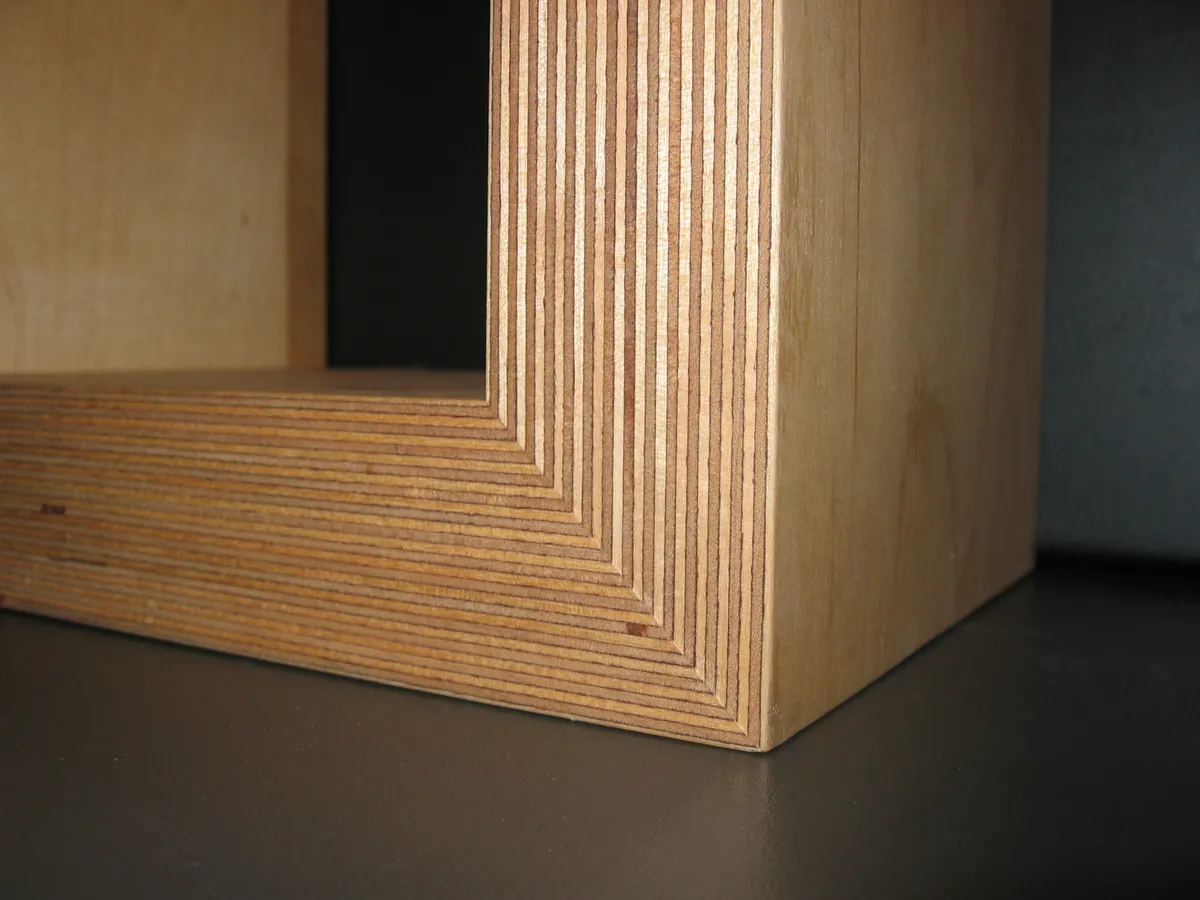
Plywood is the default for Indian built-ins: strong along every direction, holds screws well, and in BWP grade to IS 710 it survives water. It has a visible grain that telegraphs faintly through thin finishes, and its cut edges must be banded. ₹250–₹600 per sq ft for a wardrobe build.
MDF is uniform fibre board. It machines cleanly, takes paint and membrane pressing beautifully, and gives a flawless flat finish plywood cannot match. It has no edge strength and it swells irreversibly when wet. Right for painted or membrane shutters in a dry bedroom; wrong for any carcass and anywhere near water.
Solid wood is for doors, frames, beds and visible structural pieces. It is beautiful and repairable indefinitely, and it moves with the seasons, so joints must be designed for it. Expensive, and in large flat panels it cups, which is why wardrobe sides are plywood and not planks.
When each is right: plywood for every carcass and most shutters; MDF only for painted shutters in dry rooms; solid wood for doors, frames and furniture you intend to keep for decades. A new flush door is ₹1,500 plus ₹2,500–₹12,000; a frame is ₹1,200 plus ₹2,000–₹8,000.
Site-built, factory modular, or flat-pack
Site-built is measured, cut and assembled in your home at ₹450 per sq ft for a wardrobe or ₹500 per sq ft for kitchen cabinets. It fits a leaning wall exactly, can be any dimension, uses every inch to the ceiling, and any carpenter can repair it in ten years. The costs are dust, days of disruption, and hand-finished edges that are not quite factory quality.
Factory modular is machine-cut, machine-banded and installed on site at ₹150 per sq ft. The edges are better, the installation takes a day or two rather than a week, and the finish is consistent. But modules come in standard sizes, so filler panels cover the difference, the top of the unit often stops short of the ceiling, and a damaged part must be ordered from the maker.
Flat-pack is bought in boxes and assembled: ₹1,500 for a wardrobe, ₹1,200 for a bed, ₹900 for a TV unit, ₹500 for a table or desk. Cheapest, movable, usually particle board, and it tolerates one assembly well and a second move badly. Dismantling for a move is ₹600 per unit.
When each is right: site-built for a wardrobe in a room with walls that are not straight, which is most rooms; modular for a kitchen where finish consistency matters and the walls are reasonable; flat-pack for a rented flat or a room whose use will change.
Sliding or hinged wardrobe doors
Hinged doors open fully, so you see the whole wardrobe at once. The hardware is cheap and standard, repairs are ₹300 per hinge, and the internal layout is unconstrained. They need clear swing space in front, which a narrow bedroom often does not have.
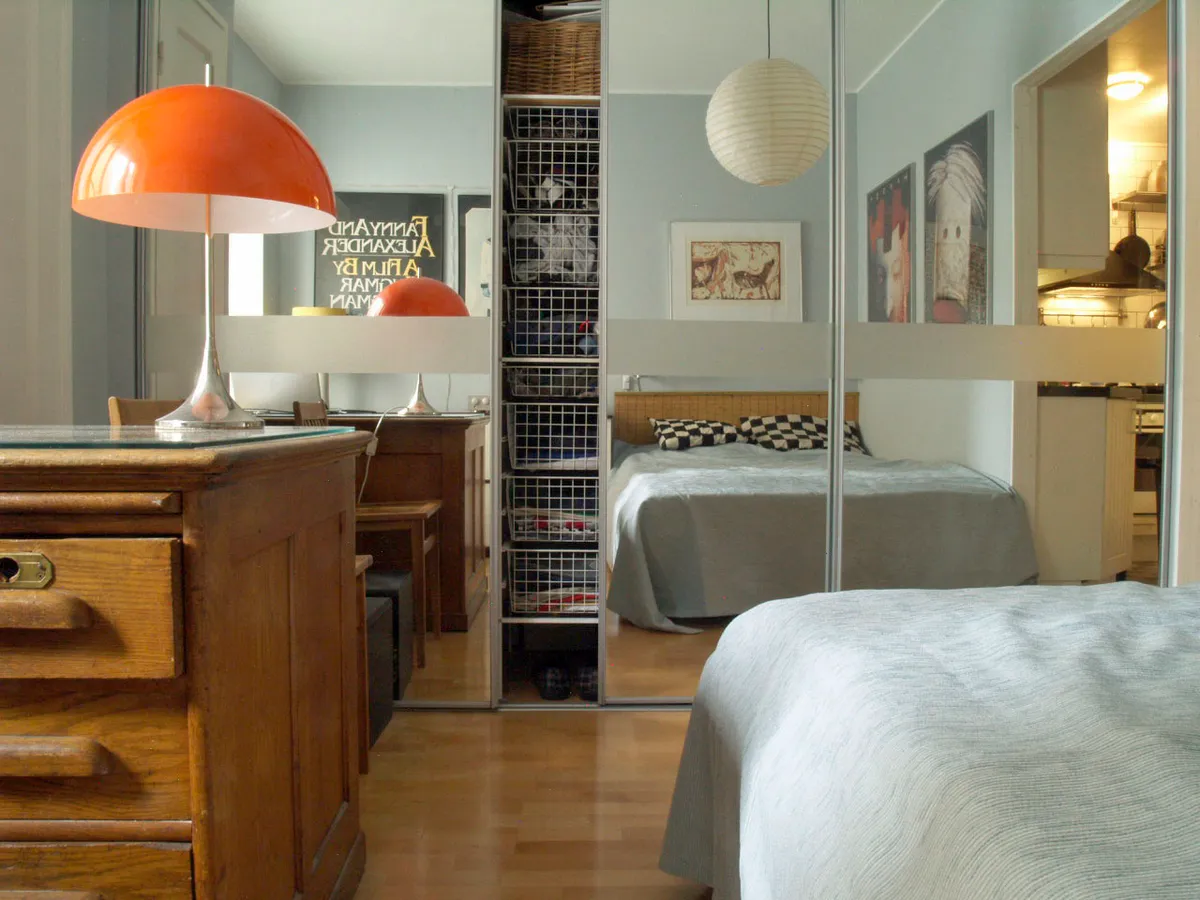
Sliding doors need no swing space, which is their whole argument, and they suit a wardrobe facing a bed with a narrow walkway. Only half the wardrobe is open at any time, the track system costs more, and bottom-rolling tracks collect dust and start jumping. Repairs are ₹500 per door.
When each is right: hinged wherever there is 2 ft of clear space in front; sliding in a narrow room or where the wardrobe faces the bed closely. If sliding, specify a top-hung system so there is no bottom track to collect grit, and mirrored panels if the room is small.
Laminate, veneer, acrylic or paint
Laminate at ₹60 per sq ft plus ₹40–₹120 is the practical default: hard, water-resistant, cheap to replace, available in hundreds of finishes. Specify 0.8 mm or thicker on shutters, and matt or textured rather than high gloss in a family kitchen, where gloss shows every fingerprint.
Veneer at ₹110 per sq ft plus ₹80–₹200 is real wood, polished on site with melamine or PU at ₹45 per sq ft. The warmest and most expensive look, it needs a skilled polisher, book-matched sheets, and recoating every few years.
Acrylic is a high-gloss mirror finish: striking, costly, and it scratches.
Paint and membrane on MDF gives a seamless finish that plywood cannot, in any colour, and is right for a painted-shutter bedroom. Not for wet zones.
When each is right: laminate for kitchens, children's rooms and anything used hard; veneer for a formal living room or a study; acrylic only where someone will care for it; painted MDF for a dry bedroom where colour matters more than toughness.
Repair or rebuild
Repair when the carcass is sound. Hinges at ₹300, drawer channels at ₹350, alignment at ₹200, a sliding track at ₹500, a single swollen shutter at ₹600. New hardware and a laminate refresh at ₹60 per sq ft can make a ten-year-old kitchen feel new for a fraction of a rebuild.
Rebuild when the carcass has gone: a base that flexes underfoot, several hinge screws that will not bite, water damage across more than one panel, or termites through the structure. At that point money spent on shutters and hardware is money spent on a box that is failing.
The test: if the carcass is sound and square, repair and upgrade. If the carcass is wet, soft or eaten, rebuild in BWP at ₹500 per sq ft and fix the water source first.
Ready-made or custom
Ready-made furniture, bought and assembled at ₹500 to ₹1,500, is cheaper, immediate, movable and replaceable. It comes in standard sizes that leave dead space above and beside it, and it is rarely built in materials that last.
Custom uses every inch, fits the wall and the room, and can be made in the grade you choose: a study table at ₹3,500, a TV unit at ₹6,000 plus ₹4,000–₹15,000, a bookshelf at ₹350 per sq ft, a loft at ₹300 per sq ft, a pooja unit at ₹7,000 plus ₹5,000–₹20,000.
When each is right: ready-made for a rented home, a changing need, or a piece you do not expect to keep. Custom for anything built into a wall, anything in a kitchen, and anywhere the standard size wastes a foot of useful space.
The pattern behind all six
In each case the more expensive option buys either fit or longevity, and both depend on the carpenter doing it properly: the site-built unit against a crooked wall, the veneer that needs polishing, the custom piece with no standard to fall back on. The cheaper option is more forgiving and easier to replace.
If you have a carpenter whose work you have seen, the first set is worth it. If you are choosing a carpenter and a method at the same time, start with a smaller job, look at the edge banding inside the finished unit, and give them the wardrobe next time.
Whichever way you go, the labour is on the rate card by the piece and by the square foot, and the cost estimator will put your choices into one quote you can hand to the carpenters who reply.