The carpentry is rarely what fails. The board that drinks water, the laminate that peels at an unbanded edge, the channel that drops a loaded drawer: the material decides how the furniture looks in year five. This guide covers what to look for on each item, which marks matter, and roughly what the shop should charge.
Plywood: grade, marks and the edge
Plywood is thin veneers glued in odd-numbered layers with the grain alternating. Two things define its quality: the glue and the core.
BWP, boiling water proof, made to IS 710, uses phenol formaldehyde glue and a hardwood core. This is the grade for kitchens, bathrooms, the base of every unit, and anything against an external wall. Often sold as marine ply. Roughly ₹85 to ₹160 per sq ft at the shop, depending on brand and thickness.
MR, moisture resistant, made to IS 303, uses urea formaldehyde glue. Fine for a bedroom wardrobe's shutters and shelves in a dry room. Roughly ₹55 to ₹100 per sq ft.
What to check at the shop:
- The BIS mark and IS number stamped on the sheet, not a printed paper sticker. Stickers are easy to buy.
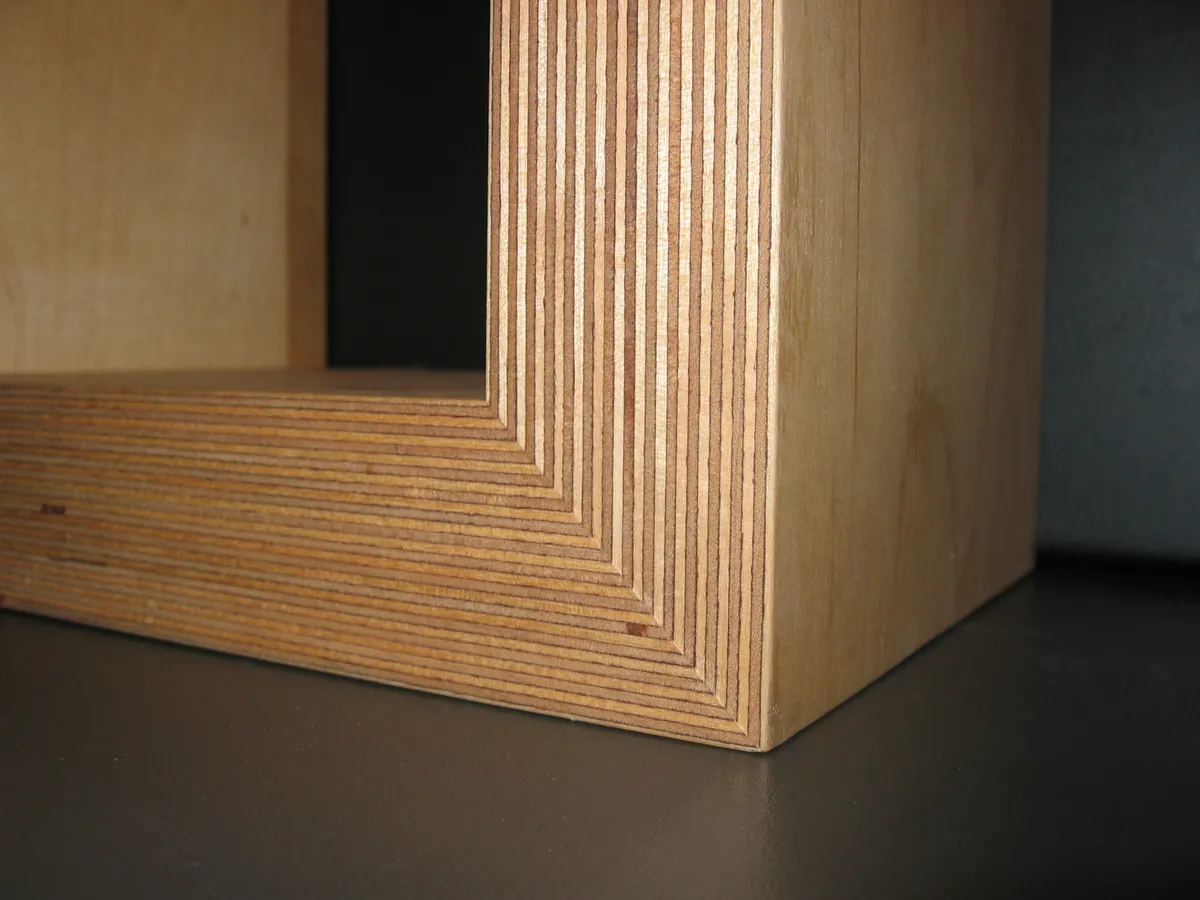
- The edge: count the plies. They should be even in thickness, tight, with no gaps, overlaps or soft filler visible. A good 19 mm sheet has consistent layers all the way across.
- Weight. A full hardwood-core sheet is heavy. A suspiciously light sheet has a soft or gap-filled core.
- A nail test, if the dealer allows: a nail driven into the edge should go in firmly without the plies separating.
- The bill with the brand on it, which is also what a warranty needs.
Thicknesses: 19 mm for carcass sides and shutters, 12 mm for back panels and drawer sides, 6 mm for backs of light units.
MDF, HDF and particle board
MDF is wood fibre and resin pressed into a uniform board. It machines beautifully, takes paint and membrane pressing better than plywood, and has no grain to telegraph through a finish. It also has no fibre strength along an edge and swells irreversibly when wet. Use for painted or membrane shutters in a dry room; never for a carcass, never near water. Roughly ₹35 to ₹60 per sq ft.
HDF is denser MDF, used for the backs of units and for laminate flooring cores.
Particle board is wood chips and resin. Cheap, used in flat-pack furniture, and acceptable there because the design spreads load. It does not hold a screw that has been removed once, and it is finished for good if it gets wet. Not for built-ins you expect to keep.
WPC and PVC boards are plastic composites: completely waterproof, lighter, and increasingly used for bathroom doors and the vanity below a basin. They do not hold screws as firmly as BWP ply, so hardware needs the right inserts. For a bathroom door, WPC is the right answer in most Indian homes.
Laminate, veneer and the finishes
Laminate is a printed decorative sheet bonded to the board. The number that matters is thickness: 0.8 mm to 1 mm for shutters and anything handled, 0.6 mm is acceptable for internal faces, and anything thinner is tomorrow's bubble. Roughly ₹700 to ₹2,500 per 8x4 sheet. Textured and matt finishes hide fingerprints better than high gloss, which looks superb for a month in a family kitchen. Applying laminate over an existing surface is ₹60 per sq ft plus ₹40–₹120.
Acrylic shutters are a high-gloss, mirror-finish option: beautiful, expensive, and scratch-prone.
Veneer is a real wood slice, finished on site with melamine or PU. It is the premium look, needs skilled polishing and periodic recoating, and no two sheets match exactly, which is why book-matching sheets matters. ₹110 per sq ft plus ₹80–₹200.
Polish: melamine is the common site finish and is repairable; PU is tougher, deeper and more expensive. ₹45 per sq ft plus ₹15–₹40. A door polished properly is ₹1,200.
Edge banding: the small thing that decides everything
Every cut edge of plywood or MDF exposes the core. Unsealed, it drinks humidity, swells and lifts the laminate. Edge banding is a PVC strip bonded to that edge, and it should be applied to every cut edge in the unit, including the ones inside that nobody sees. 2 mm banding for shutters and visible edges, 0.8 mm for internal ones.
This is the single most reliable way to tell a careful carpenter from a hurried one. Open a cabinet and look at the shelf edges at the back.
Hardware: hinges, channels and locks
Hardware is what you touch every day, and it is where a cheap quote shows first.
Hinges. The standard is the European concealed hinge, and the one to ask for is the soft-close hydraulic version, which stops the shutter slamming. Check the crank: straight, half-crank or full-crank depending on whether the shutter is full overlay, half overlay or inset. ₹120 to ₹400 per hinge for a decent soft-close. Fitting or replacing is ₹300 per piece; alignment and soft-close adjustment is ₹200 per shutter.
Drawer channels. Three levels. Roller channels are the cheapest and drop a loaded drawer within a couple of years. Telescopic ball-bearing channels pull the drawer fully out and carry real weight. Tandem undermount channels with soft-close are the kitchen standard worth paying for. ₹150–₹800 per set, and ₹350 to fit.
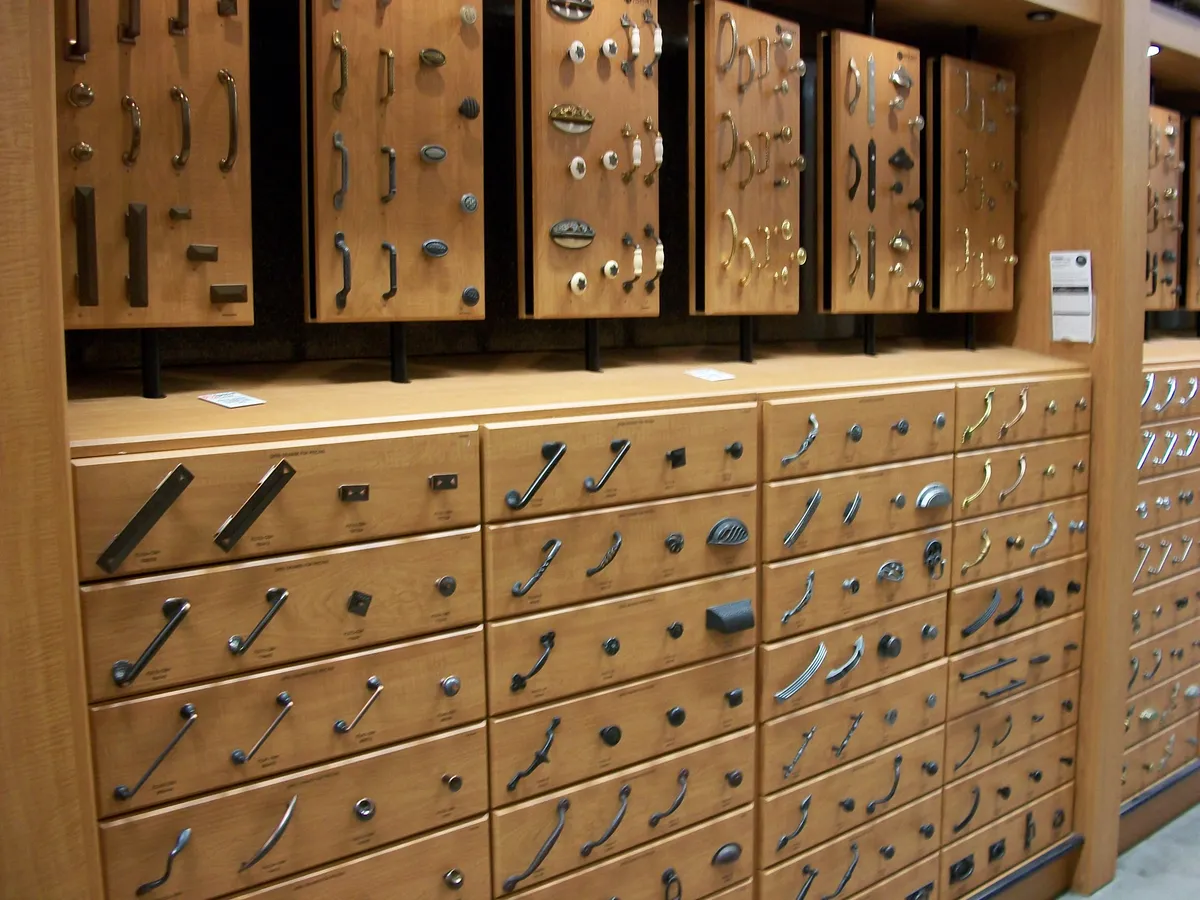
Handles. Stainless steel or aluminium; avoid plated zinc in a bathroom or kitchen where it pits.
Locks. For a main door, a mortise lock with a good cylinder from an established brand, ₹300–₹2,500 and ₹350 to fit. For drawers and wardrobes, a simple cam lock is fine.
Sliding systems. The track and rollers decide whether a sliding wardrobe works in year three. Top-hung systems run more smoothly and keep the bottom track clear of dust, which is the usual reason a sliding door starts jumping. Repairs are ₹500 per door.
Adhesive and fasteners
Ask for a synthetic resin wood adhesive of a known brand rather than an unlabelled tin. For laminate, a proper contact adhesive applied to both faces. Screws rather than nails into any joint that carries weight; nails into end grain hold nothing. For wall fixing, plastic or metal anchors sized to the screw, and into the wall rather than into plaster.
The kitchen is a special case
In a kitchen, water lives under the sink and heat lives beside the hob. The rules:
- BWP ply for the entire carcass, not just the sink unit.
- Stainless steel or aluminium baskets inside, not wooden shelves, in the wet zones.
- Edge banding on every edge, with special care on the bottom edge of every shutter, which is what mopping water reaches.
- Soft-close everything. A kitchen is opened and closed thousands of times a year.
- A separate skirting that can be removed, so a plumbing leak under the sink does not mean dismantling the unit.
Installing ready modular units is ₹150 per sq ft; custom cabinets built on site are ₹500 per sq ft with material at ₹300–₹700.
Where to buy
A plywood and laminate dealer, not a general hardware shop, for boards and sheets: they stock full ranges, stamp the bill with the brand, and will cut to a list. A dedicated hardware shop for hinges, channels and locks, where you can feel a soft-close hinge before buying forty of them. Buy the boards yourself for any large job; give the carpenter the cutting list and go together the first time.
Quick checklist before paying
- Plywood: BIS mark and IS number stamped on the sheet, BWP (IS 710) for wet zones, MR (IS 303) only in dry rooms, even plies at the edge.
- No MDF or particle board in any carcass, and none anywhere near water.
- Laminate 0.8 mm or thicker on shutters; matt or textured in a family kitchen.
- Edge banding specified on every cut edge, inside and out.
- Soft-close hydraulic hinges; telescopic or tandem channels, not roller channels.
- Stainless or aluminium handles; a branded mortise lock on the main door.
- Branded wood adhesive, screws rather than nails in load-bearing joints.
- The material bill with brands and grades, kept.