Wood and plywood move with the weather. They take up moisture in the monsoon and give it back in the dry months, and everything that sticks, gaps, swells or drops does so on that rhythm. Knowing the calendar means fixing things at the moment when the fix will still be right in six months.
Before the monsoon: the inspection that saves the furniture
Pick an afternoon in May, before the first serious rain.
Look for water paths. Every place water can reach wood: under the kitchen sink, behind the washing machine, the bathroom vanity, any carcass against an external wall, the bottom of shutters where the mop goes. Press each bottom edge with a thumbnail. Give it means the core is already taking up water, and the monsoon will finish it.
Check the external walls from inside. Run a hand down the wall behind any unit standing against an outside wall. Damp now means wet in July, and a wardrobe back panel against a wet wall is a wardrobe that goes mouldy from behind. Pull the unit an inch off the wall if you can, so air moves.
Seal exposed edges. Any raw cut edge found during the inspection should be banded or sealed before the humidity arrives. On an existing unit this is small work; afterwards it is a replaced panel.
Check the roof-level and balcony woodwork. Door frames at ground level, any wooden partition or louvre near an open balcony, the mesh doors.
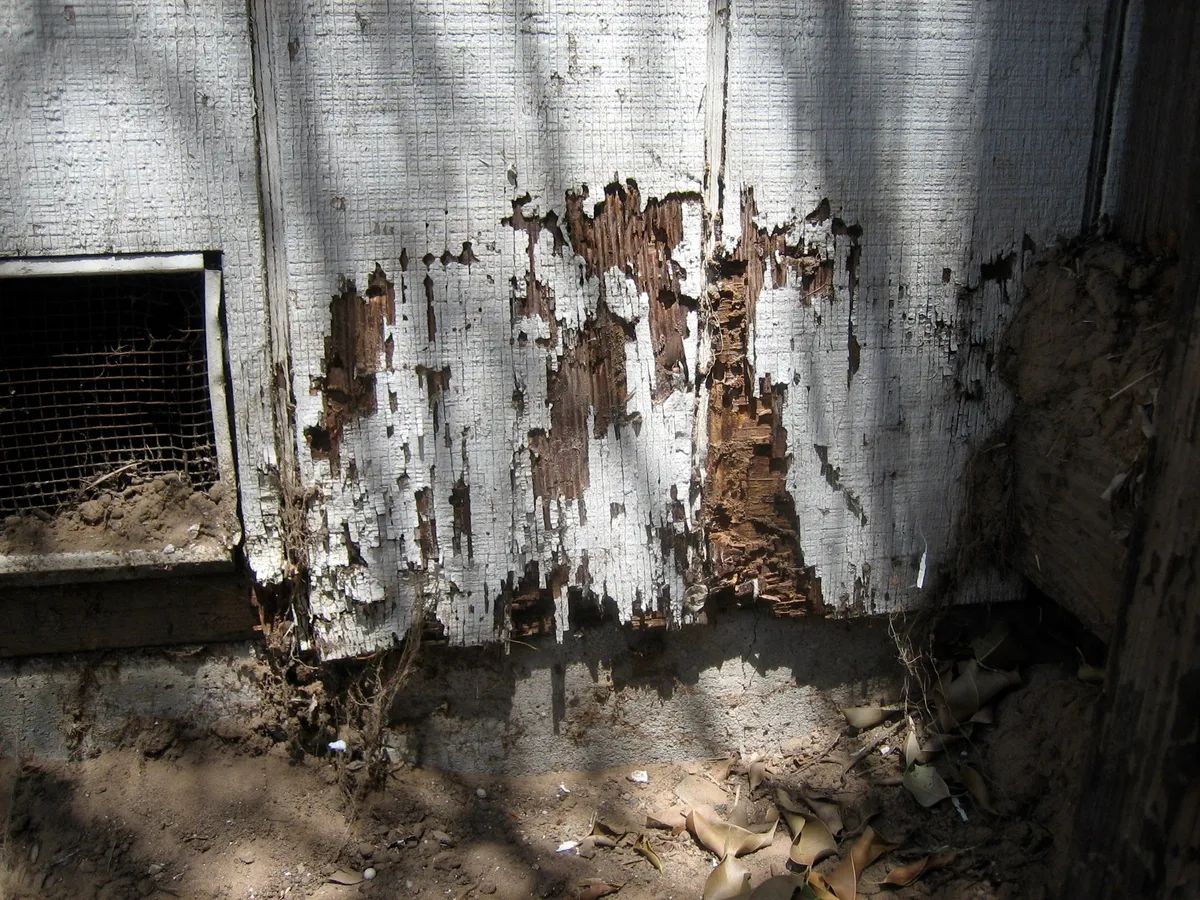
Look for termites. The first rains bring swarming, so May and June are when mud tubes appear. Check behind and under furniture where it meets the wall and floor, tap-test anything that sounds papery, and look for fine dust. Treatment is the pest control service's job and must happen before any new woodwork.
During the monsoon: what to expect
Doors stick. Wood swells. This is normal and it reverses. The rule: if a door sticks only in the wet months, plane it in the monsoon, at its worst, taking the minimum, and seal the planed edge. Planing in February guarantees a gap in July. A door and frame job is ₹1,500 and ₹1,200; planing and re-hanging is usually small work inside a ₹900 day rate.
Shutters stop sitting flush. Same cause. Hinge adjustment at ₹200 per shutter will bring them back, but it is worth waiting until the wet season has peaked so the adjustment is made at the extreme.
Drawers drag. Humidity swells a wooden drawer box against its opening. A candle or wax along the running edge helps; a channel upgrade at ₹350 per drawer solves it permanently.
Mould appears on the back of units. On a damp external wall, behind a wardrobe where no air moves. Clean it, let the wall dry, and leave an air gap behind the unit. If the wall itself is the problem, that is waterproofing and the mason's or painter's job, not the carpenter's.
Keep the kitchen dry at floor level. Mopping water against a shutter's bottom edge every day through the monsoon is the single most common way a kitchen carcass dies.
After the rains: October repairs
October is the right month for most carpentry. Humidity has peaked and is falling, and work done now settles rather than shrinks.
Fix what the monsoon exposed. A swollen shutter replaced at ₹600 plus ₹400–₹1,500. A damaged carcass base rebuilt in BWP at ₹500 per sq ft. A termite-eaten panel at ₹120 per sq ft, after treatment.
Polish and finish work. Melamine or PU polish at ₹45 per sq ft, laminate at ₹60 per sq ft, veneer at ₹110 per sq ft, doors at ₹1,200 per door. Finishes cure badly in high humidity, which is why a polish job in August often stays tacky and one in October does not.
New built-ins. A wardrobe at ₹450 per sq ft or a kitchen at ₹500 per sq ft built in the dry season will have its shutters adjusted once the next monsoon arrives, which is the normal sequence.
The dry season: shrinkage and gaps
Gaps open. Panels shrink, joints in solid wood open slightly, and a door that was perfect in July has a visible gap in February. This is wood behaving normally; it is not a defect and it does not need filling.
Do not over-correct. The temptation is to plane, pack and fill in the dry season. Everything done then has to be undone in the monsoon. Adjust hinges, which is reversible; leave material alone.
Good season for the big jobs. Cutting, assembly and finishing all go better in dry air. Book the wardrobe, the kitchen and the flooring now: wooden or laminate flooring at ₹60 per sq ft, a partition at ₹180 per sq ft.
Festival season
Diwali brings cleaning, repainting and guests, and it is when half the small carpentry in India gets booked in the same fortnight.
Book early. The week before Diwali is the carpenter's busiest, and the same-day premium applies.
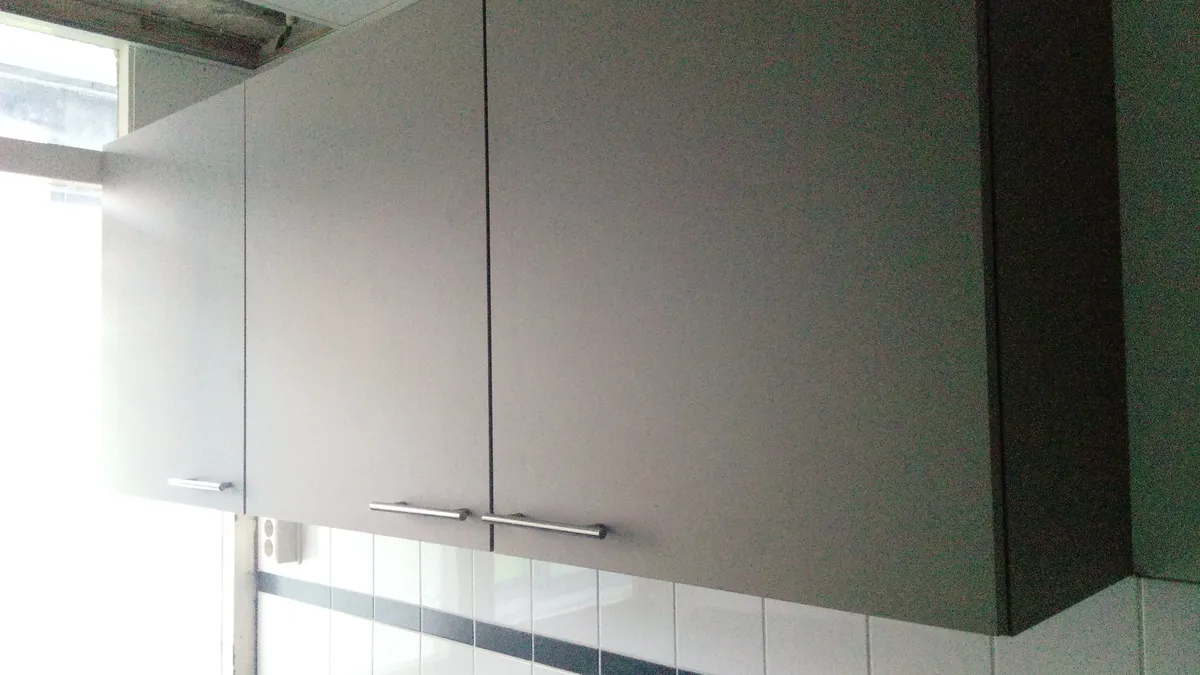
The useful festival jobs: shutter alignment across the kitchen at ₹200 each, handles and hinges replaced at ₹300 per piece, a laminate refresh on tired surfaces at ₹60 per sq ft, a pooja unit at ₹7,000, and the loose bed frame at ₹800 before guests arrive.
Mesh doors before the rains, not after. A mosquito mesh door at ₹900 is the most useful piece of carpentry in an Indian home and everyone books it a month too late.
The annual visit
One planned visit a year, in October, with a list:
- Every kitchen shutter aligned and soft-close reset at ₹200 each.
- Every drawer checked, worn roller channels replaced with telescopic ones at ₹350 each.
- Hinge screws tested; any that spin plugged properly at ₹300 each.
- Wet-zone carcass bases inspected, exposed edges sealed.
- Tall units checked for wall anchoring.
- Sagging shelves supported.
- Sliding tracks cleaned and rollers checked at ₹500 per door.
- Locks lubricated and strike plates aligned at ₹350 where needed.
The carpenter prices each item on its own rate and discounts from the fourth, you pay one ₹300 visit charge that is usually waived, and for a full day of this the ₹900 day rate is usually the cheapest way to buy it. A kitchen that gets this once a year feels five years newer than one that does not.