Furniture in an Indian home faces humidity, monsoon damp, hard use and termites. A wardrobe can look fine for three years and then fail all at once, always for one of five reasons. For each: why it matters, how to check whether you have it, and what it costs to put right.
1. BWP plywood everywhere water can reach
Why it matters. Water is what kills furniture here. Under the kitchen sink, beside the hob, in the bathroom vanity, along the bottom edge of every shutter the mop touches, and against an external wall that goes damp in the monsoon. MR plywood, MDF and particle board all swell irreversibly when they get properly wet. BWP plywood to IS 710, with phenolic glue and a hardwood core, does not.
How to check. Open the cabinet under the kitchen sink and look at the base and the back. Dark staining, a swollen or spongy edge, or a bottom panel that flexes underfoot means the wrong board. Press the bottom edge of a shutter with a thumbnail; if it gives, the core has taken up water. Ask for the original material bill; it names the brand and the grade.
What it costs. Rebuilding a sink unit carcass in BWP is the ₹500 per sq ft custom rate with material at ₹300–₹700. A single replacement shutter is ₹600 plus ₹400–₹1,500. It is cheaper than doing it twice, which is what happens otherwise.
2. Edge banding on every cut edge, not just the visible ones
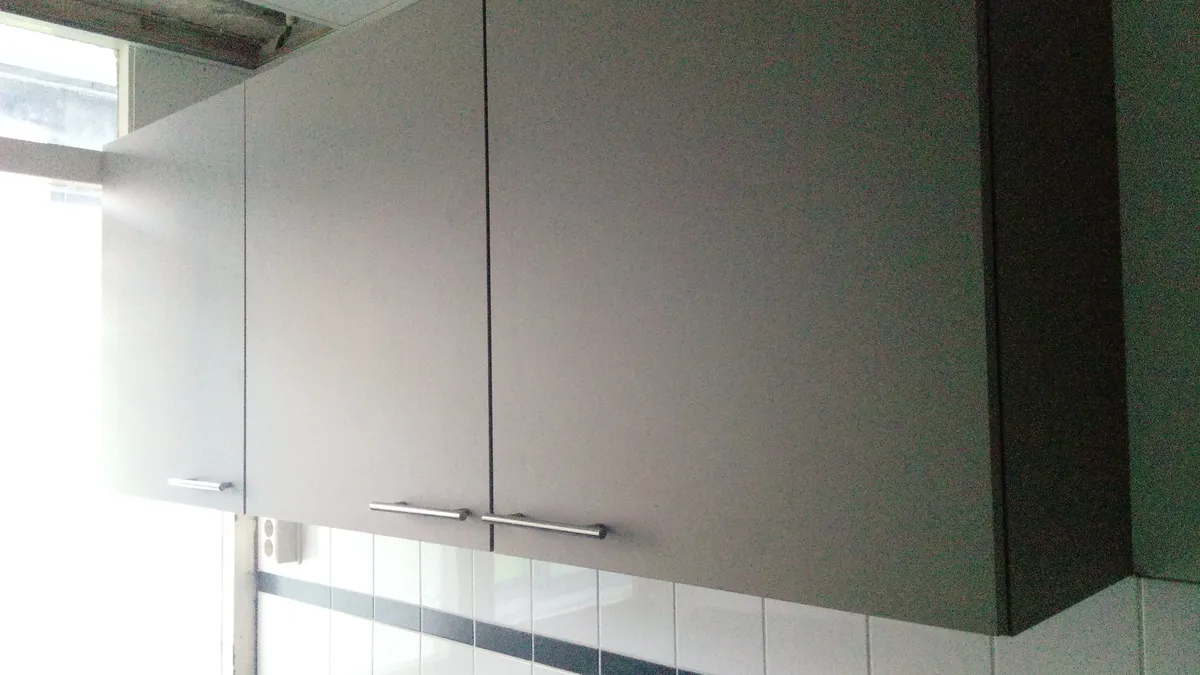
Why it matters. A cut edge of plywood is an open sponge. Humidity enters, the core swells, and the swelling lifts the laminate from underneath. The failure always starts at an unbanded edge, usually the bottom of a shutter or the back edge of a shelf, and by the time it shows on the face it cannot be repaired invisibly.
How to check. Open any cabinet and run a finger along the back edges of the shelves and the inside edges of the carcass. Banded edges feel smooth and sealed; raw plywood feels like layered wood. Look especially at the bottom edge of the shutters nearest the floor.
What it costs. On new work it is a specification, not an extra: insist on 2 mm banding for shutters and visible edges and banding on every internal cut edge. On existing furniture, exposed edges can be banded or sealed during a ₹60 per sq ft laminate job; a badly swollen panel has to be replaced.
3. Soft-close hardware, and hinge screws that bite
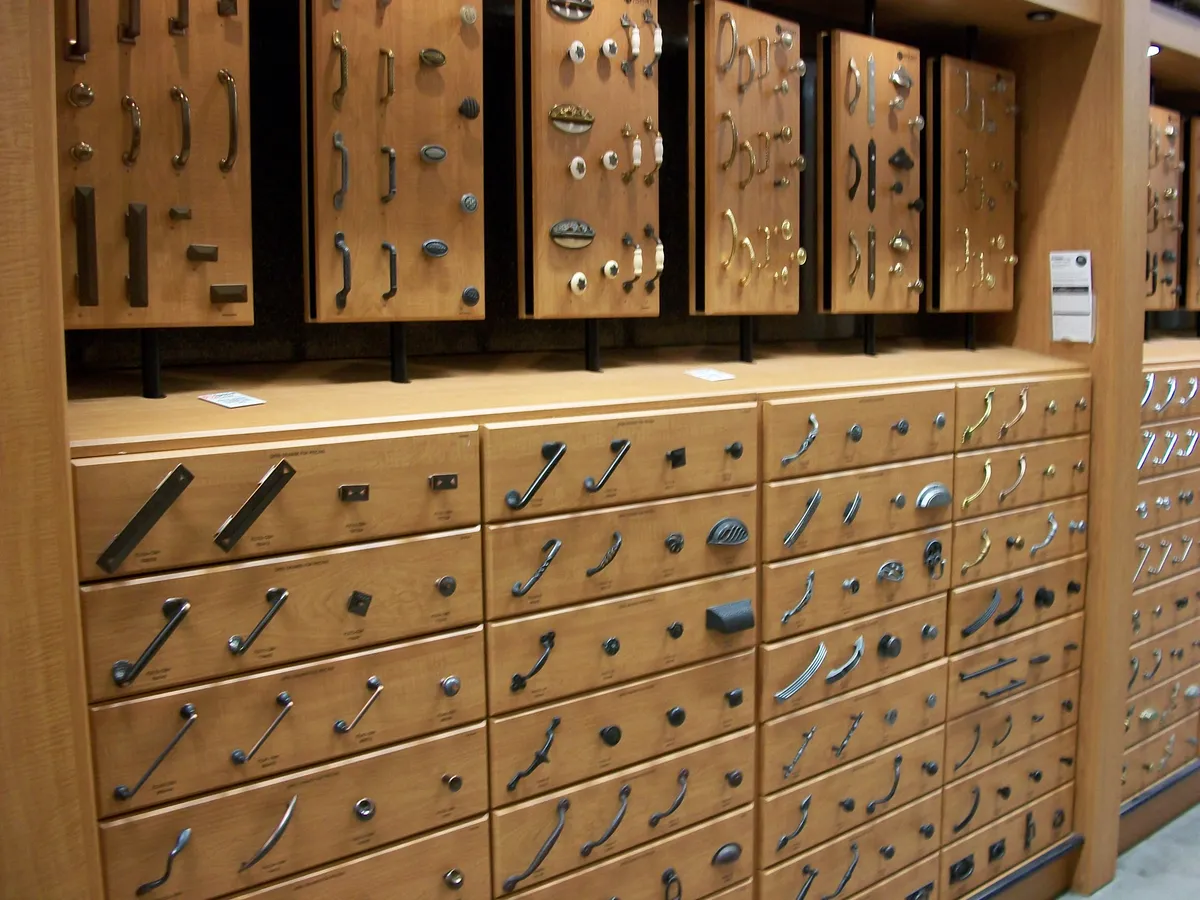
Why it matters. Hardware is what you touch thousands of times a year, and it is the first thing to feel cheap. Roller drawer channels drop a loaded drawer within a couple of years. Slamming shutters loosen their own screws and eventually blow out the board around them. A hinge screw that spins without tightening means the core behind it has swollen and lost its grip, and the shutter will never sit flush again until it is plugged properly.
How to check. Push a shutter closed and let go: it should slow and settle, not bang. Pull a loaded drawer fully out; it should stay level and not tip. Wobble a shutter at its free edge; play means a worn hinge. Try tightening a hinge screw; if it turns forever, the board has gone.
What it costs. Hinge or handle replacement is ₹300 per piece plus ₹100 to ₹500 for hardware. Drawer channels are ₹350 per drawer plus ₹150–₹800. Alignment and soft-close adjustment across a kitchen is ₹200 per shutter, and doing a dozen in one visit is the cheapest improvement available to an old kitchen.
4. Tall units anchored to the wall, and shelves that do not sag
Why it matters. A tall wardrobe or bookshelf that is not anchored can tip, especially with a drawer pulled out or a child climbing. This is the one item on this list that is a safety matter rather than a longevity one. Separately, a shelf span that is too long for its thickness sags permanently under books or crockery, and a carcass without a properly fixed back panel racks out of square so the shutters stop lining up.
How to check. Push gently at the top of each tall unit; it should not move independently of the wall. Look behind or above for an anchor bracket. Sight along each loaded shelf; a visible dip means the span is too long. Check the back panel is fixed all round, not just tacked at the corners.
What it costs. Anchoring is a small job, often done within a ₹900 day rate alongside other work. A sagging shelf is fixed with a batten under the front edge or a mid-span support, and replacing a shelf is priced within the ₹350 per sq ft rate for shelving.
5. A termite plan, before any new woodwork
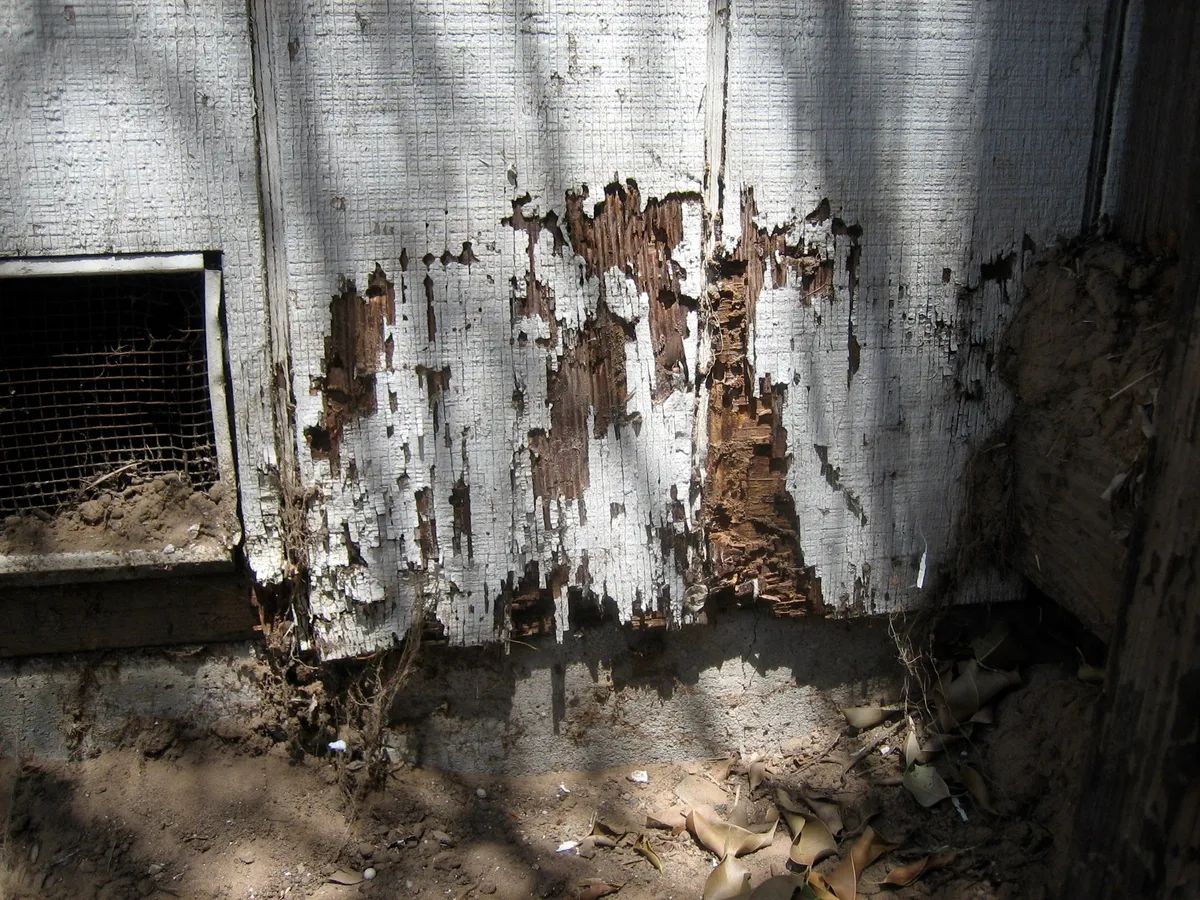
Why it matters. Subterranean termites come up through the wall or floor into a batten and eat the inside of the wood, leaving the surface intact. A wardrobe can look perfect and be hollow. Building new furniture in a house with active termites is money handed to the insects, and the carpentry trade cannot solve it; only treatment can.
How to check. Look for narrow mud tubes on the wall behind and under furniture, especially where it meets the floor. Tap suspect panels: a hollow, papery sound where you expect solid wood is the sign. Check the backs of skirting, the door frames nearest the ground, and anything against an external or bathroom wall. Small piles of fine wood dust are another.
What it costs. Treatment is the pest control service's job and comes first. After treatment, replacing a damaged panel is ₹120 per sq ft plus ₹60–₹200 for material. For new work in a house with any history of termites, specify BWP ply throughout and avoid solid wood battens in contact with the wall or floor.
Doing all five at once
A house that is missing more than two of these is better served by one planned visit than by a series of small repairs. Post the list: the wet-zone carcasses checked and quoted, exposed edges sealed, every hinge and channel assessed with soft-close replacements priced, tall units anchored and sagging shelves supported, and a termite inspection before anything is built.
The carpenter prices each item on its own rate, discounts from the fourth, and you pay one ₹300 visit charge that is usually waived. For a day of mixed small work, ask for the ₹900 day rate instead; it is often cheaper than itemising a dozen small jobs.
The order, if it has to be spread over months: termite check first, because it governs everything else. Then the wet zones, because water is actively working. Then hardware, which is the cheapest visible improvement. Anchoring takes an hour and should not wait for a convenient month.