The gardener does the work, but you usually pay for the materials, and the cheapest bag of "garden soil" at the roadside nursery is where most dead plants start. This is what quality means for each thing you will buy, what to check before paying, and what it should cost in a city nursery.
Potting mix: the one thing never to save on
Soil in a pot has no earthworms, no deep drainage and no reserve. It has to hold water, drain the excess, and feed the plant from a few litres. Garden soil alone does none of this well.
The mix most gardeners in India use, by volume:
- One part soil. Red soil in the south and the Deccan, loamy garden soil elsewhere. It gives weight and minerals. Avoid black cotton soil in pots; it cracks and sets like concrete.
- One part compost or vermicompost. The food and the sponge.
- One part cocopeat. Coir pith, sold as compressed 5 kg blocks that swell to 60 to 70 litres in water. It holds water without going soggy. Rinse a new block twice; unwashed coir carries salt.
- A handful of coarse river sand or perlite per pot for drainage, more for succulents and adenium.
- A spoon of neem cake per pot. It feeds slowly and keeps soil grubs and fungus gnats down.
Buy the parts and have the gardener mix them; a re-pot with fresh mix is ₹60 per pot. Ready "potting mix" in 5 kg bags is fine for a few pots but costs three to five times the parts.
Prices: a 5 kg cocopeat block ₹150 to ₹300; a 25 kg vermicompost bag ₹250 to ₹500; a 20 kg bag of red soil ₹60 to ₹150; neem cake ₹40 to ₹80 a kilo; perlite ₹150 to ₹250 a kilo.
Manure: what the bag should say
- Vermicompost is the safe buy. Dark, crumbly, smells of forest floor, no heat when you push a hand in. If it steams or smells of ammonia, it is not finished and will burn roots.
- Cow dung manure must be at least six months old, dry and crumbly. Fresh dung is the most common cause of a bed full of weeds and a pot that stinks after watering.
- Bone meal and mustard cake are slow feeds for flowering plants and fruit. A spoon a month in the pot.
- NPK and water-soluble feeds are useful in small doses for hungry vegetables and flowering annuals. 19:19:19 at a gram a litre, fortnightly. More is not better; it burns.
A manure and soil treatment visit, where every bed and pot gets compost worked into the top few inches, is ₹700 with the manure bought separately.
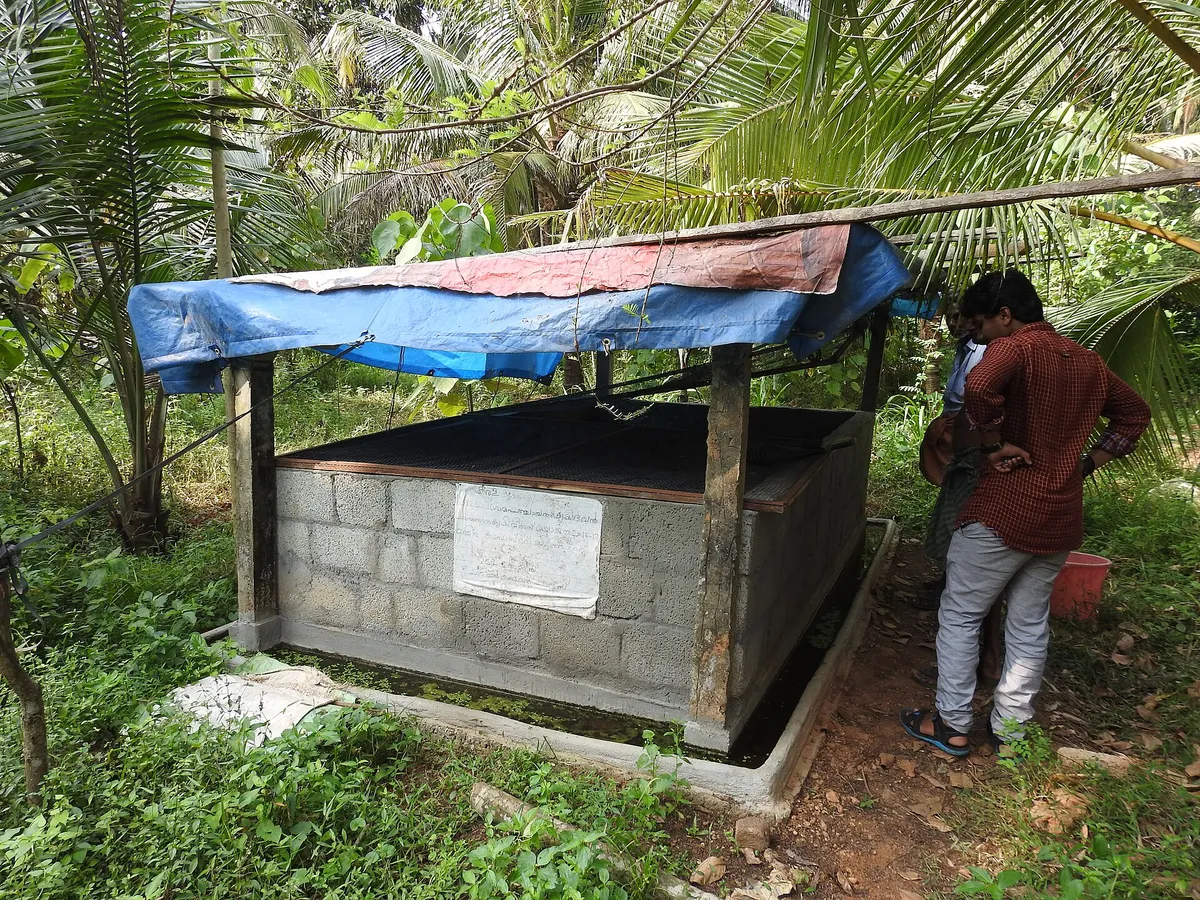
Pots and grow bags
- Drainage holes. At least three in the base. A pot without holes is a vase. If a decorative pot has none, keep the plant in a nursery pot inside it.
- Size. A plant wants a pot about a third wider than its root ball. Jumping a small plant into a huge pot leaves cold wet soil around the roots and rots them.
- Terracotta breathes and dries fast: right for adenium, jade, succulents, rosemary and anything that hates wet feet. Wrong for a terrace in May where it dries out by noon.
- Plastic is light and holds water: right for foliage, hibiscus, curry leaf, and for terraces where every kilo counts. UV-stabilised ones last five years; the thin ones crack in two summers.
- Grow bags of 200 to 400 GSM HDPE are the best value for vegetables. A 12 × 12 inch bag grows a chilli or a brinjal; 15 × 15 grows a tomato; 24 × 24 grows a papaya or a lemon. They drain through the fabric and can be emptied and reused.
- Cement and stone pots stay cool and stable in wind but weigh too much for a roof slab. Ask before putting one on a terrace.
Prices: a 12 inch plastic pot ₹80 to ₹200, terracotta ₹150 to ₹400; a 12 × 12 grow bag ₹40 to ₹100 and 24 × 24 ₹150 to ₹250; saucers ₹20 to ₹60. A terrace garden setup in labour is ₹70 per sq ft, with pots, bags and mix around ₹40–₹120 per sq ft.
Seeds and seedlings
- Seeds are for things that dislike transplanting, such as beans, coriander, methi, radish, carrot and spinach, and for sowing a lot cheaply. Buy packets with a packing date within the year and a germination percentage printed. Loose seed from a bin has no date.
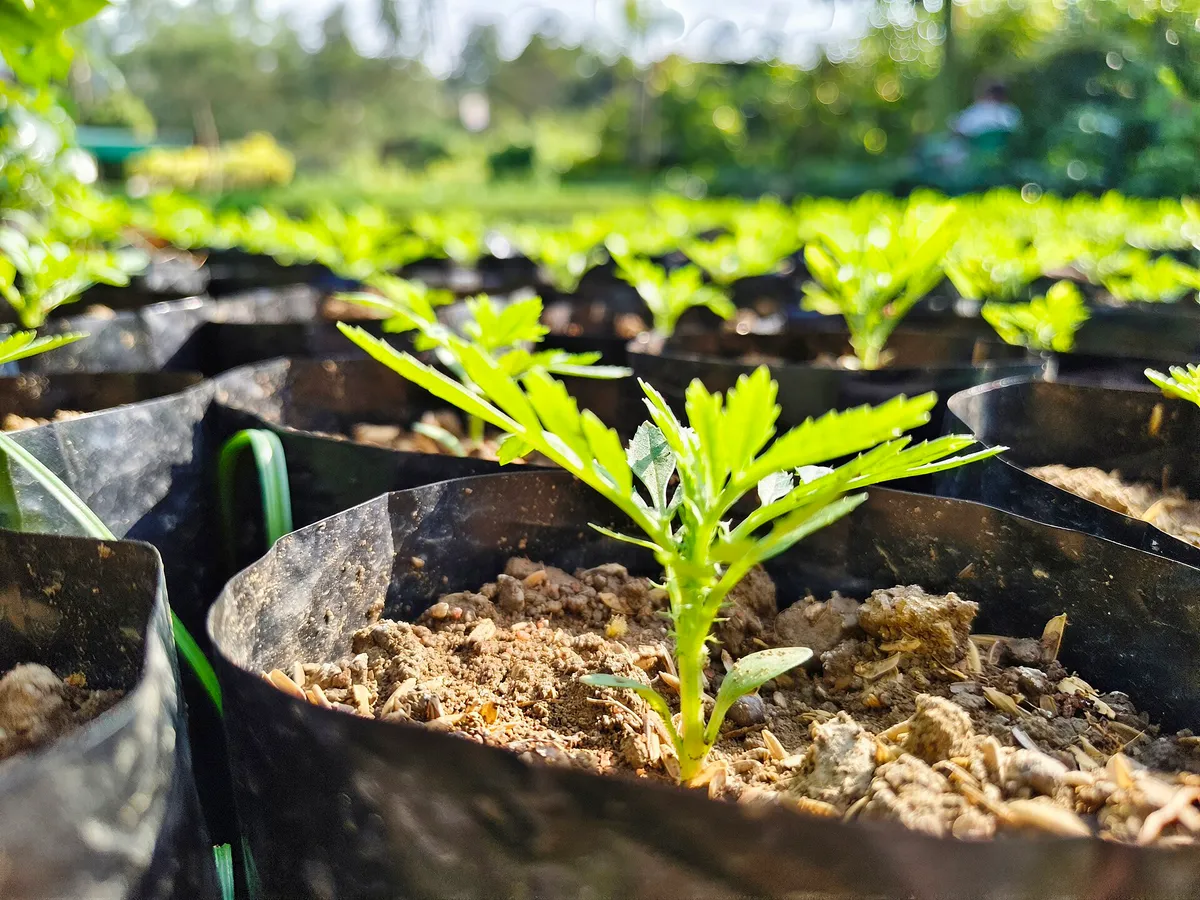
- Seedlings are for tomato, chilli, brinjal, capsicum, cabbage and every flowering annual. A good seedling is short, stocky, dark green, with roots just showing at the drainage holes. A tall pale one has been starved of light and will sulk for a month.
- Grafted plants for fruit: lemon, guava, mango, sapota. A grafted plant fruits in two to three years; a seedling takes seven. Look for the graft union a hand above the soil, healed clean, with no shoots below it.
A seedling is ₹10 to ₹40; a flowering shrub in a 10 inch pot ₹150 to ₹600; a grafted fruit tree ₹300 to ₹1,200. Planting a tree or large shrub is ₹350 each.
Drip irrigation kits
A balcony or terrace kit is simple: a tap adaptor with a screen filter, 16 mm black LDPE lateral pipe, 4 mm micro-tube to each pot, and a dripper per pot.
- Drippers: 2 litres per hour for pots under 10 inches, 4 LPH for larger pots and grow bags, 8 LPH or two drippers for a 24 inch bag. Pressure-compensating drippers cost a little more and give every pot the same water even at the end of a long run.
- The filter is not optional. Tank water carries silt that blocks a dripper in a month.
- A timer on the tap, battery-run, ₹800 to ₹2,500, is what makes the garden survive your travel.
- Pressure. Drippers want at least 1 bar. An overhead tank one floor up gives about 0.3 bar. On a terrace fed from the tank, buy a kit rated for low pressure, or add a small 0.5 HP booster pump.
A fifty-pot kit is ₹1,500 to ₹3,000 in parts. The gardener's labour to lay it is ₹20 per sq ft, and fittings run about ₹10–₹25 per sq ft if the gardener supplies them.
Tools, and the few worth buying well
For a terrace: a hand trowel, a hand fork, a pair of bypass secateurs, a watering can with a rose, and gloves. For a garden with a lawn: add a khurpi, a spade, a rake, a 15 m hose with a spray nozzle, and either a push reel mower for a small lawn or an electric rotary mower for anything over 500 sq ft. Buy the secateurs well, ₹400 to ₹1,200, because cheap ones crush stems rather than cut them. Everything else can be the ₹150 version.
A gardener on a monthly plan brings their own hand tools. A gardener on payroll at ₹5,000 or ₹13,000 uses yours, including the mower.
Sprays and feeds to keep on the shelf
- Neem oil, cold-pressed, 1500 ppm or higher, with a few drops of liquid soap as an emulsifier. Five ml per litre, sprayed in the evening, every ten days when mealybug or aphids show. ₹200 to ₹500 for 250 ml.
- Insecticidal soap or a mild dishwash solution for soft pests on vegetables you will eat the same week.
- A copper fungicide or mancozeb for monsoon leaf spot and damping off. Follow the pack, 2 g a litre, and do not spray in the heat of the day.
- Sticky yellow traps for whitefly and fungus gnats on a balcony. ₹10 to ₹30 each.
A gardener's spray visit, for an outbreak you cannot get ahead of, is ₹600.
Where to buy
The government or horticulture-department nursery in most cities sells honest plants and manure at fixed prices and is the best first stop; Lalbagh in Bengaluru, Sunder Nursery in Delhi, the Agri-Horticultural Society in Kolkata, and the state horticulture nurseries in every district. Private roadside nurseries are fine for pots, cocopeat and common plants; check the root ball before paying. Online is good for seeds, drippers, timers and tools, and poor for plants, which arrive stressed.
Ask the gardener for a written list with sizes and quantities, buy exactly that, and keep the nursery bill. Or ask for the bill in your name if they buy; gardeners on TheHire are reviewed on exactly this after every job.
Quick checklist before paying
- Potting mix is three parts: soil, compost, cocopeat, with sand and neem cake.
- Manure is cool, crumbly and old; vermicompost by preference.
- Every pot has drainage holes; grow bags are 200 GSM or more.
- Seeds carry a packing date; seedlings are short and dark; grafted fruit shows a healed union.
- The drip kit has a filter, the right LPH per pot, and a plan for pressure on a terrace.
- Secateurs are bypass, not anvil, and the one tool you bought well.