You do not need to be a gardener to understand your own garden. Ten minutes with this and you will know why plants die in pots, what the gardener means by "drainage", how much light each thing needs, and which jobs are fine to do yourself.
What soil does
Soil has three jobs: hold the plant up, hold water, and hold air. The last one is the one everyone forgets. Roots breathe. In a bed of good loam, water drains through in minutes and leaves air in the gaps. In a pot of packed garden soil, water sits, the gaps fill, and the roots suffocate in a day. That is why potting mix is a third cocopeat and a third compost: the coir holds water in its fibres while the gaps stay open, and the compost feeds.
Three things tell you a soil is alive. It is dark. It crumbles rather than smears when squeezed. And there are earthworms in a bed, or at least no sour smell in a pot. Red soil in the south is low in organic matter and needs compost every season. Black cotton soil in Maharashtra and the Deccan holds water too well and cracks in summer; it wants sand and compost in beds and should never go in a pot.
Soil also carries food, but not much for long. A pot of mix feeds a plant for three to four months. After that the compost is used and the plant lives on what you add: a spoon of vermicompost a month, a feed of 19:19:19 at a gram a litre fortnightly for hungry things like tomato and hibiscus. A gardener's manure visit at ₹700 is this job done for every bed and pot at once.
Water: the thing that kills most plants
More pot plants in Indian cities die of too much water than too little. The reason is the schedule. "Water every day" is a habit, not a need. A plant needs water when the top inch of the mix is dry, which in a 12 inch pot in December may be every four days and in May may be twice a day.
The test is a finger. Push it to the second knuckle. Dry, water until it runs from the base. Damp, wait. A pot that has no drainage hole, or sits in a saucer of water, cannot be saved by any schedule.
Watering in the early morning is better than the evening in the monsoon and the cold months, because leaves that stay wet overnight grow fungus. In peak summer, early morning and again at dusk for small pots, and a layer of mulch on top, dry leaves or coir, to slow the drying.
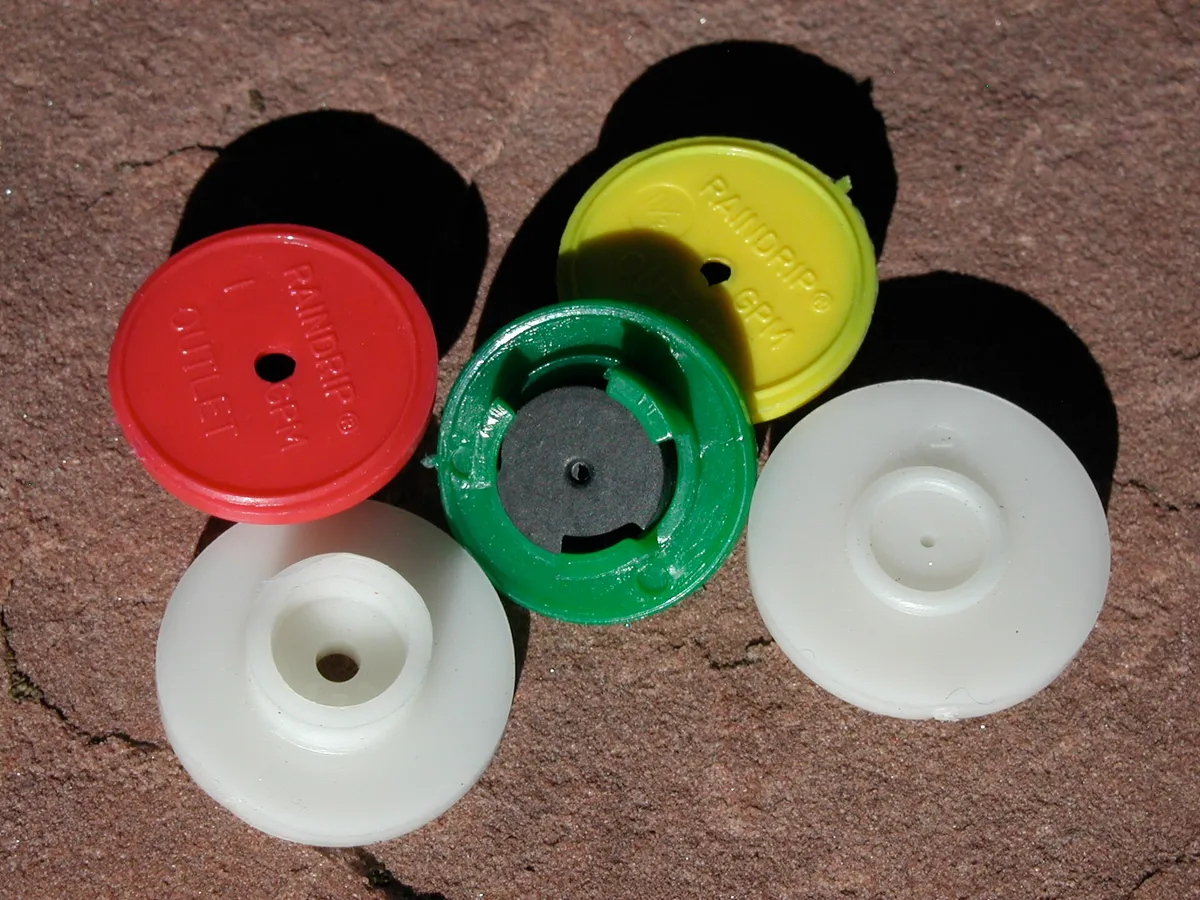
Drip irrigation is simply this done by pipe: a dripper per pot, 2 or 4 litres an hour, run for twenty to forty minutes on a timer. The water goes to the roots, the leaves stay dry, and the pots at the far end get the same as the pots at the tap if the drippers are pressure-compensating. The catch on a terrace is pressure: drippers want at least 1 bar and an overhead tank one floor up gives a third of that, so the kit has to be rated for low pressure or get a small pump. Laying a line is ₹20 per sq ft in labour.
Light: hours, not brightness
Plants are sorted by how many hours of direct sun they need, and no amount of bright shade substitutes.
- Six hours or more: every fruiting vegetable, tomato, chilli, brinjal, bhindi, beans, cucumber; every flowering annual, marigold, petunia, zinnia; roses, hibiscus, bougainvillea, jasmine, curry leaf, lemon.
- Three to five hours: leafy greens, palak, methi, coriander, lettuce, mint; ferns, coleus, begonia, aglaonema, most foliage.
- Under two hours, or bright indirect only: snake plant, pothos, ZZ plant, peace lily, spider plant, areca palm.
Most "the plant is not flowering" complaints are a six-hour plant in a three-hour spot. A north-facing balcony in a city flat gets two to three hours and will not grow a tomato however good the soil. A west-facing terrace gets the full afternoon and will cook a fern. Before buying, stand in the spot at 9, 12 and 3 and count.
Roots, and what a pot does to them
In the ground, roots spread as far as the canopy. In a pot they hit the wall and circle. After a year or two the pot is more root than soil, water runs straight through, and the plant stops. This is root-bound, and it is why a plant that was fine for two years suddenly looks starved.
The fix is a re-pot: tip it out, tease the outer roots loose, cut any that circle, and put it in a pot a third wider with fresh mix. ₹60 per pot with a gardener. The wrong fix is a much bigger pot, which leaves a ring of cold wet soil the roots have not reached, and rots them.
Trees planted in the ground want a pit twice the width of the root ball, manure in the base mixed with the soil, the plant set at the same depth it was in the nursery bag, and a stake for the first year. A ₹350 planting covers this; a tree dropped in a tight hole with the bag's shape intact will sit without growing for two seasons.
Seasons: what the plant is doing when
Indian gardens run on three seasons, not four.
Monsoon, June to September. Growth is fastest and so is fungus. Beds want drainage, pots want to be off the floor on feet or bricks, and watering mostly stops. Leaf spot, powdery mildew and rot are the monsoon problems; a copper fungicide or mancozeb at 2 g a litre is the usual answer.
Winter, October to February. The season of flowers in the north and of vegetables everywhere. Marigold, petunia, chrysanthemum, dahlia, sweet pea, pansy, dianthus go in as seedlings in October and flower till March. Tomato, cabbage, cauliflower, carrot, peas, palak and methi are winter crops.
Summer, March to May. Survival. Bhindi, cucumber, bottle gourd and amaranth grow; everything else holds on. Mulch, morning water, a 50 percent shade net over the pots on a terrace from 11 to 4, and no feeding of plants that are stressed.
In the south and on the coast the lines blur: winter is mild, so the flowering annuals do less, and the vegetable season runs longer.
Pests and what they tell you
A pest outbreak is usually a symptom. Mealybug, the white cottony clusters at leaf joints, arrives on a plant that is stressed by poor drainage or too little light. Aphids come to soft new growth pushed by too much nitrogen. Whitefly likes crowded, still, humid foliage. Red spider mite, the fine webbing under leaves, is a dry-air pest of summer and of plants under a roof.
The first response is water and a soft cloth, or neem oil at 5 ml a litre with a drop of soap in the evening, repeated every ten days. The second is fixing the cause: thinning, moving to light, letting the pot dry. A gardener's spray visit at ₹600 is for an outbreak across many plants, and a good gardener will tell you what let it start.
Five things every garden owner should know
- The finger test for water, and that "every day" is not a schedule.
- The sun count for every spot, done once, before buying anything.
- The drainage hole is not optional, and a saucer is not a reservoir.
- The re-pot cycle: every pot, every two years, into fresh mix.
- What the season is doing, so you do not feed in May or sow tomato in June.
What is fine to do yourself, and what is not
Fine: watering, deadheading, pulling weeds, neem spray, re-potting anything under 12 inches, sowing seeds and planting seedlings, mowing a small lawn.
Better with a gardener: re-potting a large plant, pruning anything over head height, laying turf at ₹25 per sq ft, setting up a terrace at ₹70 per sq ft, or a kitchen garden at ₹45 per sq ft, because the soil mix and the first month decide whether it lives.
Not a gardener's job at all: pruning or removing a tree over 15 ft, anything near a power line, and waterproofing the terrace before the pots go up. Those are a tree contractor, the electricity board and a mason respectively.