Indian homes have three cleaning seasons: the dust of summer, the mould of the monsoon, and the one week before Diwali when everyone wants a team at once. Each has a routine that costs almost nothing, and two professional visits a year cover what the routine cannot. Here is the year, in the order it arrives.
Before the monsoon: the one weekend that matters
Mould needs damp and still air. The weeks before the rains are when you remove the second of those, because once the humidity is at ninety percent nothing dries and anything you missed grows.
- Pull every wardrobe and bed two inches off any outside wall. The wall sweats in the rains; the furniture against it is where the mould starts and where you find it in September.
- Empty the wardrobes once. Leather, silk and anything stored in a plastic cover comes out, is aired in the sun for a day, and goes back with silica gel or a camphor block on the shelf. Plastic covers trap the damp; cotton covers breathe.
- Check every exhaust fan runs. The bathroom fan is the single most useful device against monsoon mould, and half of them are seized by May. A fan that does not run is a ₹700 bathroom deep clean in August.
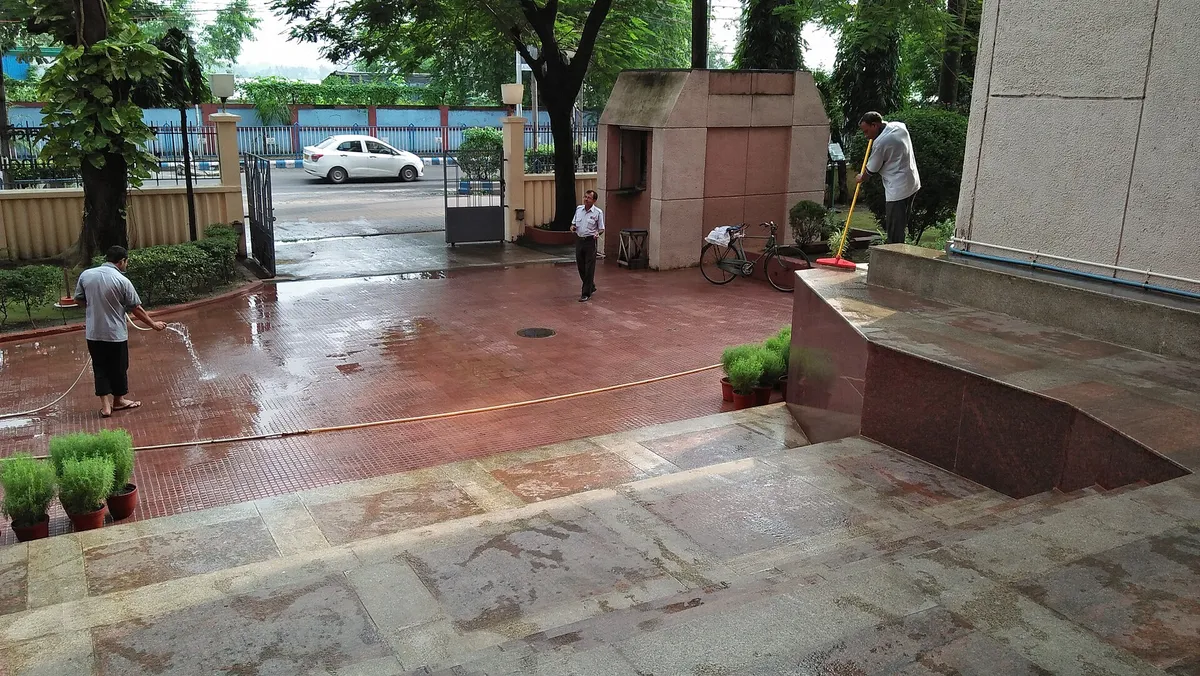
- Wash the balcony and clear its drain. The black film on a balcony floor is algae; a bleach solution and a stiff brush, or the ₹500 balcony wash. A blocked balcony drain in the first downpour is water under the door.
- Clean the water tank. ₹1,200, drained, scrubbed, chlorinated. The rains stir sediment through the supply, and a tank that starts the season dirty gives brown water by July.
- Book the pest treatment if you need one. Cockroaches and mosquitoes multiply in the damp; the pest-control guides cover what to do, and the week before the rains is the week to do it.
During the monsoon: the daily and weekly habits
The routine that keeps a house from smelling of damp is small and daily.
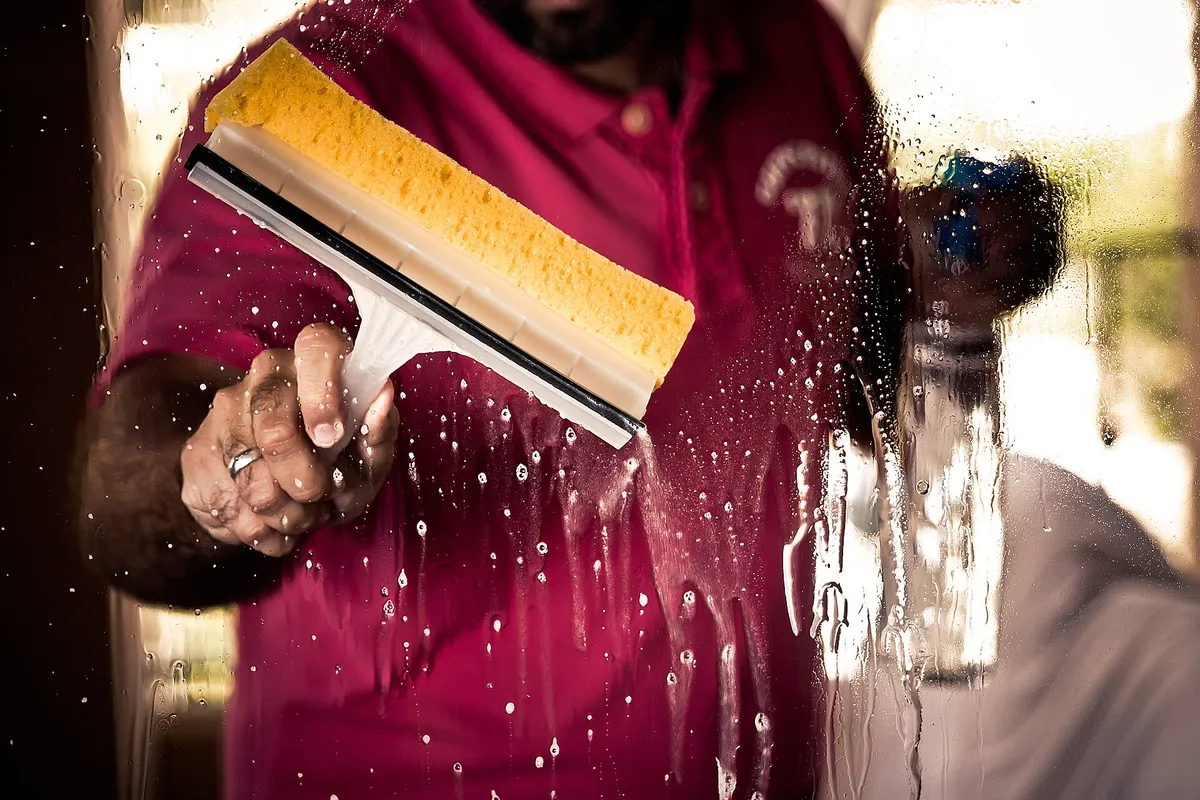
Daily. The bathroom exhaust fan on for twenty minutes after every shower, and the door open afterwards. Wet umbrellas and shoes on the balcony, not in the hall. The squeegee on the shower glass, because scale forms faster when nothing dries.
Weekly. Wardrobe doors open for an hour on any dry morning. A one-to-ten bleach solution on the silicone around the basin and shower, ten minutes, rinsed, with the window open and no acid cleaner in that bathroom the same hour. A jug of water down the guest bathroom drain to keep the trap wet, because a dry trap lets the drain smell in and the monsoon makes everything smell worse.
Fortnightly. The underside of mattresses turned to the fan. The backs of sofas pulled out and the wall behind wiped. The kitchen cabinet under the sink emptied and aired; it is the dampest cupboard in the house and the one where the cockroaches live.
If a room smells musty and you cannot find the mould, it is behind or under something. Look at the back of the wardrobe, the underside of the bed and the wall behind the headboard. A dehumidifier at ₹8,000 to ₹15,000 is worth it in a flat whose bedroom faces the rain; running it four hours a night keeps the room below the humidity where mould starts.
After the monsoon: the deep clean that does the most good
This is the professional visit to book if you only book one. The mould is at its worst, the balcony is black, the grout has gone grey, and the whole house has the smell. A deep clean at ₹5 per sq ft in late September or October, with every bathroom at ₹700 so the mould is killed rather than wiped, the balcony at ₹500, and the mattresses at ₹600 each, is the reset the house needs. Book it a few weeks before Diwali rather than the week of, when every team is full and the surcharge appears.
If the mould on a particular wall comes back within a month of the deep clean, it is not a cleaning problem. Water is coming through the wall, from the flat above, the terrace or the outside, and it is a mason's seepage job. The cleaning team should tell you so.
Diwali: the clean everyone books at once
The pre-Diwali clean is a tradition, and it is also the week when cleaning teams are booked solid and prices climb. Three ways to make it work:
- Book early. Two to three weeks ahead. A same-day booking in Diwali week pays the surcharge and gets the team that was free for a reason.
- Do the kitchen properly. It is the room that gets the most use in the festival and the one where the grease has built since last year. ₹1,500 for the kitchen and ₹1,200 for the chimney filters, which will be solid with a year of frying.
- Sofas and curtains. Guests sit on them. ₹180 per seat for a shampoo, ₹250 per pair steamed in place, and the chairs at ₹120 each. Four or more items together earns the discount.
If you did the post-monsoon deep clean, the Diwali clean can be a regular visit at ₹3 per sq ft plus the kitchen, which is a far smaller bill than the whole house in the busiest week of the year.
Summer: the dust
From March the problem changes from damp to dust. Road dust through open windows settles on fans, grills, window tracks and the tops of every surface, and the first humid week of June turns it into a film that needs a cleaner rather than a duster.
- Fans weekly with a long-handled duster, before the dust bonds. Fans that get this never need the ₹80 per fan professional job.
- Window tracks and grills monthly. A brush, the vacuum, a wipe. ₹70 per window if you would rather a team did them all in one go.
- AC grilles and the wall around the indoor unit before the AC season starts; dust on the grille goes into the room every evening. ₹150 each if the team is already there. The AC's own service is the AC technician's.
- Curtains down and washed or steamed once in summer, because they are the biggest dust filter in the room.
The two visits a year
Houses that do not call cleaning teams in a panic are the ones with a fixed pattern: a deep clean after the monsoon, a lighter visit before Diwali or in spring, the tank twice a year, and the daily and weekly habits in between. For a working household, a weekly visit at ₹900 a day or a daily arrangement at ₹4,500 a month carries the habits; the two professional visits carry the machines.
What the cleaning year cannot fix: the mosquitoes that breed in the balcony drain and the cockroaches under the sink are the pest-control trade's, and the pre-monsoon week is theirs too. The floor that has gone dull from a year of the wrong cleaner is the floor polisher's. And the monsoon's casualties among the curtains and the sofa covers are the laundry's. The guides for those three trades are written to follow this one.