The difference between what a professional team does and what a good maid does is not effort. It is order, chemistry, machines and time, in that sequence. Here is how a deep clean actually unfolds, so you know what you are buying at ₹5 per sq ft and can tell when a team is skipping the parts that matter.
The walk-in
A good team spends the first ten minutes not cleaning. The supervisor walks every room with you and asks three things: what the floors are made of, what the worst spots are, and what is off-limits. The floor question decides the chemicals. Vitrified tile takes almost anything; marble, Kota, granite and wood take only a neutral cleaner and a soft pad, and an acid that would be routine in the bathroom will etch them in minutes. The worst spots get photographed, which is the before half of the before-and-after you should expect. Off-limits usually means the pooja room, a study with papers out, or a cabinet of medicines.
They also check water and power at every point they will use. The scrubber and the wet-dry vacuum run on a 6A socket; the bathroom work needs the tap running. A dry overhead tank at eleven in the morning is the most common reason a deep clean stops halfway.
The order: top to bottom, dry to wet, mild to strong
Everything in a professional clean follows three rules, and once you know them you can see at a glance whether a team knows its trade.
Top to bottom. Dust falls. Ceiling fans, cobwebs and the tops of wardrobes come first, then light fittings and curtain rods, then walls, switch plates and furniture, then skirting, then the floor. A team that mops the hall and then dusts the fan will mop it again or leave it grey.
Dry before wet. Sweeping and vacuuming before any water touches a surface. Wet dust is mud, and mud in grout is why a mopped floor looks dirty by evening.
Mild before strong. The neutral cleaner first, everywhere. Then the degreaser only where there is grease, the acid only where there is scale, and bleach only where there is mould, with a rinse between each. This is the order that keeps the acids and bleach apart, which matters more than any other rule in the house.
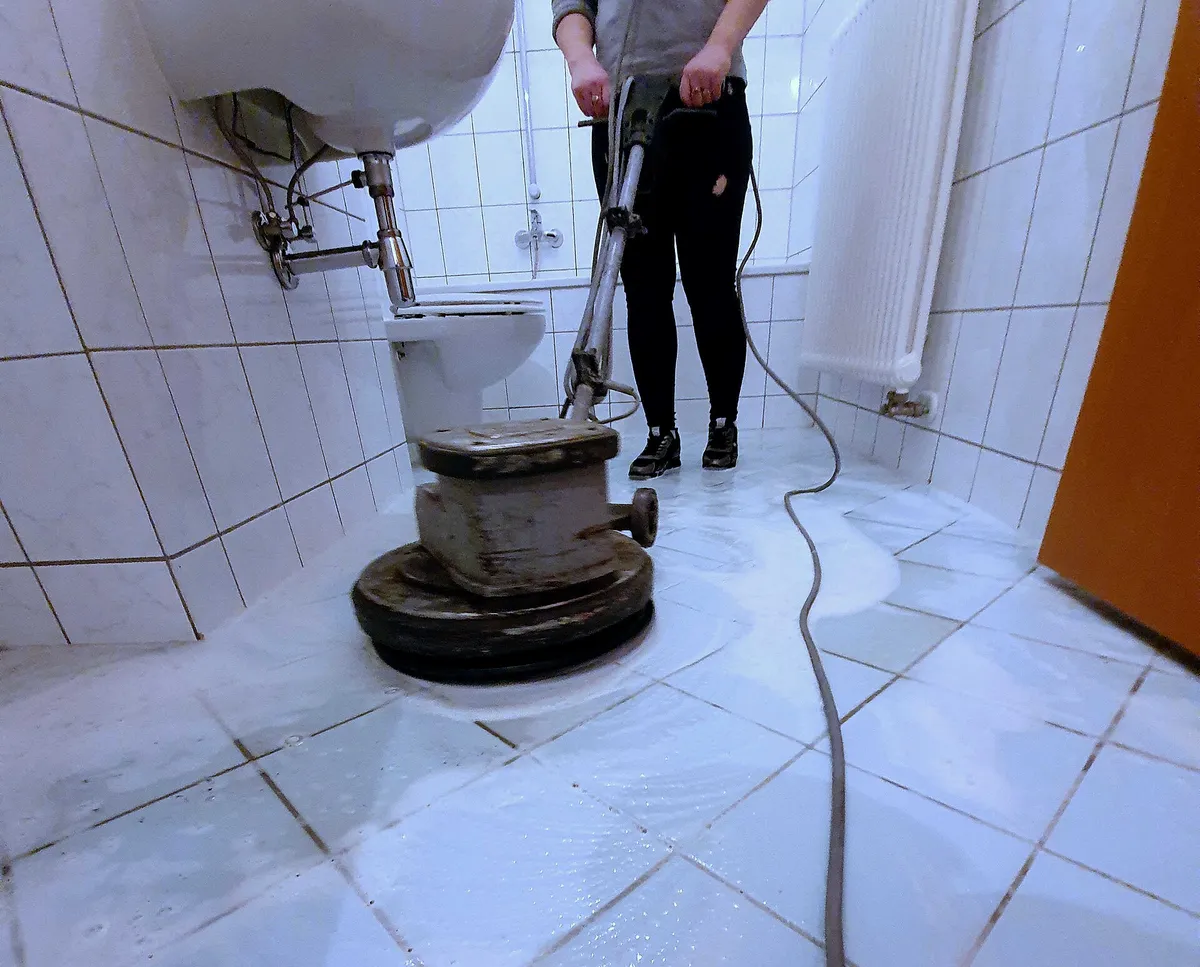
The machines, and what each one does
- Single-disc scrubber. A heavy motor spinning a pad or a brush at a few hundred revolutions a minute. On tiles and Kota it lifts the film that mopping cannot; on marble, with a soft pad and a neutral cleaner, it cleans without cutting. It is the machine that justifies the deep-clean rate over the ₹3 per sq ft regular rate.
- Wet-dry vacuum. Picks up the dirty water the scrubber leaves, so the floor is not rinsed with its own dirt. The same machine, with an upholstery nozzle, does the extraction half of the ₹180 per seat sofa shampoo and the ₹600 mattress job.
- Steam cleaner. Hot vapour under pressure for grout lines, tap bases, the rubber seals of the fridge and curtains steamed in place at ₹250 per pair. It disinfects without a chemical, which is why it is used around food and on fabric.
- A hand drill with a brush head for the corners the disc cannot reach, and a set of scrapers for cement and paint after a renovation, where the ₹8 per sq ft rate comes from.
Room by room: what happens and how long it takes
Bathrooms, about an hour each for a deep clean. Degreaser on the tiles around the basin and the floor near the door, where soap and skin oil build up. Rinse. Acid descaler on the taps, the shower glass, the WC and the floor near the drain, left ten minutes. Scrub with a non-scratch pad, or the disc machine if the floor is textured. Rinse. Bleach solution on any black mould at the silicone and the ceiling corners, ten minutes, rinse, window open. Exhaust fan grille off and washed. Drain cover lifted and the trap cleared of hair. Fittings dried with a cloth so the water does not leave new scale. That is the ₹700 bathroom. The ₹400 standard clean is the same without the ceiling, the fan and the descale.
Kitchen, two hours. Counters cleared. Degreaser on the tiles behind the hob and the hob itself, fifteen minutes, scrubbed and rinsed. Cabinet doors and handles wiped with degreaser, then neutral cleaner. Sink descaled and the drain trap cleared. The outside of the fridge, the microwave and the water purifier wiped. Floor scrubbed last, with attention to the strip under the counter edge where oil drips. The chimney is separate: its baffle filters come out and go into a caustic soak for an hour, which is the ₹1,200 job, and nobody does it with a cloth.
Bedrooms and hall, forty minutes a room. Fan and cobwebs, wardrobe tops, window tracks with a brush and the vacuum, grills wiped, switch plates, skirting, the floor swept and then scrubbed or mopped depending on the stone. Mattresses vacuumed with the upholstery head on both sides; sofas vacuumed, and shampooed if you booked it.
Balcony, thirty minutes. Degreaser and a stiff brush on the floor, the railing wiped, the drain cleared. If the balcony has not been washed since the last monsoon, the black film is algae and needs a bleach solution and dwell time, which is what the ₹500 balcony wash pays for.
The walkthrough
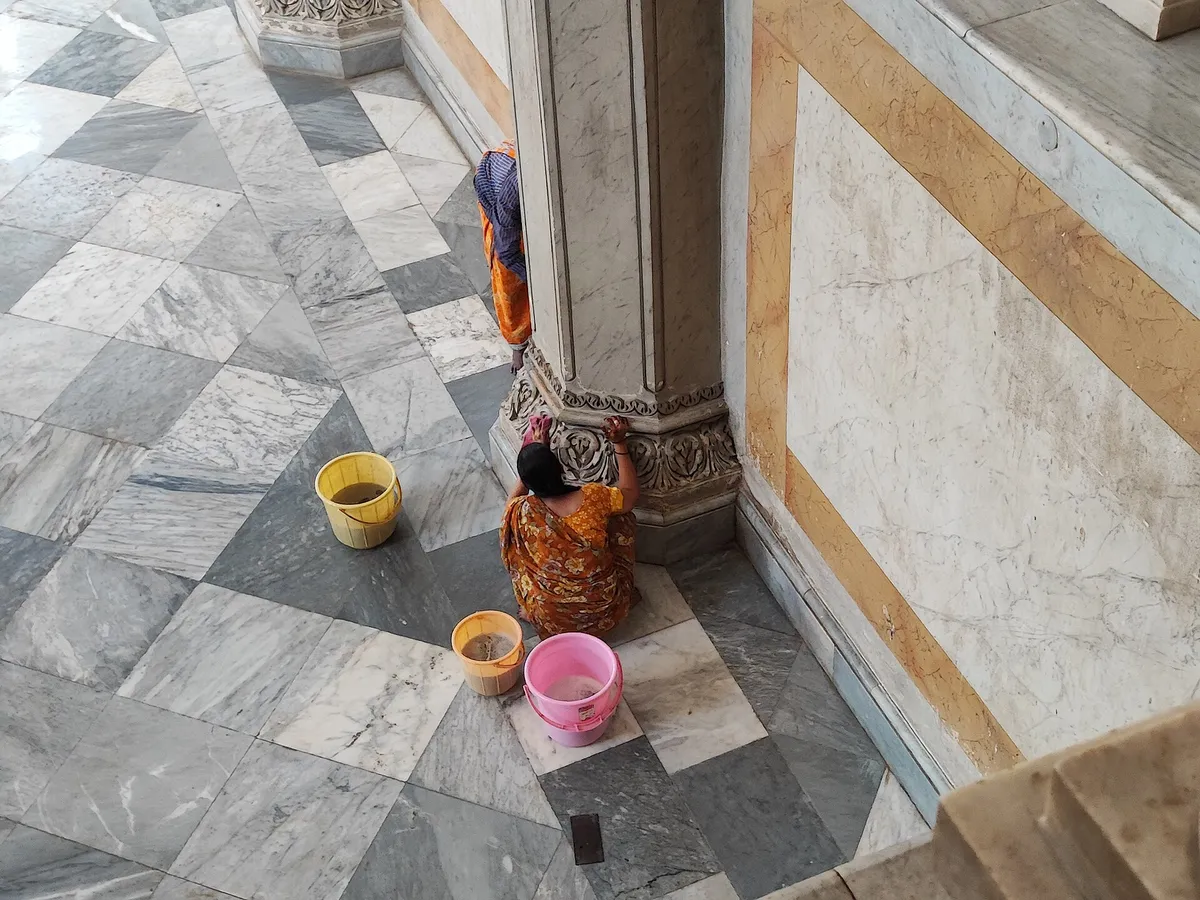
The job ends the way it started: the supervisor walks every room with you. You point at anything you are not happy with and it is redone before the team packs the machines. The after photos are taken now. If a team is loading the van before you have walked the house, stop them; the ten minutes of redoing is part of the price, and it is far easier now than on a return visit. Most teams on TheHire also ask for the review at this point, because the review is what their next job depends on.
What is fine to do yourself, and what is not
Daily and weekly cleaning is yours or your help's: sweeping, mopping with a neutral cleaner, wiping the kitchen after cooking, a squeegee on the shower glass, the WC with toilet cleaner once a week. None of it needs a professional, and a house that gets this attention needs the professional deep clean once a year rather than twice.
Three things are worth paying for. The scrubber on grout and textured floors, because there is no hand equivalent. The chimney filters, because the caustic bath and the gloves are not something to keep in a flat with children. And anything on marble that has already gone dull, which is not a cleaning job at all but a polishing one, and the floor-polishing guides explain why.
Two things to never do yourself: mix bleach with anything acidic, and use a scouring pad on a glossy surface. Both are permanent in their own way. The pest-control guides cover what happens when the cleaning uncovers cockroaches or termites, which it often does, and the laundry guides take the sofa covers and curtains that need more than a steam.