Every household makes the same six cleaning decisions, usually by default. Here is each one laid out: what the options are, what each costs, and when each is right. None of them has a single answer; all of them have a wrong one for your situation.
Deep clean or regular clean
A regular clean at ₹3 per sq ft is a mop, a dust and a wipe: the surfaces you can see, in two or three hours, no machine. It keeps a clean house clean. A deep clean at ₹5 per sq ft is the floor scrubbed by machine, fans and walls, bathrooms descaled, the kitchen degreased, window tracks, skirting, mattresses vacuumed; four to six hours for a 2 BHK with two or three people. It makes a dirty house clean.
Deep clean when: it has been six months or more, after the monsoon, before Diwali, before or after a move, after any renovation (at the ₹8 rate, because of the cement and paint), or when the grout and the shower glass have gone grey and white and no mopping shifts them.
Regular clean when: the house is kept up and you want it done properly once a week or fortnight without a daily arrangement, or in the gap between two deep cleans.
The mistake is to book a deep clean every month, paying for machines that have nothing to lift, or to book a regular clean once a year and wonder why the grout is still grey.
A professional team or a monthly maid
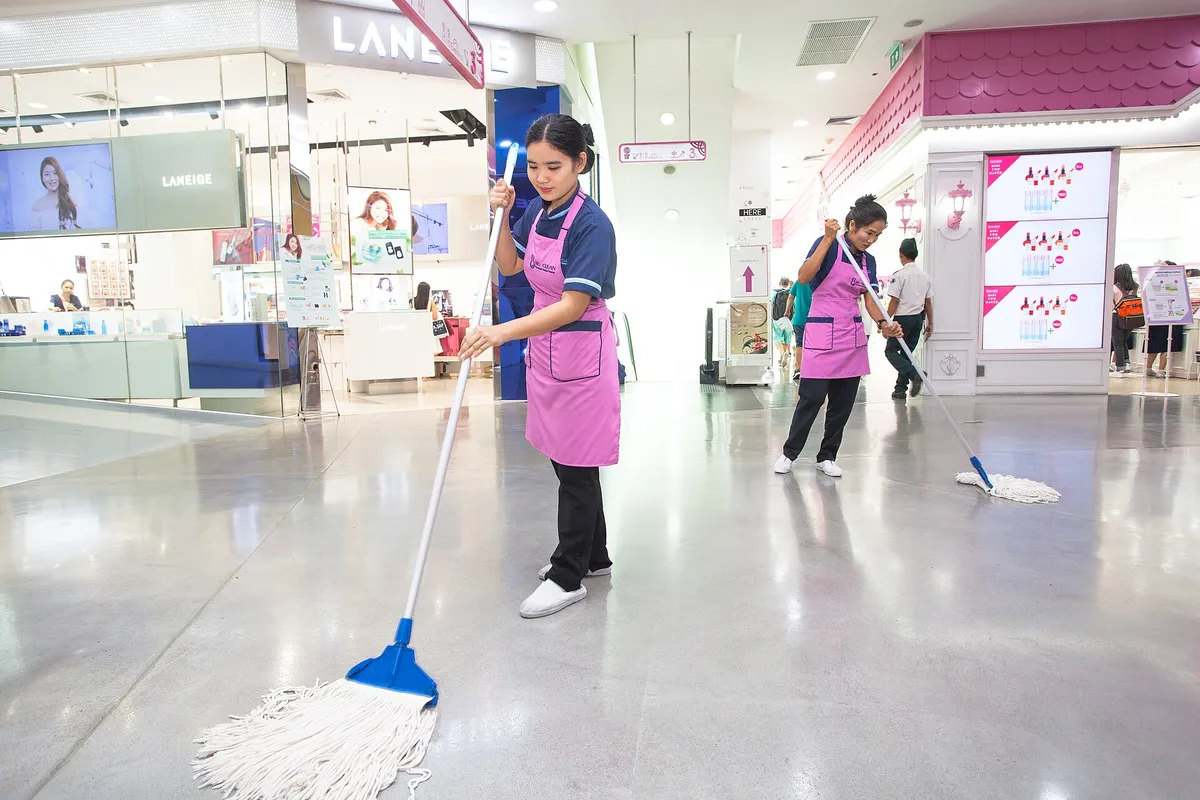
Different jobs, not competing ones. A team brings machines, chemicals and a method, and leaves. A maid comes every day, uses what is in the house, and keeps it from getting dirty in the first place.
A maid at ₹4,500 a month suits a family at home a lot, a house with children or pets, and anyone who cooks daily. Add dishes at ₹2,500 if you want them done. A full-day housekeeper at ₹12,000 is for a larger home or one with elderly members, and covers laundry and more. The cost over a year is the whole of what you spend on cleaning, and the house is never dirty.
A team only suits a working couple in a small flat who keep it tidy: a deep clean twice a year and a regular clean monthly, with the squeegee and the duster in between. Cheaper over a year, and nobody has a key.
The middle path is a weekly deep-clean visit at ₹900 a day: one proper clean a week by one person who knows the house, with a professional team for the twice-yearly machine job.
Which cleaner for the floor
The choice here is not between brands; it is between chemistries, and the floor decides.
Vitrified or ceramic tile: anything. Phenyl, a branded floor cleaner, a mild bleach solution on a bathroom floor. Tile is glass-hard and does not care.
Marble, Kota, granite, terrazzo, sandstone: a pH-neutral cleaner only, at the label dilution. Acids etch stone and leave it dull in the traffic lanes; strong alkalis strip the polish. The marble floors that look grey in a ten-year-old flat were cleaned with the wrong thing for ten years. If yours is already there, it is the floor-polishing trade's job, not a cleaning one.
Red-oxide and cement: neutral cleaner, a damp mop rather than a wet one, and a coat of wax once a year. These floors are porous and absorb whatever is poured on them.
Wood and laminate: a barely damp mop with a neutral cleaner. Standing water swells the boards within hours.
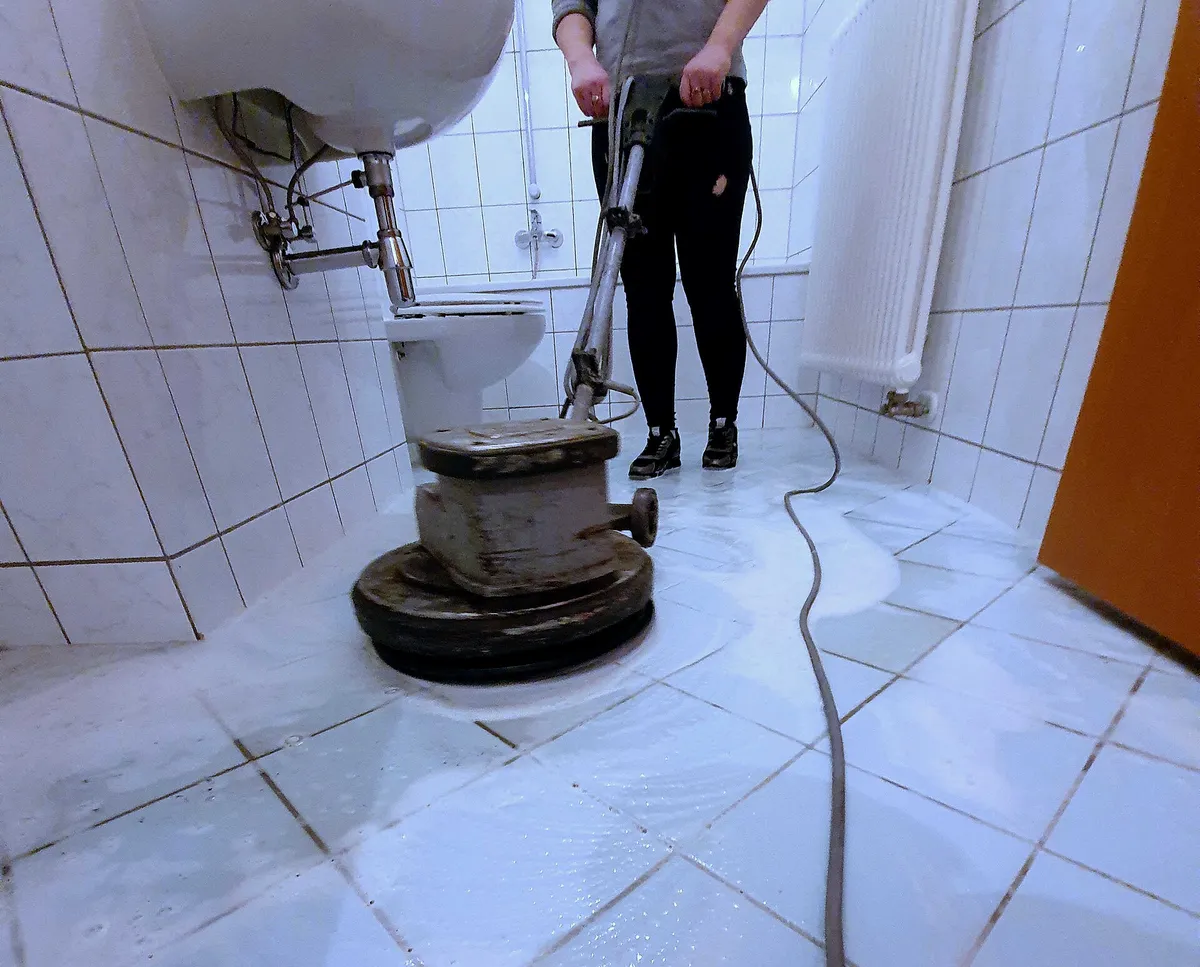
A professional deep clean on stone uses a soft pad on the disc machine and a neutral cleaner; the ₹5 per sq ft rate is the same, but the method is different, and a team that does not ask what the floor is will use the tile method on everything.
Sofa shampoo or dry foam, and what the label says
Under a cushion is a tag with a letter. W means water-based cleaning is safe: a shampoo and extraction with a wet-dry vacuum at ₹180 per seat, which lifts the dirt out and leaves the fabric damp for a few hours. S means solvent only: a dry foam or a solvent spray, worked in and vacuumed off, because water will shrink or watermark the fabric; same price, different method. WS means either. X means vacuum only, and no cleaning team can do more than that without risk.
Most Indian sofas are W or WS, but the velvet and linen-look fabrics that have become common are often S, and a shampoo on them leaves rings that do not come out. Ask the team to find the tag before they start, and if there is no tag, to test in a hidden spot. Leather is its own case: a leather cleaner and conditioner, no shampoo, no steam.
Mattresses are never shampooed. The ₹600 mattress job is a vacuum on both sides, a sanitise with steam or UV, and the mattress stays dry. A mattress that has been shampooed takes days to dry and grows mould inside.
Steam or chemical
A steam cleaner uses hot vapour under pressure and no chemical. It is excellent on grout lines, tap bases, the rubber seals on a fridge door, curtains in place at ₹250 per pair, and anywhere you do not want a residue, such as a kitchen counter or a child's room. It disinfects by heat. It does not remove scale, which needs an acid, or heavy grease, which needs an alkali, and on a whole floor it is slow.
Chemical cleaning is faster and stronger for scale and grease, and it is what the ₹500 descale and the ₹1,500 kitchen job rely on. The trade-off is residue, fumes, and the mixing rules that come with acids and bleach.
A good team uses both: chemicals where chemistry is needed, steam for the fine work and the fabric. If you are buying one machine for the house, a wet-dry vacuum at ₹5,000 to ₹12,000 does more than a steam cleaner at a similar price, because it is the extraction half of every upholstery job and the water pick-up for the bathroom.
Cleaning team or a different trade
The last choice is knowing when the problem is not a cleaning problem.
- Mould that returns within a month of a bleach treatment is water coming through the wall: a mason's seepage job.
- A marble floor that is dull, not dirty is etched: the floor polisher's.
- A drain that is slow after the trap is cleared is blocked further down: the plumber's.
- Cockroaches, ants, termites, bed bugs are the pest-control trade's. A cleaning team that offers to spray something is not the right team for the pests, and the pest-control guides explain what a proper treatment involves and why a deep clean before it helps.
- Curtains and covers that a steam does not save go to the laundry, and the laundry guides cover what can be machine-washed and what needs dry cleaning.
The pattern behind all six
Every choice above comes down to the same thing: match the method to the dirt and the surface. A scrubber on grout and a neutral cleaner on marble; a shampoo on a W sofa and dry foam on an S one; a maid for the daily and a team for the twice-yearly; a cleaner for dirt and another trade for the cause. The cost estimator prices whichever combination you land on for your city, and the teams on TheHire who reply are the ones who will ask the questions this guide has, before they start.