Every cleaning team on TheHire hears the same ten complaints week after week. For each one: what is usually behind it, what you can safely try first, when to call, and what the call should cost in a typical Indian city.
1. White scale on taps, shower glass and the WC
Usually: hard water. Most Indian cities run borewell or mixed supply with a lot of dissolved calcium and magnesium, and every drop that dries leaves a little behind. The cloudy glass, the rough tap base and the ring in the bowl are the same mineral.
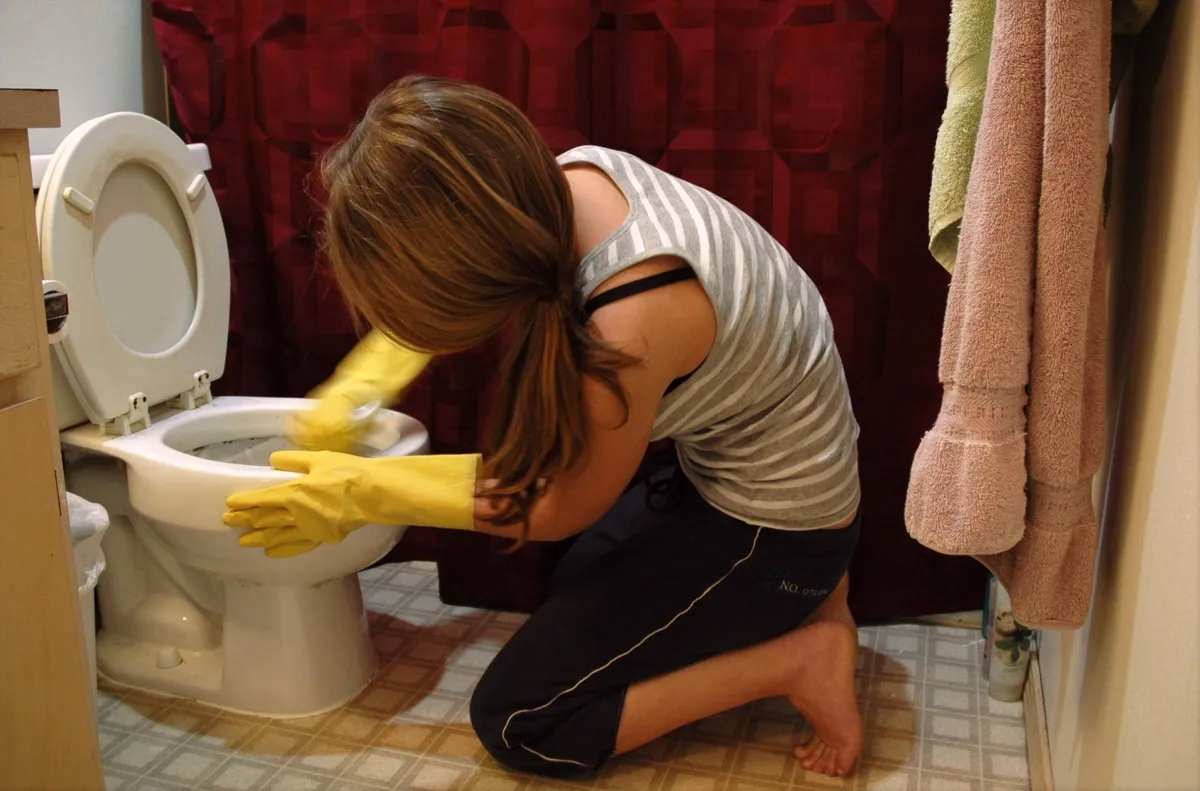
Try first: a citric descaler or plain white vinegar on a cloth, left ten minutes, then a non-scratch pad. On the WC, undiluted toilet cleaner, ten minutes, brush. Never on marble.
Call for: scale that has gone thick and yellow, usually on glass and in the WC rim. ₹500 per bathroom for a professional descale, which is a stronger acid, a longer soak and a second pass. A tap aerator that has clogged with scale unscrews and soaks in vinegar overnight; that one is yours.
2. Black mould on the bathroom ceiling and the silicone
Usually: damp air that does not leave. Hot showers, no exhaust fan or one that is never switched on, and the door kept shut. The silicone bead around the basin and the shower tray goes first because it stays wet longest.
Try first: one part bleach to ten parts water, sprayed on, left ten minutes, rinsed, with the window open and nothing acidic used in the same hour. Then the exhaust fan on for twenty minutes after every shower.
Call for: a ceiling that is more black than white, or mould that returns within a fortnight of bleaching. The ₹700 deep clean includes the ceiling and the fan grille. Mould that comes back after that is seepage from the flat above or the wall outside, which is a mason's job, not a cleaner's.
3. A chimney that drips oil and barely pulls
Usually: the baffle filters are blocked with grease. Indian cooking puts more oil into the air than most chimneys were designed for, and a filter that has not been soaked in six months is a sheet of fat. The motor is probably fine.
Try first: the filters out, into a tub of very hot water with a strong degreaser or dishwasher powder, an hour, then a brush. Wear gloves. If the grease is solid, this will not shift it.
Call for: ₹1,200 for a professional filter soak in a caustic bath, the hood degreased inside and the duct outlet checked. Twice a year for a family that fries daily. A chimney that still will not pull after a clean has a motor or duct problem, which is the appliance technician's.
4. The kitchen tiles behind the hob are sticky and yellow
Usually: aerosolised oil that has settled and oxidised. Water and floor cleaner do nothing to it; it needs an alkali.
Try first: degreaser spray, fifteen minutes, non-scratch pad, rinse. Repeat once. Baking soda paste for a lighter film.
Call for: a kitchen that has not been degreased in a year, or cabinet doors that have gone tacky. The ₹1,500 kitchen deep clean does the tiles, the hob, the counters, the cabinet fronts and the sink; add ₹700 for the insides if you empty them first, and ₹350 for the microwave or OTG.
5. A bad smell in a bathroom that looks clean
Usually: the trap under the floor drain or the basin. It is full of hair and soap, or it has dried out in a bathroom nobody uses and the sewer gas is coming straight through. Not dirt on the surfaces.
Try first: lift the floor drain cover and pull out what is there. Pour a bucket of water into the drain. Pour a jug into the guest bathroom's drain every week to keep the trap wet.
Call for: a drain that stays slow after the trap is cleared, which is a blockage further down and a plumber's job. A cleaning team will clear the trap as part of the ₹700 bathroom, but they cannot reach beyond it.
6. A marble or Kota floor that has gone dull in patches
Usually: acid. A phenyl that is slightly acidic, a toilet cleaner splashed on the bathroom-door threshold, a lime-juice spill in the kitchen. The acid dissolves the surface of the stone and leaves it rough, and the rough patch holds dirt and looks grey.
Try first: stop the acid. A pH-neutral cleaner from today. The patch will not come back on its own.
Call for: this is not a cleaning problem. A professional deep clean at ₹5 per sq ft will get the dirt out of the rough patch, but only a diamond polish restores the surface, which is the floor-polishing trade. The cleaning team's job is to not make it worse.
7. Sofa cushions that smell, or a mattress that sets off sneezing
Usually: dust mites and the skin and sweat they live on. A mattress collects both for years; a fabric sofa in a house with a pet or small children collects food and worse. The smell is bacteria; the sneezing is mites.
Try first: the mattress in the sun for a day, both sides, and vacuumed. Cushion covers in the machine if the fabric code allows. Sprinkle baking soda on a sofa, leave an hour, vacuum.
Call for: ₹600 per mattress for a vacuum and a sanitise, usually with steam or a UV lamp; the mattress does not get wet. ₹180 per seat for a sofa shampoo with extraction, or dry foam if the fabric code is S. The choices guide explains the codes.
8. Grout lines that are grey or black no matter how often the floor is mopped
Usually: grout is porous cement, and a mop drags dirty water into it. On a bathroom floor the black is mould as well.
Try first: a stiff brush and a paste of baking soda and a little bleach solution on the grout, ten minutes, scrub, rinse. Tedious by hand, which is why it never gets done.
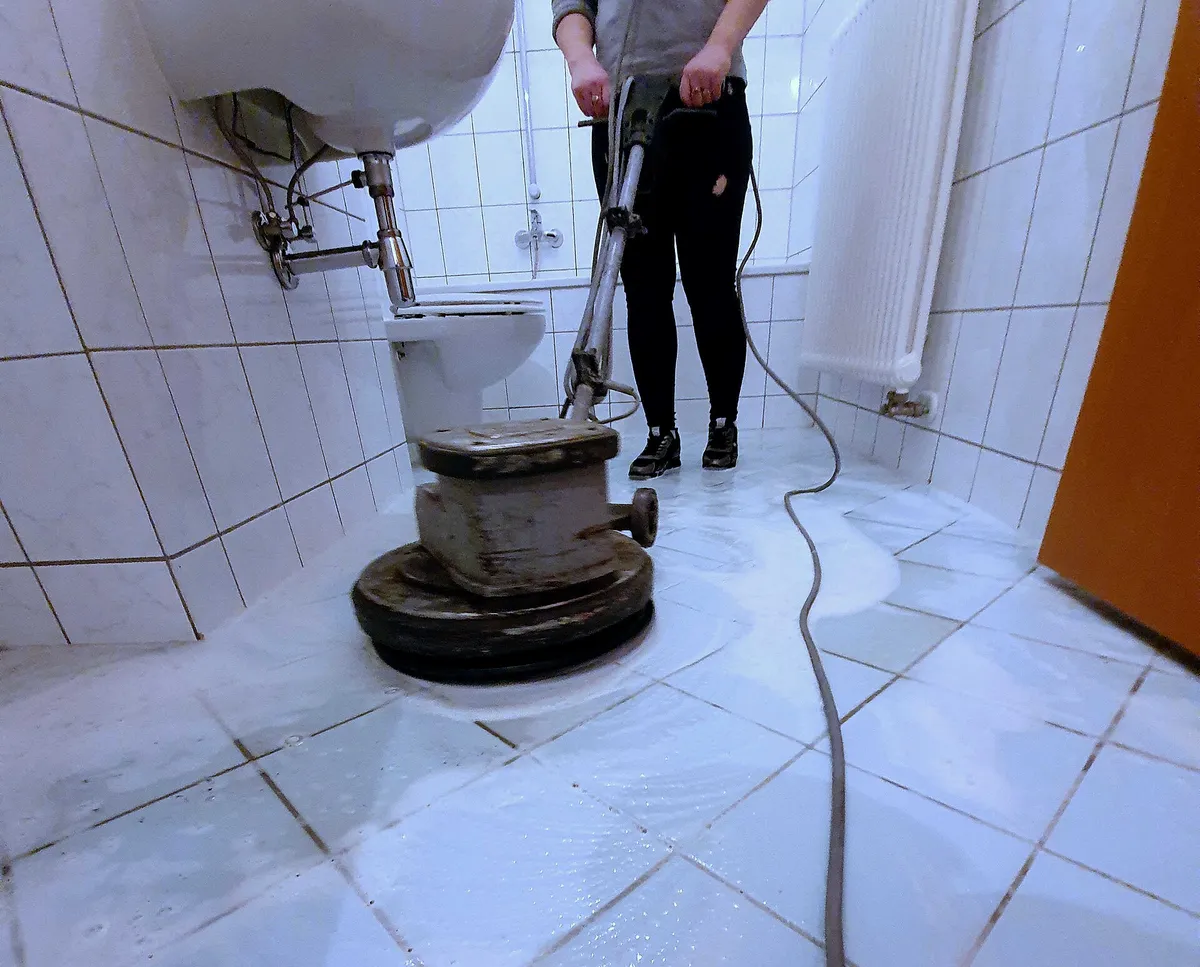
Call for: the disc scrubber. The ₹5 per sq ft deep clean runs a machine over grout that a brush cannot match. Grout that is crumbling rather than dirty needs re-grouting, which is a mason's job.
9. Brown water from the taps after a tanker delivery
Usually: the overhead tank has sediment on the bottom, and a fresh delivery stirs it up. If the water is brown every time, the tank is years overdue.
Try first: run the taps until it clears, and lift the tank lid to look. Do not drink from the purifier until the water is clear; the filter is choking on the sediment.
Call for: ₹1,200 for a tank drained, scrubbed, the sediment removed, chlorinated and refilled. Twice a year. In an apartment, ask the society whether the common tank is on a schedule; it often is not.
10. Fans and window grills that are grey a week after cleaning
Usually: the city. Fans in a room with the window open collect road dust fast, and a grill facing the street faster. Not a cleaning failure; a frequency problem.
Try first: a long-handled duster on the fan blades weekly, before the dust bonds with humidity into a film. Window tracks vacuumed and the grills wiped on the same day.
Call for: ₹80 per fan and ₹70 per window with the grill, added to any deep clean. The discount from the fifth item makes it worth adding every fan and window at once rather than a few.
When the problem is not a cleaning problem
Three of the ten above end at a different trade's door. Seepage behind mould is the mason's. A dull stone floor is the polisher's. A slow drain below the trap is the plumber's. And the cockroaches that run when the fridge is pulled out for the first time in a year are the pest-control trade's; the cleaning team will tell you they saw them, and the pest-control guides explain what the treatment involves. A good cleaning team says which it is rather than selling you another clean.