A painted wall is five layers, and the colour is only the last of them. Most painting failures, the peeling, the bubbles, the patches that come back, happen in the layers underneath, and most of them are caused by water. Here is how a wall is built up, what each layer does, and what goes wrong.
The five layers
- Brick or block. The structure. Clay brick is porous and absorbs water; AAC block more so. Neither is a problem as long as it dries out.
- Plaster. Cement and sand, 12 to 15 mm thick, trowelled on by a mason. It is the surface everything else sits on. New plaster is alkaline and wet for weeks; it needs three to four weeks of curing and drying before paint.
- Putty. One or two thin coats of white cement or acrylic compound, sanded flat. It fills the pores and the trowel marks and turns a grey, rough plaster into a white, smooth sheet. Full putty is the slow, skilled part of the job, which is why it is priced at ₹24 per sq ft against ₹16 for a repaint with touch-ups.
- Primer. A thin sealing coat that evens out how the surface drinks paint and gives the top coat something to grip. Skip it and the first coat of emulsion soaks in unevenly, leaving patches that no number of coats will hide.
- Paint. Two coats of emulsion, four to six hours apart, or one coat for a same-colour refresh. The paint is a film about the thickness of a human hair. It is decoration and a little protection, not waterproofing.
Why two coats, and why the gap
The first coat is mostly absorbed and leaves a thin, uneven film; the second builds the colour and the sheen. Rolling the second coat before the first has dried traps solvent water in the film and the paint stays soft and marks easily for weeks. Four to six hours between coats in dry weather, overnight in the monsoon. Painters who finish a 2 BHK in two days have either used one coat or not let anything dry.
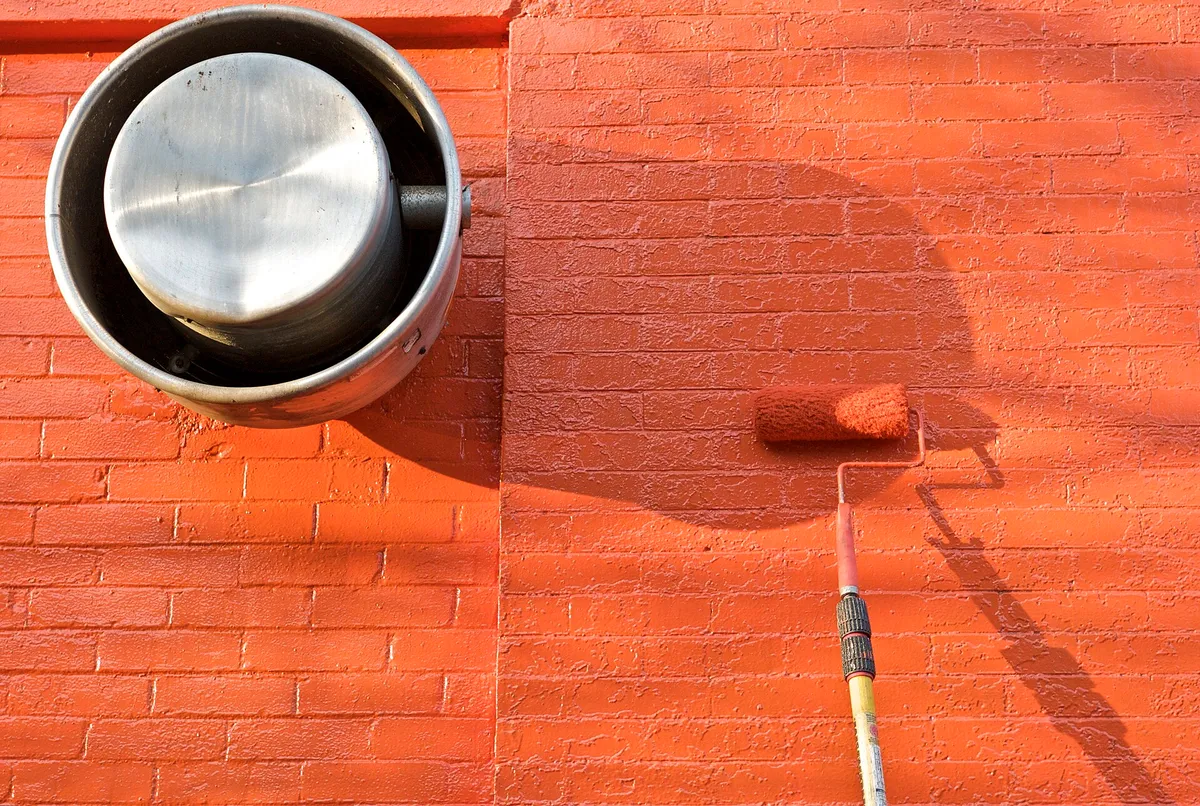
Why damp walls defeat paint
Emulsion is a water-based film that breathes a little but does not let liquid water through. When water arrives from behind the wall, it has nowhere to go. It pushes the putty off the plaster, lifts the paint into bubbles, and when the wall finally dries, the film has nothing to hold on to and flakes off. Three sources, in order of how common they are in Indian flats:
A wet area on the other side. The bathroom wall. Water gets behind the tiles through failed grout or a cracked floor and soaks through the brick. The bedroom wall shows a patch at the height of the shower. Repainting at ₹35 per sq ft lasts until the next monsoon unless the bathroom is waterproofed or re-grouted from its own side.
Seepage from above. A terrace slab or a balcony with a blocked drain. The patch is on the ceiling or the top of the wall and grows after rain. A mason's terrace waterproofing comes first, at ₹45 per sq ft.
Rising damp. Ground-floor walls drawing water up from the soil through the plinth, usually in an older house without a damp-proof course. The damage is a band along the bottom metre of the wall with efflorescence above it. The honest fix is a chemical damp-proof course injected by a mason; the common fix is a dado of tiles or a waterproof coat that moves the moisture higher.
The rule that follows: paint is never the treatment for dampness. Find the water, stop it, let the wall dry for weeks, and only then paint.
Efflorescence
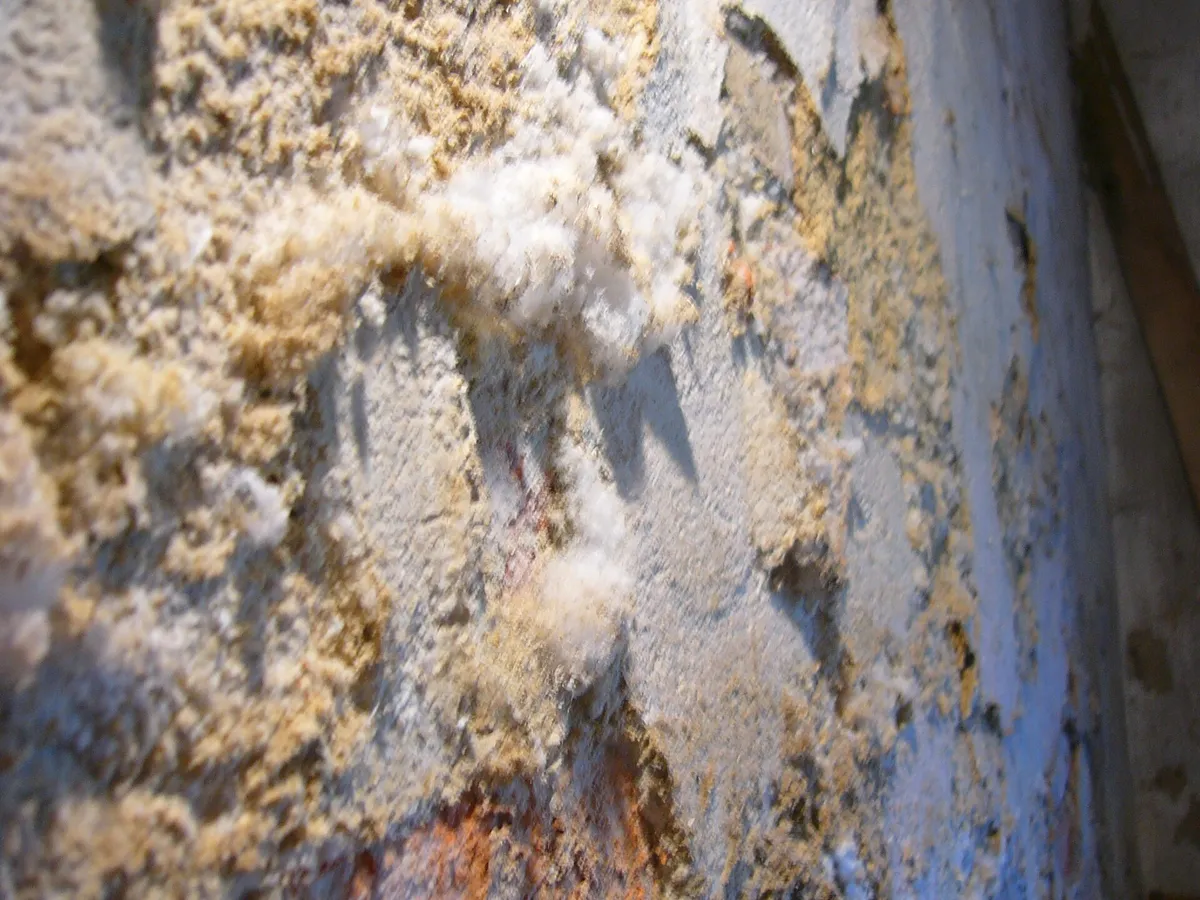
Brick, cement and sand all contain soluble salts. Water moving through the wall dissolves them and carries them to the surface; when the water evaporates, the salts stay as a white crust or powder. It is harmless itself, but it is proof that water is moving through the wall, and paint over it fails because the salts keep crystallising under the film.
Treatment: brush it dry with a stiff brush, never wash it in, because washing dissolves the salt and pushes it back. Let the wall dry fully, apply an alkali-resistant primer, then putty and paint. If the crust returns within weeks, the wall is still wet and the source has not been found.
Why new plaster waits
Cement plaster cures by reacting with water over about 28 days, and it stays strongly alkaline while it does. Paint applied early is attacked by that alkali: emulsion goes blotchy, enamel saponifies into a sticky mess. In a new flat, the walls should be at least a month old, cured by wetting for the first week, then dry to the touch with no dark patches before putty. A cheap moisture meter, ₹1,500 at a hardware shop, reads under 15 percent on a wall ready for paint; a painter who presses a palm to the wall and says it is fine is guessing.
Why primer matters more than brand
Primer is the unglamorous layer that nobody sees and the one most often skipped to save a day. It does three things: it seals the putty so it does not drink the first coat of paint unevenly, it binds any chalky residue left from old distemper, and it blocks the alkali from new plaster. Over sound old emulsion of a similar colour, a painter can spot-prime the putty patches only and the result is fine. Over distemper, bare plaster, or a dark colour, primer is the difference between a wall that lasts seven years and one that looks patchy in seven months.
Exterior walls: the same layers, more weather
Outside, the wall gets sun, driving rain and the heat cycle of an Indian summer. The plaster cracks hair-fine as it expands and contracts, water gets in, and the inside wall shows damp. Exterior emulsion is more elastic and carries fungicides; a waterproof exterior coat is thicker and bridges the fine cracks, which is why it is priced at ₹22 per sq ft against ₹14 for plain exterior emulsion. Neither will hold on a wall with structural cracks wider than about 2 mm; those are a mason's crack filling at ₹1,500 before any paint.
What is fine to do yourself, and what is not
Fine to do yourself: a single accent wall over sound paint, a wooden door with enamel, a grill, touching up nail holes with acrylic putty and leftover paint from the sealed tin. Buy the primer, buy a decent roller, and give each coat its drying time.
Not worth doing yourself: full putty, because sanding 2,500 sq ft flat is a week of dust and a skill; ceilings, because the arm work and the drips make a mess of a room; exterior walls above the ground floor, because of the staging; and anything on a wall that is damp, because the work is wasted until the mason has been.
Five things every householder should know
- Wall area is three to three and a half times carpet area; that is the number the quote is on.
- The paint lasts as long as the layer under it. Full putty and primer at ₹24 per sq ft is the finish that lasts a decade.
- A bubble or a peeling sheet means water, and the painter is the last person to call, not the first.
- The white crust is efflorescence; brush it dry, never wash it.
- Two coats, four to six hours apart, and a month for new plaster before any of it.
The mason's guides cover the plaster, the waterproofing and the cracks that sit under every paint failure; the false-ceiling and interior guides cover what goes on the wall and ceiling after the paint.