Every painter on TheHire sees the same ten faults. For each one: what it usually is, what you can safely do first, when to call, and what the call should cost in a typical Indian city.
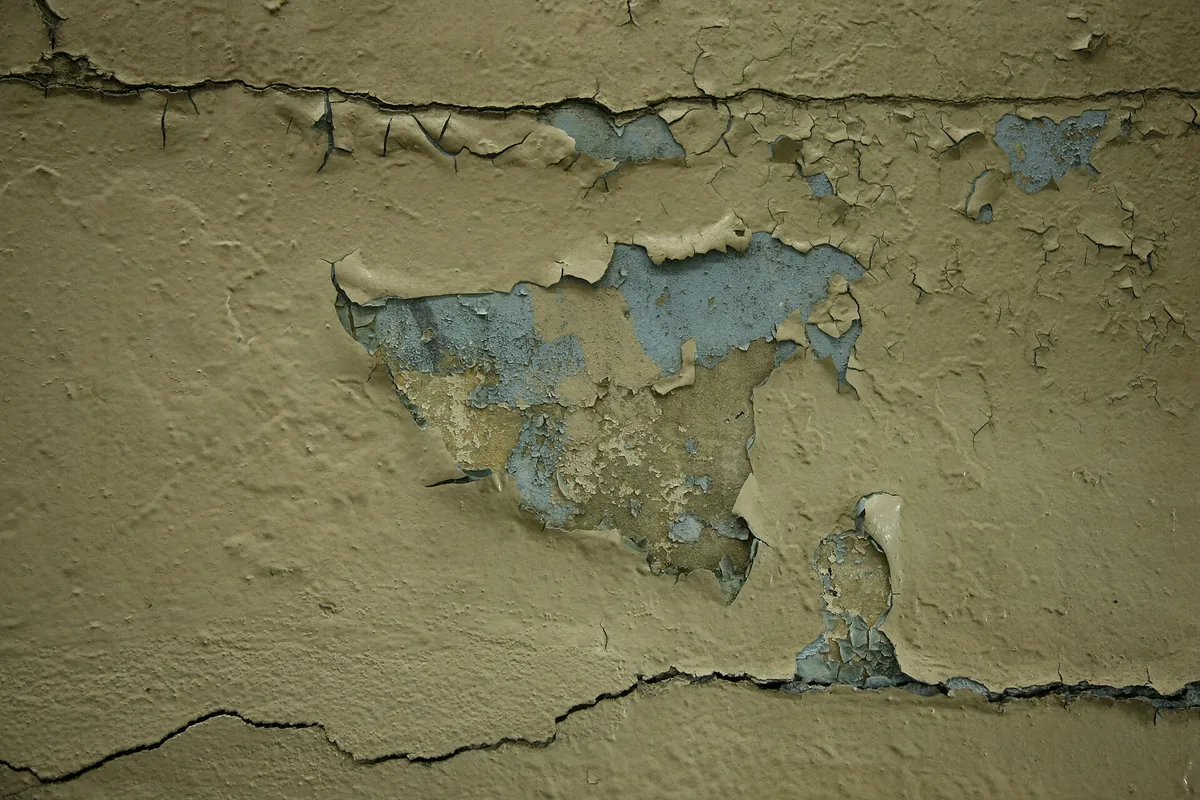
1. Paint peeling in sheets from one wall
Usually: water behind the wall. A bathroom on the other side, a terrace above, or the ground below. The putty has lost its grip and the film comes away with the putty stuck to it.
Try first: find the water. Look at what is on the other side of that wall and above it. Press a palm: cold and damp means the wall is still wet.
Call for: a mason first, for the bathroom grout, the terrace or the plinth. Then the painter's damp treatment at ₹35 per sq ft once the wall has dried for a few weeks. Painting first is paying twice.
2. Bubbles and blisters under the paint
Usually: either moisture coming through, in which case the bubbles are in one area, or paint applied to a wall that was not dry, or a second coat rolled over a first that had not dried, in which case the bubbles are everywhere.
Try first: cut one open. Wet underneath is water from behind. Dry underneath, and all over the wall, is bad application.
Call for: bad application is the painter's to redo; a painter on TheHire has a public review riding on it. Water is the damp treatment at ₹35 per sq ft after the source is fixed.
3. White powder on the wall
Usually: efflorescence. Salts carried out of the brick and plaster by water and left behind when it evaporates. It is proof that water is moving through the wall.
Try first: brush it off dry with a stiff brush. Never wash it; water dissolves the salt back in. If it returns within weeks, the wall is still wet.
Call for: once the wall is dry, an alkali-resistant primer, putty and paint, which falls inside the damp treatment rate of ₹35 per sq ft. If it is a ground-floor band, the mason's chemical damp-proof course comes first.
4. Black or green patches in the bathroom or on a north wall
Usually: mould. It grows on paint where the surface stays damp: bathroom ceilings, the wall behind a wardrobe on an outside wall, under a leaking AC drain. In the monsoon it spreads in days.
Try first: wipe with one part household bleach in four parts water, wearing gloves and with the window open. Let it dry. Improve the ventilation: an exhaust fan that is actually switched on, the wardrobe moved an inch off the wall.
Call for: if it returns within a month, the wall is wet from behind or the room cannot dry. A repaint of the ceiling at ₹6 per sq ft with an anti-fungal primer and a premium emulsion with fungicide holds if the ventilation is fixed. If it does not, it is a leak, and the mason or plumber comes before the painter.
5. Patchy, uneven colour on a freshly painted wall
Usually: primer skipped, or putty not sanded flat, so the paint soaked in unevenly. Sometimes a tinted colour from two batches.
Try first: look at the wall in raking light from a window. Waves and trowel arcs are an unsanded wall. Flat but blotchy is missing primer. Two slightly different shades meeting at a corner are two batches.
Call for: the painter who did it, to prime and recoat. A new painter will quote the repaint rate of ₹16 per sq ft for those walls. A one-room redo is ₹3,500.
6. Hairline cracks that show through the paint
Usually: plaster shrinkage. Fine, random, map-like cracks that do not widen are the plaster drying and are harmless. A single straight crack that reopens after filling, especially from a corner of a door or window, is movement and is structural.
Try first: fill a hairline with acrylic putty and a finger, sand, touch up with leftover paint. Mark the ends of any straight crack with a pencil and the date; if it grows past the mark in a month, it is moving.
Call for: fine cracks are inside a repaint at ₹16 per sq ft. A moving crack is a mason's job before any paint; the painter's crack filling at ₹1,500 per job is for the ones that have stopped.
7. Chalk on your hand when you touch the wall
Usually: old distemper, or cheap emulsion at the end of its life. The binder has broken down and the pigment comes off as powder. Emulsion will not stick to it.
Try first: nothing; it cannot be revived. Wash a small patch with water and let it dry; if it still chalks, the whole surface needs sealing.
Call for: a full prep job: wash down, a binding primer, putty where needed, then two coats. If the wall is otherwise sound that is ₹16 per sq ft; if the distemper is thick and flaking it is a full putty at ₹24.
8. Rust bleeding through a painted grill or gate
Usually: enamel applied without a metal primer, or over rust that was not removed. The rust keeps growing under the film and pushes through within a year.
Try first: a small patch can be wire-brushed to bare metal, dabbed with red-oxide primer, then enamel. The whole grill cannot be done well patch by patch.
Call for: stripping and redoing with primer: ₹500 per window grill, ₹2,500 for a main gate, ₹180 per metre of railing. Ask to see the primer coat on day one.
9. Exterior paint faded, chalky and streaked with green
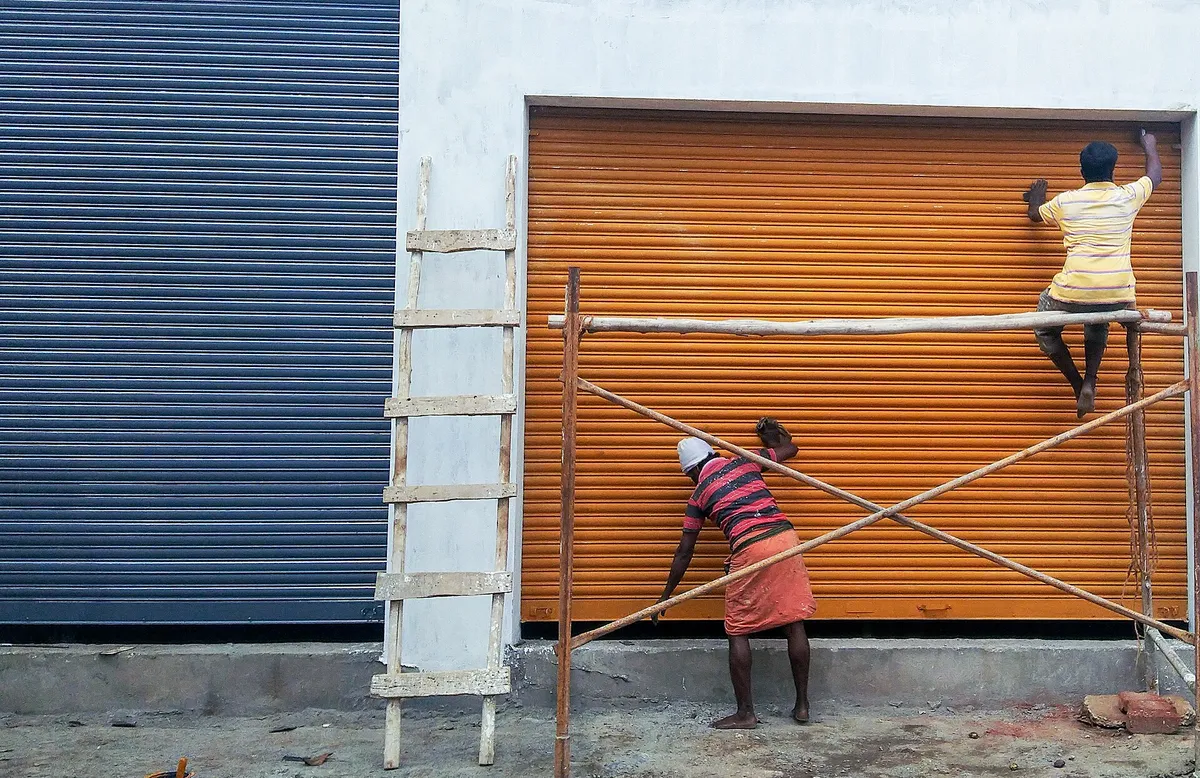
Usually: interior emulsion used outside, or exterior paint at the end of its life, six to eight years, sooner on a coastal or a sun-facing wall. Green streaks are algae growing where the wall stays damp below a drip.
Try first: a pressure wash or a stiff brush with bleach water removes the algae; it comes back within the year if the surface is porous.
Call for: exterior emulsion at ₹14 per sq ft, or a waterproof coat at ₹22 if the inside walls are showing damp. Fix the drip, the broken pipe or the blocked balcony drain that keeps the wall wet, or the algae returns.
10. The ceiling stain that comes back after every rain
Usually: the terrace or the balcony above. Water finds a crack in the slab, travels along the reinforcement and comes through as a brown ring. In a top-floor flat it is the terrace; in a lower flat it is the balcony or bathroom above.
Try first: photograph it dry and after rain so the growth is clear. Check the terrace drain is not blocked with leaves; that alone cures a surprising number.
Call for: terrace waterproofing at ₹45 per sq ft, which is a painter's or a mason's job depending on whether it is a chemical coat or brickbat coba. Then, after the next rain proves it dry, the ceiling at ₹6 per sq ft with a stain-blocking primer so the ring does not bleed through.
The pattern behind the ten
Seven of the ten are water. Of the rest, two are preparation skipped, and one is paint that has simply reached the end of its life. Which means the first question for any paint problem is where the water is coming from, and the second is what was under the paint. The painter's part of the fix is nearly always cheap; it is the mason's part, the bathroom, the terrace, the plinth, that decides whether the fix holds.
Grouping helps here as with any trade: a painter who comes to treat one damp wall at ₹35 per sq ft can do the mouldy bathroom ceiling and the rusting grill on the same visit, and painters on TheHire discount from the fourth item.