Five things decide whether a paint job lasts ten years or two. None of them is the brand of paint. Here is each one, why it matters, how to check it, and what it costs when it was skipped.
1. A dry wall before anything goes on it
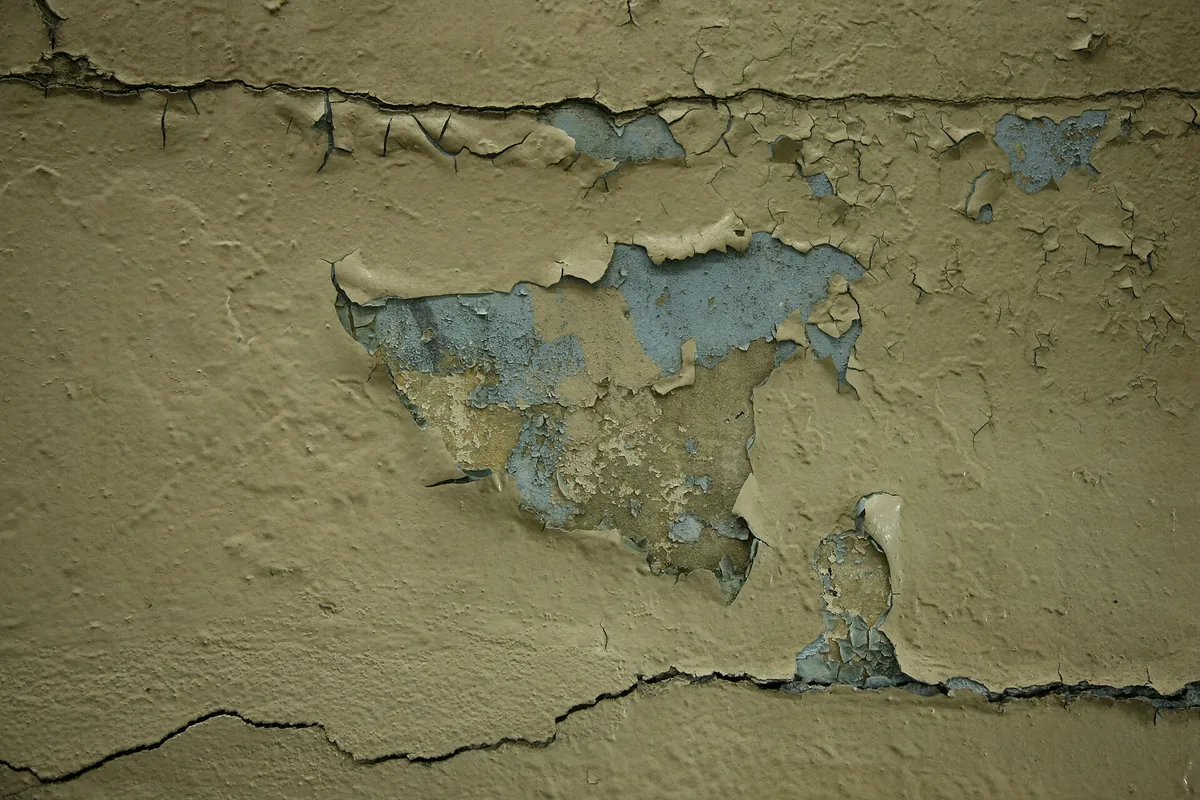
Why. Paint is a thin film that keeps water out and, just as well, keeps water in. On a wall that is wet from behind, the putty loses its grip, the film bubbles and the whole lot comes away in sheets. Nothing applied on top fixes a wall that is wet underneath.
How to check. Walk every wall before the painter quotes. Look for bubbles, flaking in a patch, a tide mark, white powder, a dark band along the bottom of a ground-floor wall, or a stain on the ceiling that grows after rain. Press a palm to the suspect patch; cold and damp is a failing wall. A moisture meter, ₹1,500 at a hardware shop, settles it: under 15 percent is ready for paint.
What it costs to put right. The painter's part is ₹35 per sq ft of affected wall for scraping back, a damp-proof coat, putty and paint. The real cost is the mason's: fixing the bathroom, the terrace or the plinth that is sending the water. Skip that and the ₹35 is spent again next year.
2. Putty on every surface that will be painted
Why. Cement plaster is rough and porous. Emulsion on it looks patchy, drinks a third more paint, and shows every trowel mark in raking light. Putty fills the pores and gives a flat white surface that the paint can sit on evenly. On a wall that was puttied years ago and is still sound, touch-up putty on holes and cracks is enough; on bare plaster or a flaking wall, it needs two full coats.
How to check. Run a hand across the wall after sanding: it should feel like paper, not sandpaper. Look along the wall towards a window; a puttied wall is flat, an unputtied one shows waves and trowel arcs. Ask the painter which walls are getting full putty and which are touch-up, and why.
What it costs. Touch-up putty is inside the repaint rate of ₹16 per sq ft. Full putty, two coats sanded, is ₹24 per sq ft, and it is the right spend on a new flat because the paint over it lasts seven to ten years instead of three.
3. Primer where the surface changes
Why. Primer seals the putty, binds old chalky paint and stops the alkali in new plaster from attacking the emulsion. Without it, the first coat soaks in unevenly and the finish is blotchy whatever paint goes on. Over sound old emulsion, spot-priming the patches is fine. Over bare plaster, over distemper, and under a light colour on a dark wall, primer is a full coat.
How to check. You can see primer: a thin, even white or grey coat that dries matte before the colour goes on. If the colour goes straight onto the putty, it was skipped. On metal, the primer is red or grey; a gate going from rust to final enamel in one day had none.
What it costs. Primer is inside the full-putty rate; a painter who leaves it out is pocketing the day. On a grill or gate, the primer is inside the ₹500 or ₹2,500 piece rate. The cost of skipping it is the whole job in a year.
4. An exterior coat that keeps rain out
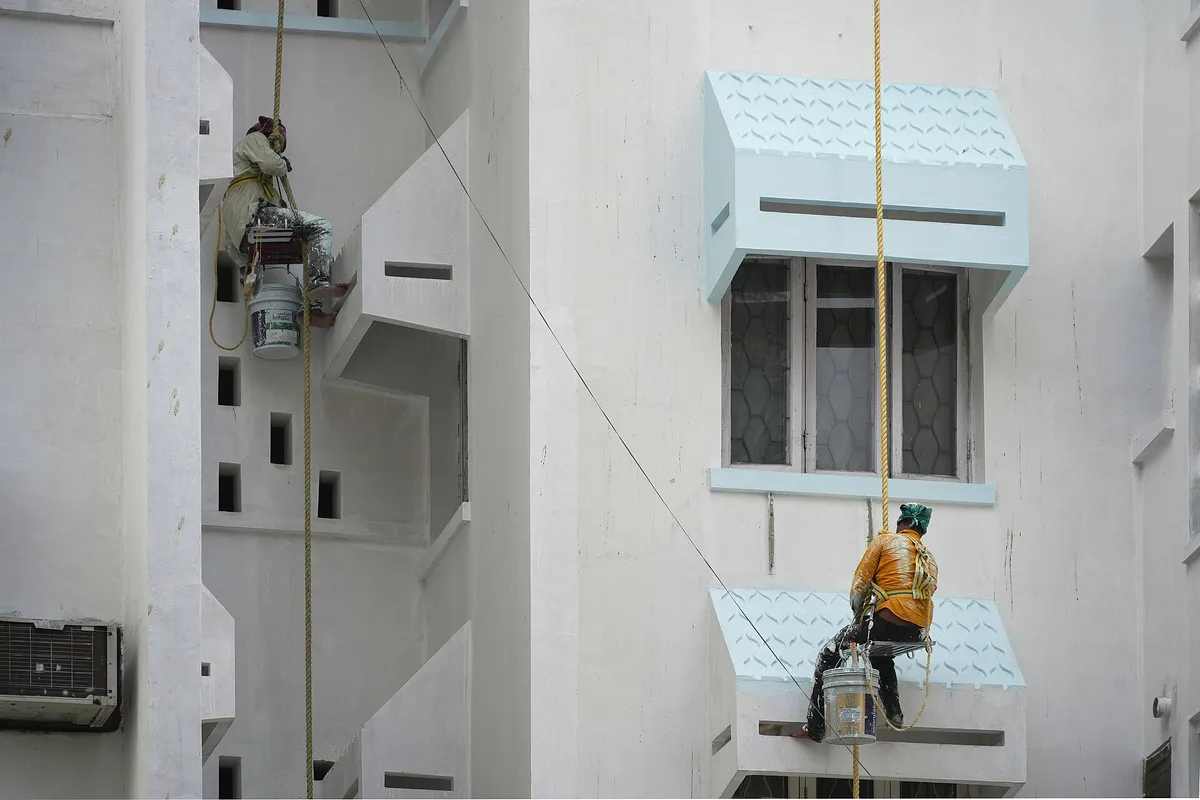
Why. Inside walls get wet from outside walls. The exterior plaster cracks hair-fine every summer, rain enters, and the bedroom shows damp. Exterior emulsion is elastic and carries fungicide; a waterproof exterior coat is thick enough to bridge fine cracks. Interior paint on an outside wall fades and peels in two monsoons.
How to check. On an independent house, look at the exterior after the first rain: dark patches that take days to dry are plaster drinking water. In a society, ask the committee when the last exterior job was done and what was used; six to eight years is the usual life of a waterproof coat, less in a coastal city.
What it costs. Exterior emulsion is ₹14 per sq ft; a waterproof coat ₹22. A compound wall is ₹10. The terrace, which is where most leaks start, is a mason's or a painter's waterproofing at ₹45 per sq ft, and it comes before anything inside is repainted.
5. Metal primed before enamel
Why. Grills, gates, railings and window frames rust from the inside of the paint film out. Enamel alone is not a rust barrier; a red-oxide or zinc-chromate primer is. Rust that shows through a new coat within months means the primer was skipped, and the next job has to start with wire-brushing the lot back to bare metal.
How to check. The sequence on metal is sanding or wire-brushing until no loose rust remains, a coat of primer, a day, then two coats of enamel a day apart. Watch for the red or grey coat on day one. On wood, the sequence is sanding, a wood primer or thinned enamel, then two coats.
What it costs. A window grill is ₹500, a door both sides ₹800, a railing ₹180 per metre, a main gate ₹2,500, each including the primer. A painter quoting half those figures is quoting without it.
Doing all five at once
A new flat is the time to do all five properly: walls cured a month, full putty, primer, two coats of a standard or premium emulsion, exterior and terrace done by the builder or society to a stated specification, and every grill primed before the final colour. At ₹24 per sq ft on roughly 2,500 sq ft of wall, a 2 BHK is about ₹60,000 in labour plus material, and it is the last whole-flat painting bill for seven to ten years.
An older flat rarely needs all five. Usually it needs one: the damp wall found and fixed, or the gate primed properly, or the one room that was never puttied. The checks above tell you which. A painter on TheHire will walk the flat and say which walls need what; a quote that gives one rate for every wall without a walk-through has not looked.
When these five are not enough
Three cases where the painter is not the right first call:
- A crack wider than a coin edge that reopens after filling. That is the plaster or the wall moving, and a mason's crack repair comes first.
- A damp patch that returns within weeks of being treated. The water source has not been found; it needs the mason or the plumber, not more paint.
- Flaking on every wall of a flat under five years old. The plaster was painted green, before it cured. The remedy is full putty over primer once the walls are genuinely dry, and it is worth a word with the builder.
The mason's guides pick up exactly where these three begin.