The worker does the work, but the household provides the means and sets the terms, and most trouble with domestic staff in India starts with a term that was never said aloud. This is what to have ready in the house, what to write on the one sheet that matters, and the handful of things to settle before the first day rather than the first argument.
The supplies to keep, and who buys them
Supplies are the household's. The salary is for labour, and a worker buying her own phenyl is paying to clean your floor. Keep a shelf stocked and let the worker tell you when something is running out.
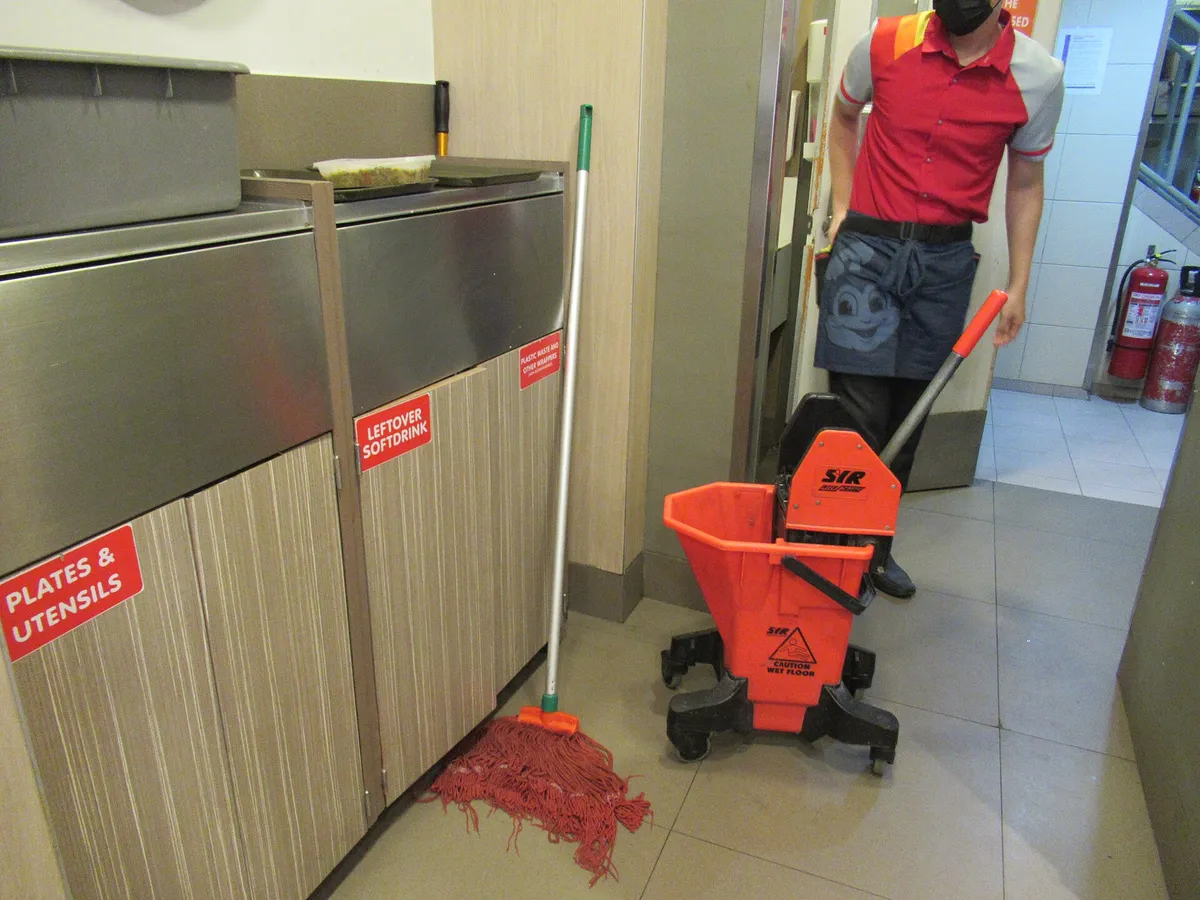
- Floor. A broom and a soft broom for inside, a bucket with a wringer mop or a flat spin mop. A spin mop set is ₹600 to ₹1,500 and lasts a year; refills are ₹150 to ₹300. Floor cleaner or phenyl, ₹100 to ₹250 a litre, diluted as the label says, not poured neat.
- Bathrooms. A separate brush and bucket that never go to the kitchen, an acid-free toilet cleaner, a tile scrubber, and rubber gloves at ₹80 to ₹200 a pair, replaced when they split. Nobody should be cleaning a toilet bare-handed in your house.
- Kitchen. Dish soap or bar, two scrubbers (one for oily vessels, one for the rest), a drying rack, a bin with a lid and liners. For a cook: sharp knives, a working mixer-grinder, a pressure cooker that seals, and containers with labels. A cook who spends twenty minutes a day fighting a blunt knife is twenty minutes less cooking.
- Clothes. Detergent, a brush, a bucket, pegs, and a line or stand in the sun. If the machine is to be used, show the programme once and write it on a sticker on the lid.
- For a nanny. A changing mat, a stocked nappy bag, the child's own cupboard, and a written feeding and nap routine on the fridge.
- For an attendant. Disposable gloves, a thermometer, a BP monitor, a glucometer if sugar is tracked, a notebook for readings, and a bed with rails or a wheelchair if the doctor has advised one.
A vacuum cleaner is optional in a small flat and worth it in a large one with carpets or pets; ₹4,000 to ₹10,000 for a dry one that will be used daily.
The duty sheet: one page, one line per task
Write every task as one line. Not "cleaning", but "sweep and mop all rooms, dust surfaces, two bathrooms on Monday, Wednesday and Saturday". Not "cooking", but "lunch for four by 12:30, dinner prep cut and kept, tiffins packed by 8". Beside the list, the salary, the hours, the days off and the bonus.
For each common role the sheet should answer these questions:
Maid. Which rooms, how often the bathrooms, whether balconies and grills are included, whether dishes means after every meal or once, whether clothes includes folding and putting away. Pay for the three units runs from ₹4,500 for cleaning alone to ₹8,000 for cleaning, dishes and clothes.
Cook. How many people, how many meals, veg or non-veg, the cuisine, whether breakfast is included, who writes the grocery list, whether leftovers are reused, whether the kitchen is left washed. One meal is ₹6,000, two meals ₹9,500.
Nanny. Hours, what the child eats and when, whether bathing is included, whether the nanny steps out with the child and where, screen rules, and which household chores are not hers. Eight hours is ₹13,000; occasional hours are ₹150 an hour with a four-hour minimum.
Attendant. Medicines with times, what to log, when to call whom, whether lifting is involved, whether the attendant cooks for the patient. An elderly care attendant is ₹15,000; a trained patient attendant for bed-ridden care is ₹18,000. Anything with a needle or a doctor's order is a nurse's job and belongs on a different sheet.
Live-in. All of the above plus start and end of the working day, the afternoon rest, the weekly off, where the worker sleeps, and what is provided. Live-in housekeeping is ₹16,000, a live-in cook ₹17,000, a couple ₹28,000, all with food and stay on top.
Photograph the sheet on both phones. When a task is added, add a line and add to the salary. That single habit prevents the "extra work" dispute that ends most arrangements.
Hours, leave and the calendar
- Hours. Fixed start and finish times, written. Part-time workers do several houses a day; a household that keeps them waiting is costing them their next salary.
- Weekly off. A fixed day for full-time and live-in staff, usually Sunday or a weekday the family chooses. Part-time staff normally take two to four paid days a month, told in advance.
- Annual leave for live-in. Fifteen to thirty days a year, usually taken as one or two trips home, with the travel date agreed a month ahead and the festival in mind.
- Sick leave. A few paid days a year is fair and is what most good households give without a policy.
- When you travel. A monthly worker is paid in full while you are away for a week or two. For a month or more, half pay as a retainer is the usual arrangement if you want the worker back.
- Festivals. Decide now which festival the bonus is attached to and which days off go with it. Diwali in the north, Pongal in Tamil Nadu, Onam in Kerala, Eid, Christmas or Durga Puja depending on the worker's family, not yours.
Pay structure: advance, bonus, raise
Salary date. A fixed date, paid in cash or UPI, with a two-line note on the phone each month. Late salary is the single biggest reason workers leave quietly.
Advance. A week's or a month's pay against a real need, a school fee or a medical bill, repaid in small monthly deductions. One at a time; a second before the first is cleared is where to say no kindly.
Bonus. One month's salary at the chosen festival, paid before it. Not a gift, and not conditional on attendance that month.
Raise. About ten percent a year at the anniversary. Say it on the sheet so nobody has to ask.
Agency arrangements. If an agency placed the worker, ask who pays the salary and how much of it reaches the worker. A placement fee of half to one month's salary is normal. An agency that collects the salary and passes on a part is a different and worse arrangement, and the worker usually knows how to say so if asked privately.
Food, uniform, phone and a place to rest
- Food. Tea and a meal for anyone working more than four hours, the same food the family eats. Live-in staff eat three meals and should not be eating leftovers as a rule.
- Uniform. Optional in a home, normal in an office or a hospitality role. If you want one, buy it: two sets, ₹500 to ₹1,200 each, and replace yearly.
- Phone. A live-in worker keeps her phone and uses it in her own time. A monthly recharge of a basic plan is a small, well-received part of the package.
- A place to rest. Part-time workers need somewhere to sit for tea. Live-in staff need a room or a proper cot with a fan and a door, their own cupboard with a lock, and a bathroom they can use. A mattress in the passage is not a live-in arrangement.
Verification, and what you may never ask for
Start police verification in the first week: the form at the local station or on the city police website, a photo, an ID copy and a previous employer's number. Keep the copy. Never keep the original Aadhaar, voter card or passport; holding a worker's documents is not security, it is the thing that makes a worker a captive, and no agency or society rule requires it.
Every worker on TheHire has a verified phone and ID and reviews from previous households on the profile, which covers the part you cannot check in a ten-minute interview.
The sheet, in short
- Tasks, one line each, with how often.
- Salary, date of payment, and what each task adds.
- Hours and the weekly off.
- Leave days a month or a year, and the festival that matters.
- Bonus of one month's salary, and when.
- Raise date.
- What the household provides: supplies, food, room, phone.
- Verification started, documents copied, originals returned.