The difference between a cook who stays eight years and one who leaves in eight weeks is rarely the cook. It is whether the hiring was done properly: the right place to look, two paid days of real work, references actually called, and an offer with leave and the bonus already in it. Here is how to do each part.
Where good workers are actually found
- The society and the street. The gate register and the society WhatsApp group are the oldest route and still a good one: a worker already doing three flats in your building has a track record you can check by walking down a floor.
- Your current staff. A good maid knows who is good. A referral from someone who has worked for you for years is worth more than any agency's word, and she is unlikely to bring someone who will embarrass her.
- Verified profiles. On TheHire, every worker has a verified phone and ID, lists the tasks and shifts she takes, and carries reviews from previous households. Post the role, the hours and the salary band, and the replies come with those reviews attached.
- Agencies. Useful for live-in staff, trained attendants and offices, where the pool is thin and a replacement guarantee matters. Expect a placement fee of half to one month's salary and read the replacement clause before paying.
The phone screen: five questions
- "Which tasks, which hours?" You want a specific answer: cleaning and dishes, 7 to 9, or two meals, 10 and 6. A worker who agrees to everything has not understood the job.
- "How many other houses?" Four to six a day is normal for a maid; a cook usually does two or three. Seven or eight means your slot will slip.
- "What were you paid at the last house, and why did it end?" Both answers tell you something. A reasonable number and a plain reason, a family that moved, a salary that stayed flat for three years, are good signs.
- "Are you fine with police verification and an ID copy?" The answer should be yes without hesitation. Tell her you will return the original the same minute.
- "When can you do two paid trial days?" The answer sorts the serious from the rest.
Say the salary band on the call. For a part-time maid that is ₹4,500 for cleaning alone up to ₹8,000 with dishes and clothes; for a cook ₹6,000 for one meal and ₹9,500 for two; for an eight-hour nanny ₹13,000; for an elderly care attendant ₹15,000. Good workers do not waste a visit on a household that is paying under the street rate.
The trial: two or three paid days
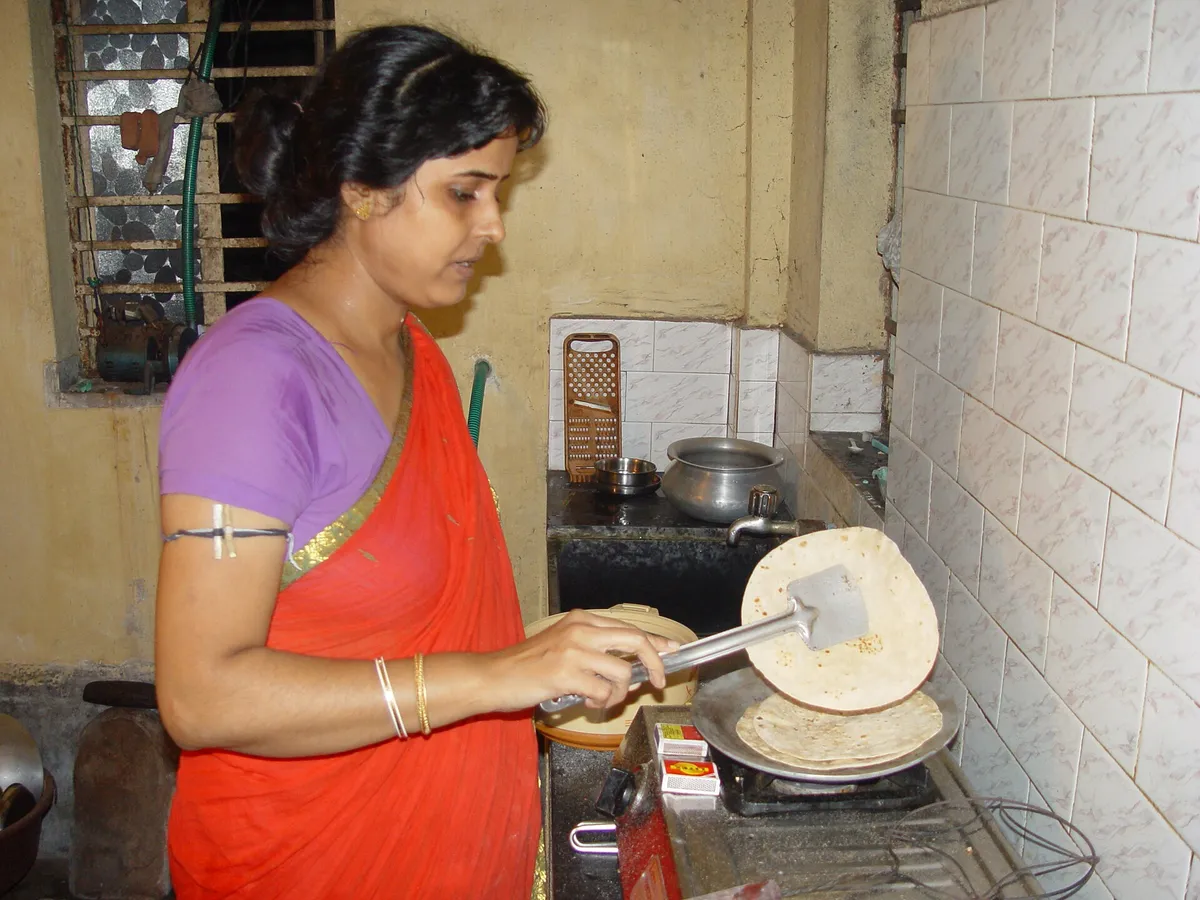
Pay the day rate, ₹700 for a helper and ₹1,200 for a cook, for two or three days of the real job. Watch for the things that matter and ignore the things that do not.
Matters: on time; does the task without being followed; asks where things go rather than guessing; washes hands, ties hair, covers food; closes the gas; leaves the floor dry; is comfortable with the children or the parent; tells you when the phenyl is finishing.
Does not matter: speed on day one; not knowing your particular way of folding; a different style of dal. Those are taught in a week.
For a nanny, be at home for the trial and stay out of the room. For an attendant, have the doctor's instructions on paper and see whether she reads and follows them. For a live-in, a week's paid trial is fairer than two days, because the question is whether two people can share a house.
References and verification
Call the previous household. Three questions: how long, why it ended, would they take her back. A previous employer who says "she just stopped coming" and nothing else is worth a second question: did the salary go out on time?
File the police verification in the first week: the form at the local station or on the city police website, a photo, an ID copy, the permanent address, and the previous employer's number. Register at the society gate with the app the same day. Keep the ID copy; hand the original back. If an agency says it has "verified" the worker, ask to see what was actually filed.
Red flags, on both sides
In a worker: no ID at all; a different name on the ID and the phone; three houses in the last six months with no reason for any; a refusal of trial days; asking for an advance before starting; a relative who does the talking and takes the money.
In a household, from the worker's side: an unpaid trial; a demand to hold the original ID; no answer on leave or the bonus; a salary figure under the street rate "to start with"; a live-in room that is a mattress in the passage; a family member who makes her uncomfortable on day one. A worker who walks away from these is making the right call, and the good ones do.
In an agency: a placement fee with no written replacement clause; a monthly collection model for a home job; "verified" without paperwork; pressure to decide on the phone.
What a fair offer looks like
An offer that keeps someone for years is not an unusually high salary. It is the street rate with the surrounding terms already in it, said aloud before she asks:
- Salary at the going rate for the tasks and the city, on a fixed date.
- Leave: two to four paid days a month for part-time, a weekly off for full-time, fifteen to thirty days a year plus festival travel for live-in.
- Bonus of one month's salary before her main festival.
- Raise of about ten percent at the anniversary.
- Supplies, food on long days, and a proper room with a door and a lock for live-in.
- Full pay when you travel for a week or two; a half-pay retainer for longer absences.
- An advance available once, against a real need, repaid in small deductions.
Write it on the duty sheet and photograph it on both phones. The whole conversation takes ten minutes and replaces every argument of the next five years.
What to agree before the first full day
- The sheet: tasks, one line each, salary beside it.
- Start and finish times, and the weekly off.
- The bonus festival and the raise date.
- Who buys supplies and groceries, and how money is handled.
- Where the key is, and what is locked.
- For nannies and attendants: the routine, the medicine chart, the numbers to call.
- Verification form filed, gate registration done, ID original returned.

After the hire
Pay on the date. Say thank you when the house is clean and when the dal is good. Raise anything that bothers you the day it happens, in two sentences, not after a month of silence. Give the bonus before the festival. Review on TheHire when the arrangement ends well or badly, because the next household is relying on it, and because the reviews are what make the verified profile worth more than an agency's word.
When household staff is not the answer
A parent who needs injections, drips or wound care needs a home nurse, under the nursing category. A pet that needs walking twice a day while everyone is at work is the pet care category, though most families fold it into the maid's sheet with a line and a little extra. And a cook with a specialised cuisine, or one for a function of fifty, is listed under cooks, where the party and event rates live.